The Flavors of Senegal
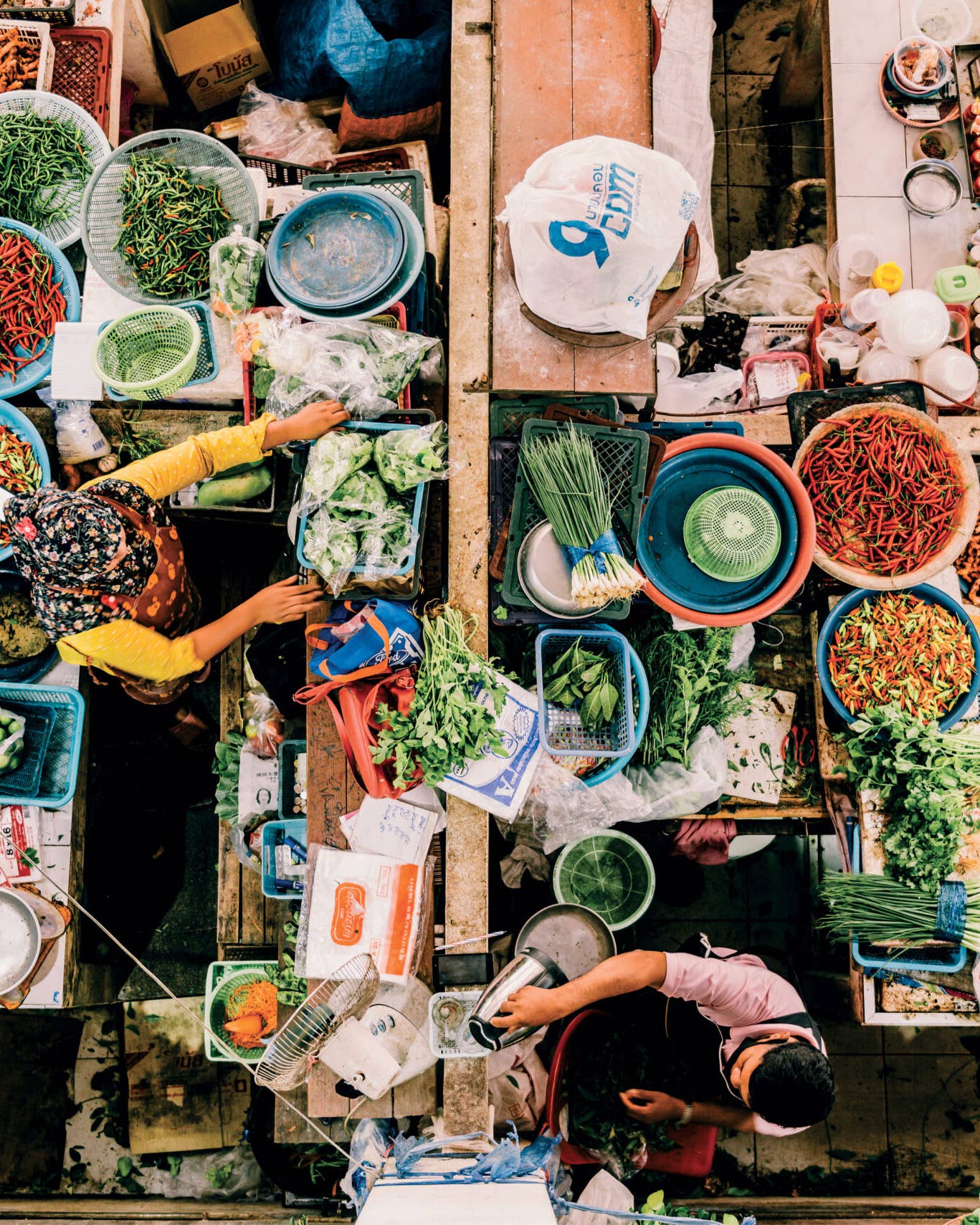
Everyone learning to cook Senegalese food should be so lucky as to have a friend like Pierre Thiam. We first got to know the chef, a native of Dakar, Senegal, through his restaurants Yolele and Le Grand Dakar, which he ran in Brooklyn, New York, until recently; his cookbook Yolele! Recipes From the Heart of Senegal (Lake Isle Press, 2008) is our go-to Senegalese reference. As we tested recipes for our May 2012 issue's feature on Senegalese cuisine, he generously agreed to spend some time in the saveur kitchen. Before we started cooking, though, Thiam took us to a couple of West African markets in New York City, where we picked up some staples of the Senegalese pantry. In Harlem, we ducked into Nawel Keur Mame Asta Walo, a tiny grocery store lined with sacks of rice and plastic jugs of bright-red palm oil. I hail from Mississippi, so as we strolled the aisles, Thiam related some of the ingredients we found to ones used in the American South; Senegalese, he explained, were among the first enslaved Africans brought to the South, and they left a lasting mark on the cooking. "This is fonio," he said, indicating a type of millet with the consistency of couscous. "It's a bit like grits when it's cooked." Tossing a bag of dried black-eyed peas into our basket, he said, "These we puree and fry to make fritters called accara—the Senegalese answer to hush puppies." At Gold Coast Trading Company, in the Bronx, Thiam pointed out smoked, dried, and fermented ingredients that are added to stews and sauces in the same way that smoked ham hocks are added to Southern greens and soups. "This is how we build flavor," he told me, "layer upon layer."
Nawel Keur Mame Asta Walo
(212/222-7900)
219 West 116th Street
New York, NY 10026
Keep Reading

Continue to Next Story