Jamaican Sunrise
You need to take a picture of some big-bellied Jamaicans because people in the States think we're all skinny and hungry," bus driver Peter Holland tells me. He's waiting for his breakfast at Anty's Homestyle Cooking, a blue plywood shack with a hand-painted sign on a dusty street in downtown Kingston, the capital of Jamaica. It's six o'clock in the morning, and Anty's is already busy.
"Come on, mon," Holland says, turning profile to display his ample girth. He's reminding me of the first time I tasted a Jamaican breakfast, bought from a food truck some winters ago in New York City: Dense dumplings, both boiled and fried, and golden fried plantains, sweet boiled yam, boiled green bananas—these were just the accompaniments. The main course was a massive portion of salted cod cooked with a tropical fruit called ackee. How in the world, I thought, do folks on an island where the average temperature is in the 80s start off the day like this? Then I took a forkful, and I fell in love.
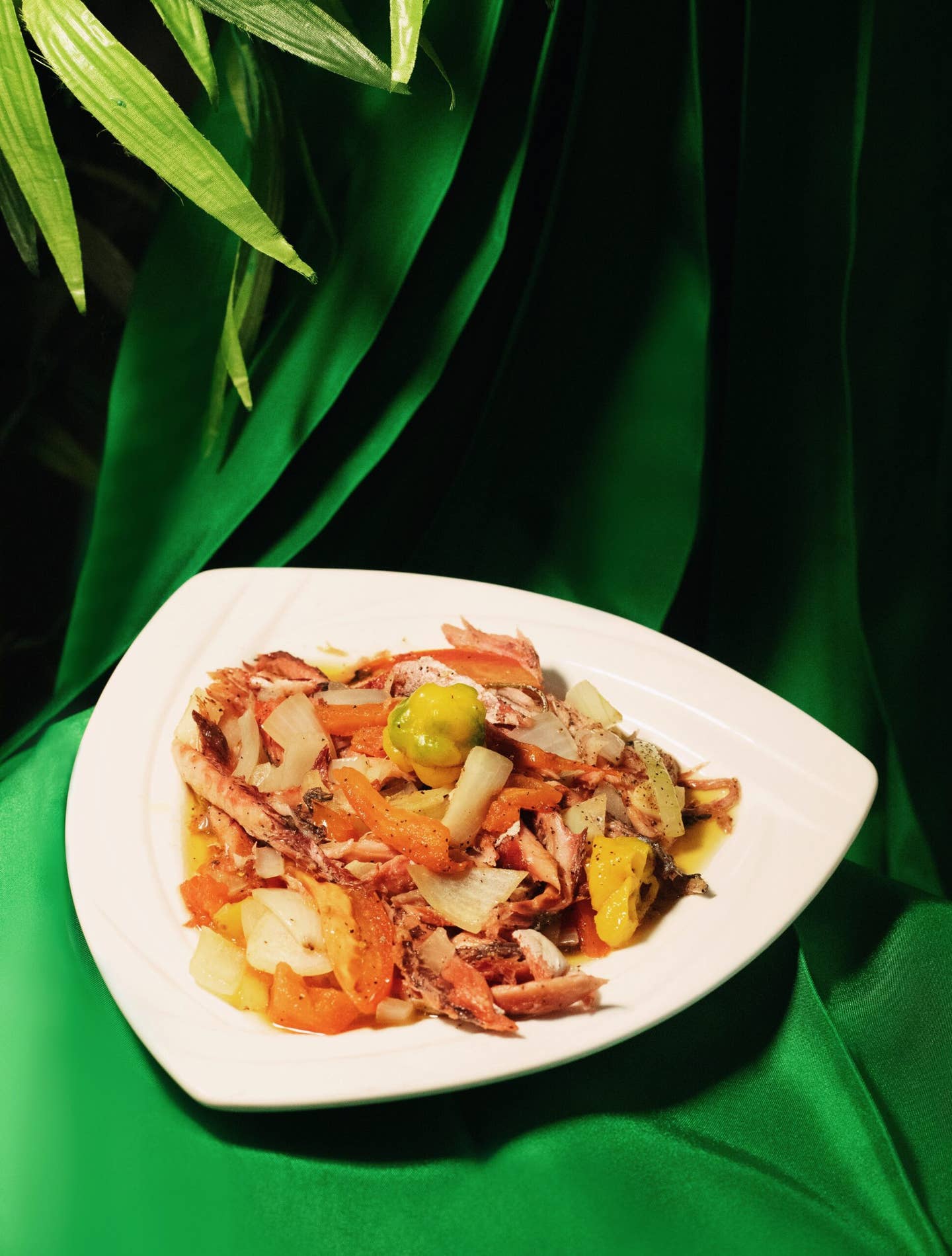
Jamaica, the third-largest Caribbean island, with a population of nearly 3 million, is known in the United States for its fiery barbecue, called jerk. But any of the customers lining up at Anty's will tell you that Jamaica's most beloved meal isn't a jerk lunch or dinner. It's breakfast, including the national dish, a sauté of salt cod or pollack, bell peppers, onions, tomatoes, Scotch bonnet chiles, scallions, and ackee, which grows wild on the island. As much as I'd like to try the version at Anty's, just one of dozens of bustling cookshops I pass this morning, I can't linger right now. I'm headed to meet Barbara Naedene Ellington, the lifestyle editor for the Kingston-based newspaper The Gleaner, to find out how she prepares this and other dishes that make up the awe-inspiring morning meals I've come to the island to experience.
Jamaican Fruit Vendor
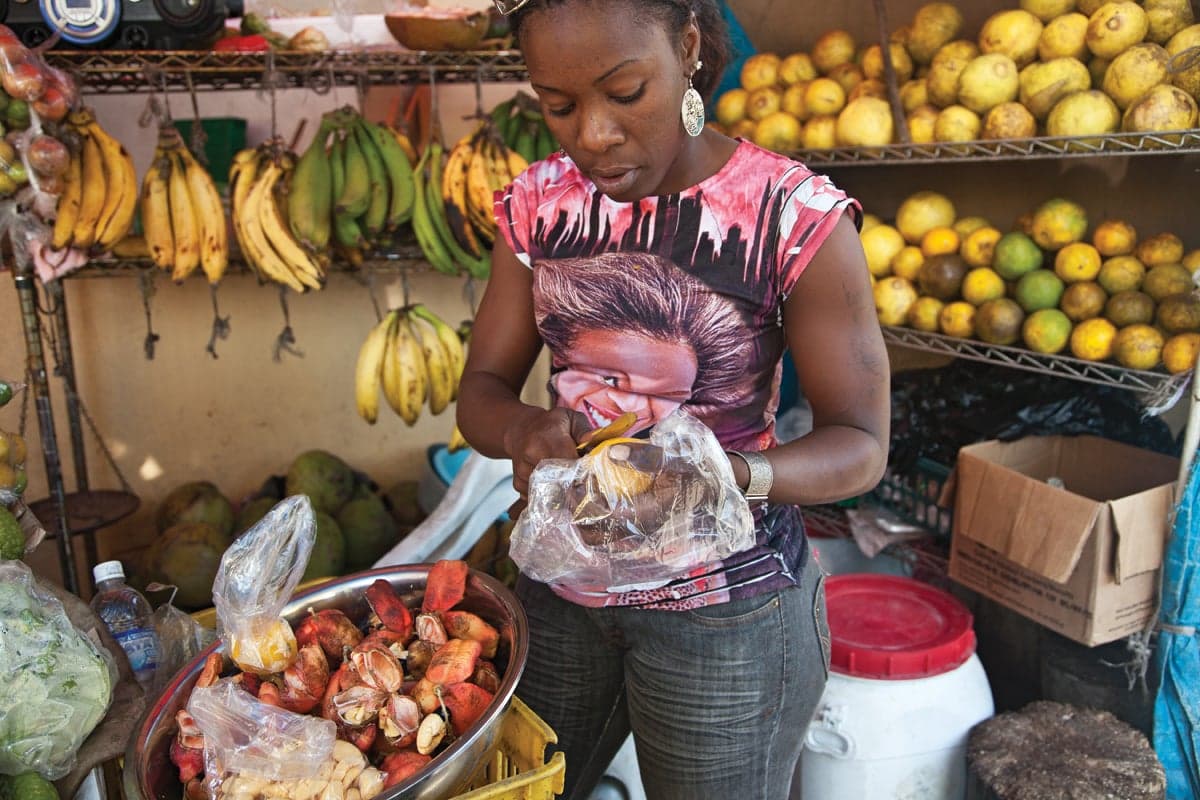
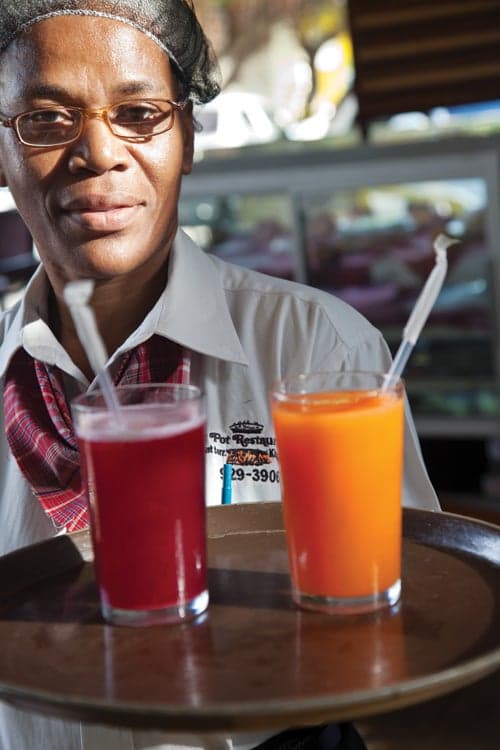
"Most Jamaicans eat a big plate of food, girl, in the morning," Ellington tells me over breakfast at her home. "We just grew up hearing that you need a solid meal in your belly first thing." She pours me a sweet-tart drink made with the sepals of hibiscus flowers, which Jamaicans call sorrel, and lays a bright-orange hunk of boiled yam on my plate next to the ackee and saltfish. The saltfish, an increasingly expensive import, is used sparingly as an accent. The star of Ellington's dish is the ackee, which she takes from the prolific trees in her yard. She explains that the fruit, which is poisonous until ripened, can be harvested once its red pods have burst, revealing lobes of creased yellow flesh surrounding shiny black seeds. Unlike the canned kind we get in the States, which breaks down when sautéed, the fresh lobes retain the shape that inspired the nickname "vegetable brain."
Digging in, I realize that this dish epitomizes the brilliance of Jamaican cooking. It's a cuisine born of the island's unique history—its sugar plantation past, its kaleidoscopic Creole culture, its people's vibrancy in the face of hardship. Like the diverse ancestors of the islanders themselves (whose motto is "Out of Many, One People"), none of the ingredients in ackee and saltfish is indigenous. The cod comes from northern waters; it arrived here in the 17th century to provision forced labor. The vegetables—most of which are now staples of Jamaican kitchen gardens—were introduced from Europe, Asia, and other parts of the Americas. And the ackee is of West African origin, the trees in Jamaica perhaps first sprung from seeds stowed away with captives in the hold of a slave ship. Yet when cooked together, they create a sort of magic: The brine and oil of the fish mingle with the brightness and heat of the vegetables and the nuttiness of the ackee. The vegetables crunch, the fish flakes, and the custardy fruit yields to the fork. It tastes like the world's most satisfying way to begin the day.

"You don't have to have anything after this breakfast," chef Gary Burt declares as I sit down with him after his shift. "Not everyone can have lunch"—by which he means not everyone can afford it. Burt works at Susie's Bakery and Coffee Bar, a popular café in New Kingston, the upscale section of the capital. He's just finished cooking the weekend brunch, an al fresco buffet served on the front patio.
The spread is brimming with robust dishes, and I pile my plate high. I try mackerel rundown, a stew of pickled fish and aromatics that's reduced, or "run down," until it's creamy and flavorful. It goes well with a savory side dish of callaloo. Over the course of my week in Jamaica, I'll eat this spinachlike green in everything from sautés to quiches, but here I have it simply steamed with thyme and Scotch bonnets. I venture some bites of the brown stew liver, a rich calf's liver dish made with a ubiquitous Jamaican sauce that is enhanced with caramelized brown sugar, and I devour the curried chicken, its sweet-spicy flavors introduced by Indian laborers who came here after emancipation.
In addition to the entrées, I stuff myself on airy salt cod fritters, nicknamed "stamp-and-go," a reference to their status as a quick roadside snack. I find the johnnycakes—fried flour dumplings derived from the 18th-century "journey cakes" that plantation workers would pack for trips to the fields—great for sopping up sauces. And I have a tough time resisting all those starchy, boiled vegetables that Jamaicans call "ground provisions": I eat yams, sweet potatoes, and dasheen, or taro. But my favorite side of all is the golden slices of fried breadfruit, crunchy and salty outside, sweet and soft within.
This is country breakfast food, designed to fuel a long day of strenuous farm work. But over the centuries, as the culture has urbanized, it's become something more: a source of Jamaican identity and pride. "This is why Jamaicans did so good in the Olympics: yam, green banana, plantain," says Burt's boss, Susie Hanna. "Complex carbohydrates. We eat what's grown in the earth."
The Jamaican focus on natural eating is strongest among Rastafarians, adherents of a religion based on black empowerment that sprung up in Kingston's ghettos in the 1930s. The movement originated a meat-free, salt-free cuisine called Ital, rooted in Rasta interpretations of the Old Testament. It's the specialty of New Kingston's Ashanti Oasis Vegetarian Restaurant, where I stop one morning for owner Yvonne Peters-Hope's version of a rundown, which is chock-full of mild chocho squash (chayote) and fresh green gungo peas (pigeon peas) and enriched with coconut milk. "We don't do rundown; we do run-up," Peters-Hope says, her long dreadlocks held back by a scarf, "because everything we do is uplifting." Her green plantain-and-peanut porridge is served Rasta-style in a calabash shell. I wonder aloud what makes it so good. "All our cooking has love in it," she answers. "If you take upset and cook it, that's not going to do it."
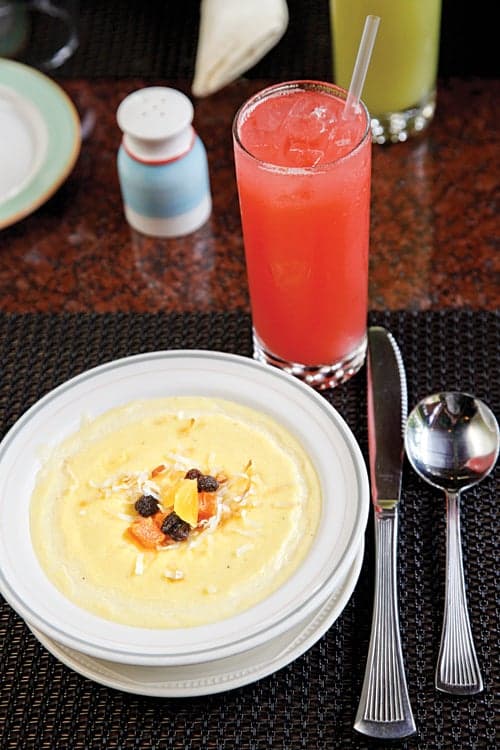
It's an ethos that seems to apply to the contents of the cookpots and aluminum Dutch ovens, or Dutchies, on the stoves of many morning porridge makers. At the Charley Mattrass Porridge Centre, tucked into a downtown shopping arcade, a shadowy warren of tin-and-plywood stalls, Ricky Holland and his brother Dameko serve a steady stream of early risers, ladling out soupy hot cereals spiced with nutmeg and allspice. As a branding strategy, Holland's family named the shop after his grandfather, Egbert "Charley Mattrass" Jackson, a noted local fisherman who fathered 56 children. Ricky and Dameko make flavors from oats to cornmeal, but peanut porridge is their big seller.

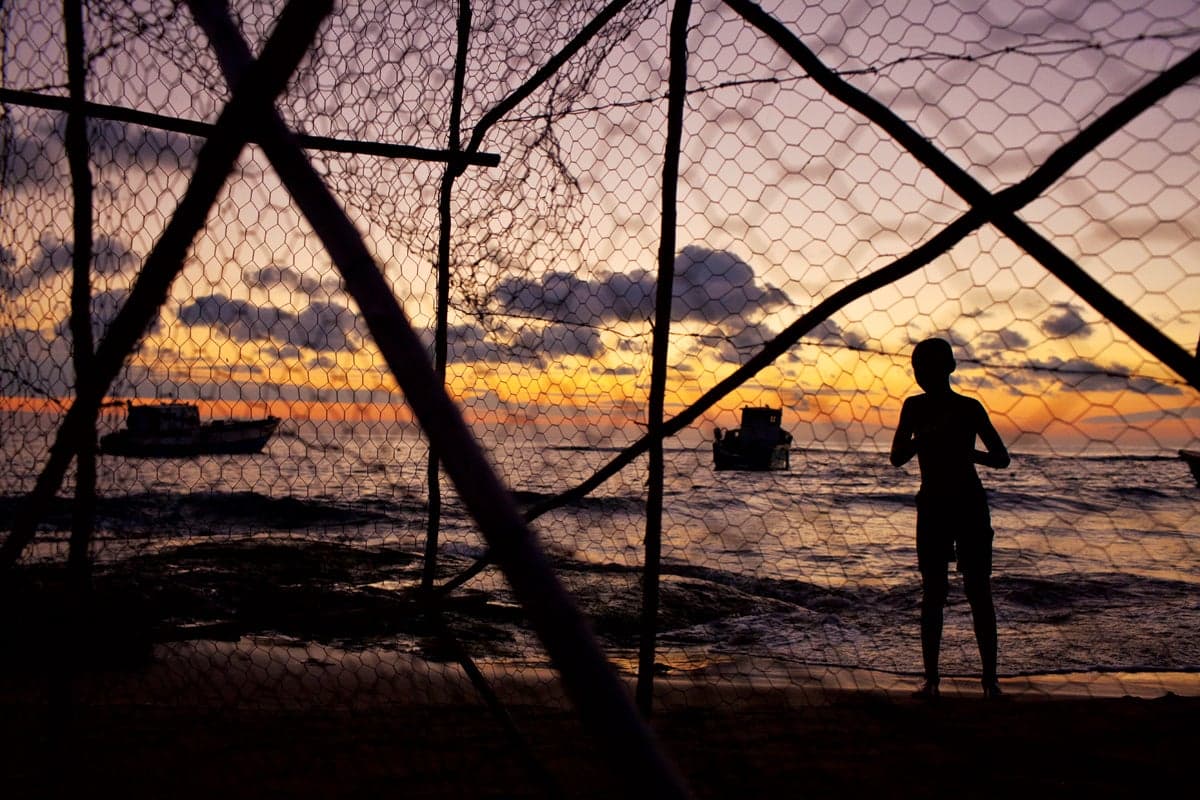
Boats in Jamaica
"It's a mon t'ing," Holland says; it belongs to a seemingly endless category of foods valued for aiding virility. Reddish-brown with peanut skins, it is nutty, earthy, and sweet.
After the frenetic rhythm of Kingston, I'm curious to know more about the slower-paced, agrarian Jamaica where the roots of the rib-sticking morning meal lie. So I travel westward to St. Elizabeth parish, to visit the family of my friend Melissa Stephenson, who lives in Mount Vernon, New York. "St. Elizabeth is the breadbasket of the nation," she has told me. "Growing up, our lawn was scallion and thyme."
When Melissa's father, Delano Stephenson, a prominent St. Elizabeth farmer and businessman, and her cousin, Keisha Green, pick me up at my hotel in the morning, our first stop is M & D Grocery, where proprietor Delvin Powell is standing in his parking lot, stirring the steaming contents of an enormous cauldron set over a roaring fire.
"Soup ready?" a woman shouts from a car rolling by.
Fresh Juices
"No, mon," says Powell. He's just finished assembling the ingredients for his conch soup, which won't be ready to sell for another hour. Nevertheless, he offers me a spoonful. Loaded with fresh conch and flavored with scallion, thyme, and Scotch bonnets picked from St. Elizabeth's fields, it already tastes terrific.
Conch is not the only fresh seafood I sample this morning. St. Elizabeth is also a fishing community; curried or brown stew lobster and fish soup are common breakfasts here, along with escovitch fish, fried whole and topped with a vinegary sauce. They're all eaten with a cassava flatbread called bammy, which is made from scratch by women like Imogene Falconer, whose home we visit next.
The bespectacled Falconer had grated her cassava and let it sit overnight in a wicker bag pressed down with stones to leech out its poisonous juices. This morning she beats the grated root in a huge wooden mortar, then sifts it to attain a fine flour. Oneil, 30, the eldest of her three sons, begins to fry small whole snappers and to prepare the escovitch sauce, slicing onions, ginger, and chiles into a reduction of coconut milk and vinegar. A tart aroma fills the kitchen, while outside, Falconer smooths a fistful of cassava flour into a round mold set on a cast-iron plate over a wood fire. The heat binds and toasts the starchy flour into a chewy, wafer-thin bammy. She hands it to me. It's smoky and has a creamy, wheatlike flavor. I've eaten escovitch fish and bammy before, bought from a hawker in downtown Kingston. But I'm grateful now to know just how much work goes into its preparation. Falconer makes six dozen bammies every morning to sell to farmers who snatch them up on their way to the fields.
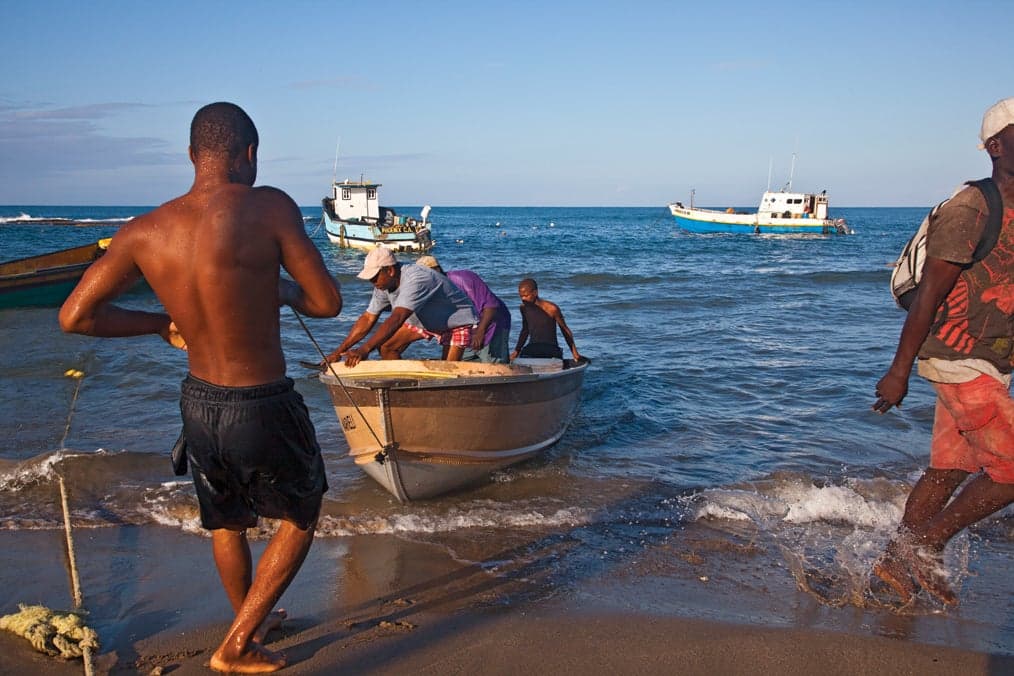
We take a drive across Delano's scruffy land along an oceanside cliff, where he yanks a tentacled cassava from the ground and plucks some melons. We visit various Stephensons in their homes surrounded by banana plants and enormous rosemary bushes. As night falls, we wander down to Treasure Beach, where a fishing boat called the Avatar II has anchored. A crowd has formed with trucks and coolers. Driftwood fires dot the beach. The boat's crewmen, their muscles taut from hauling nets, row ashore and dump their catch: jackfish, grunts, parrot fish, yellowtail snappers, barracuda. Within an hour, all the fish is sold. By morning, much of it will be fried, doused in escovitch, and wrapped in paper along with fresh-made bammy, to be purchased and eaten for breakfast in an open-air market, on a street corner, or on a waterfront somewhere in Jamaica, as the sun rises again.
Keep Reading
Continue to Next Story