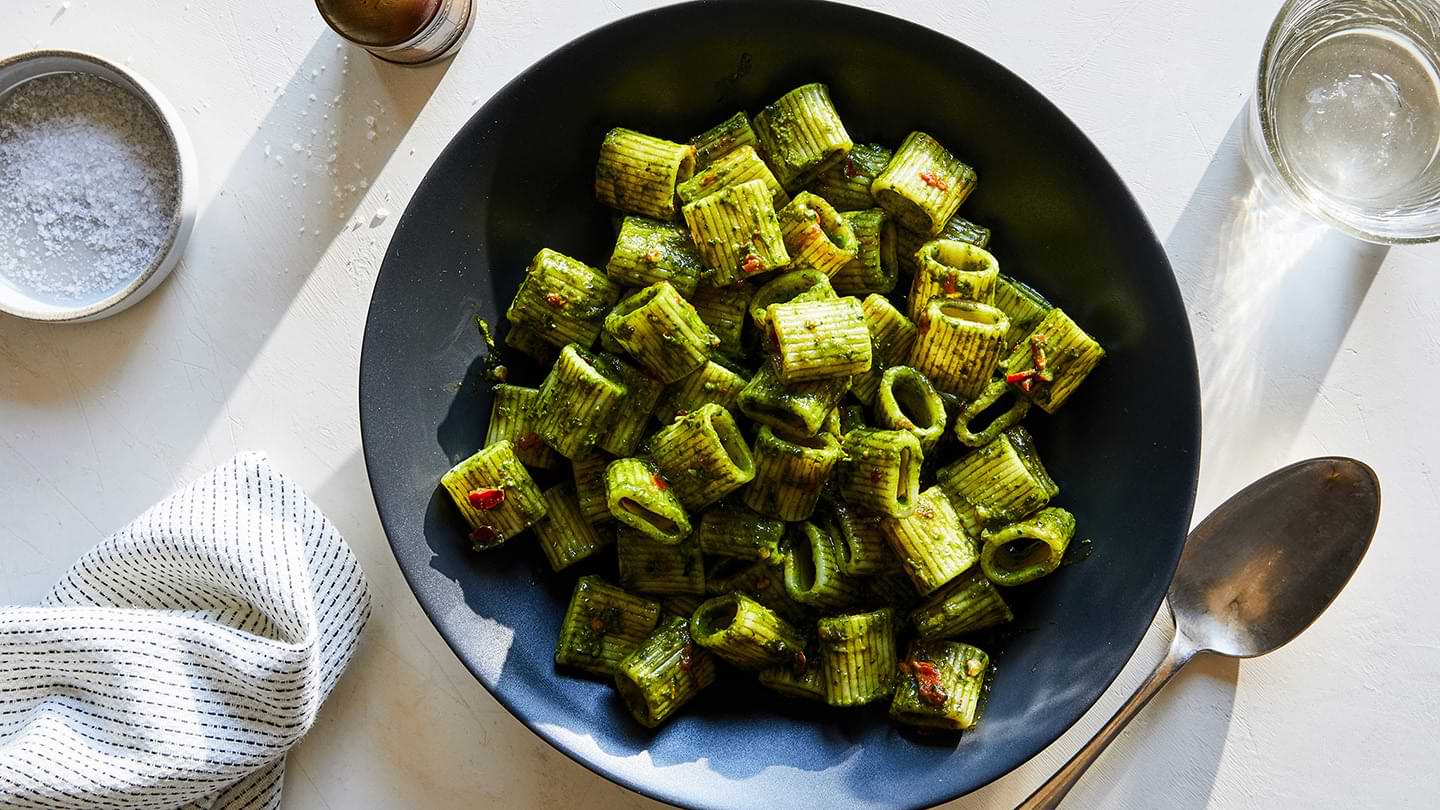
Saveur kitchen assistant Victoria Cannizzo's cousin Catherine Arturi Seco gave us the recipe for this spicy seafood pasta. This recipe first appeared in our December 2011 issue along with the special feature Italian America.
WATCH: How to Humanely Kill a Lobster
Ingredients
- 1⁄2 cup extra-virgin olive oil
- 2 (1 1/4-lb.) lobsters, cleaned, tails cut into 6 pieces, claws cracked open, bodies reserved
- 1⁄2 cup flour
- 2 tsp. crushed red chile flakes
- 1 tsp. dried oregano
- 5 cloves garlic, finely chopped
- 2 tbsp. tomato paste
- 1⁄2 cup cognac or brandy
- 1 cup seafood or fish stock
- 1 (28-oz.) can whole peeled tomatoes in juice, crushed
- 1 bay leaf
- Kosher salt and freshly ground black pepper, to taste
- 1 lb. bucatini pasta, cooked
- 1 tbsp. chopped parsley
ADVERTISEMENTADAD
Instructions
Step 1
Heat oil in an 8-qt. Dutch oven over medium-high heat. Toss lobster pieces (including reserved bodies) in flour, shake off excess, and add to pot; cook until shells turn red, about 6 minutes. Transfer lobster pieces to a plate; set aside. Add chile flakes, oregano, and garlic to pot; cook until lightly toasted, about 3 minutes. Add tomato paste; cook until lightly caramelized, about 2 minutes. Add cognac; cook until almost evaporated, about 2 minutes. Add stock, tomatoes, and bay leaf; boil. Reduce heat to medium-low; cook, partially covered, until thickened, about 30 minutes. Return lobster to pot; cook until cooked through, about 10 minutes. Season with salt and pepper. Add pasta; toss with sauce. Transfer to a large serving platter; sprinkle with parsley.
- Heat oil in an 8-qt. Dutch oven over medium-high heat. Toss lobster pieces (including reserved bodies) in flour, shake off excess, and add to pot; cook until shells turn red, about 6 minutes. Transfer lobster pieces to a plate; set aside. Add chile flakes, oregano, and garlic to pot; cook until lightly toasted, about 3 minutes. Add tomato paste; cook until lightly caramelized, about 2 minutes. Add cognac; cook until almost evaporated, about 2 minutes. Add stock, tomatoes, and bay leaf; boil. Reduce heat to medium-low; cook, partially covered, until thickened, about 30 minutes. Return lobster to pot; cook until cooked through, about 10 minutes. Season with salt and pepper. Add pasta; toss with sauce. Transfer to a large serving platter; sprinkle with parsley.
Keep Reading
Continue to Next Story
ADVERTISEMENTADAD