Taking Root: Cassava Claims Its Place On The American Table
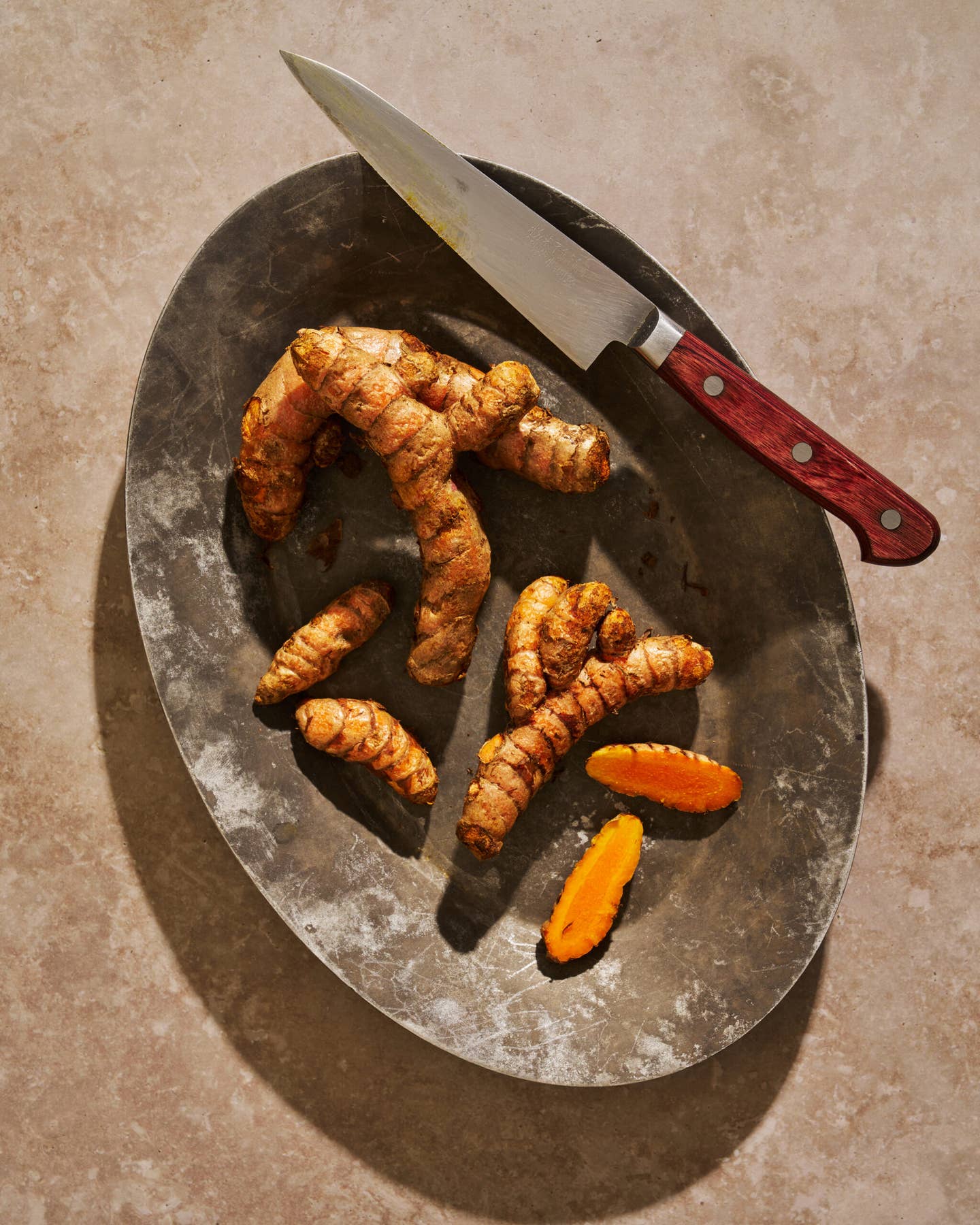
A cassava is an ugly-beautiful thing. Formidable. For years I saw the gnarly brown root vegetable at different markets in New York City, where I live, and I'll confess I was a little intimidated. Surely it would take some special tool, one I didn't have in my kitchen, to remove the bark-like peel, which, on most cassavas I've seen, has been coated in a disconcerting layer of wax.
I was fascinated to discover that I'd actually been eating this vegetable all my life, in the form of tapioca—the pure starch filtered out of juice extracted from the cassava, and further processed into a fine powder, coarser granules, or the round pearls found in tapioca pudding. The gap between the pearls in the pudding I'd grown up with and the vegetable I saw at the market seemed too vast to comprehend. So, I decided to connect the dots by cooking.
First I determined what cassava is, exactly: a starchy, tuberous root native to Central and South America, typically sold at a size of six to ten inches in length and two to three inches in diameter. I'd seen it referred to as yuca and manioc, and I learned that its many other aliases—aipim, mandioca, and macaxeira in Brazil alone; mihogo in Swahili-speaking Africa; kappa in South India; singkong in parts of Indonesia—reflect its distribution across a vast portion of the globe. The plant that produces the tuber, Manihot esculenta, is a woody shrub that grows quickly and vigorously—a sort of miracle plant, really. In tropical conditions with natural rainfall, it requires no irrigation, and its roots can be harvested year-round; unharvested, they can remain underground for an astonishing three years without spoiling. For all those reasons, cassava is ubiquitous throughout the tropics and a staple food for, by some estimates, 15 percent of the world's population.
The cookbook Tasting Brazil (Macmillan, 1992), by the historian Jessica B. Harris, provided me a richer picture in its recipes and descriptions of the many ways that cassava is used in Brazil—one of the homelands of cassava and therefore, I reasoned, as good a place to start as any. Take farinha de mandioca, a coarse meal made from cassava that's been soaked, dried, ground, pressed, and (sometimes) toasted. Brazilian cooks further toast this cassava meal in butter or palm oil to make farofa, a crunchy condiment found on tables throughout Brazil. On the country's northeastern coast, there is also vatapa, a creamy, polenta-like dish of coconut milk and palm oil thickened with farinha de mandioca and studded with shrimp, fish, or chicken. In the same region, fresh cassava is boiled and mashed, shaped into fritters around a filling of spiced ground beef, and deep-fried to make bolinhos de macaxeira recheado. Farther south, Brazilians use two kinds of powdered tapioca starch—a sour, fermented kind called polvilho azedo, and an unfermented kind, polvilho doce—to make a gougere-like pastry, pao de queijo, enriched with grated hard cheese. In Tasting Brazil, Harris notes that cassava even "turns up batter-fried in Sao Paulo's Japanese tempuras."
As I collected recipes from other parts of the world, I learned that cassava has been a staple crop in some places for thousands of years—though its distant history is somewhat difficult to trace. Four years ago, Payson Sheets, an anthropology professor at the University of Colorado at Boulder, led the excavation of a field of cultivated cassava at the ancient Maya village Ceren, in El Salvador. He called the finding "a jackpot" because it revealed, as no other ancient site has, what the Maya ate besides corn, beans, and squash—all of which require fertile soil and are sensitive to drought. Those more finicky crops figured in Maya religious practices—and the artifacts associated with them—while dependable cassava was used strictly as food; the evidence was consumed, and so cassava has remained largely invisible to history. "I like to think of cassava as an old Chevy gathering dust in the garage," Sheets said. "It doesn't get much attention but starts right up every time when the need arises."
In my own kitchen, I embraced cassava in stages. Farinha de mandioca was, for me, the gateway cassava: already processed and ready to add to all kinds of dishes. After finding a bag in Manhattan's Little Brazil, I couldn't wait to make farofa at home. The cassava meal, similar in texture to cornmeal, was labeled torrada, which means it had already been lightly toasted. To begin I simply melted butter in a cast-iron skillet, lightly sauteed some diced onion, then added a handful of farinha de mandioca and cooked it, stirring constantly, for just a couple of minutes, until it took on a pale brown color and a lovely, nutty flavor. I served it as one of the garnishes for a big pot of feijoada, the hearty Brazilian black bean and pork stew, along with wilted collard greens, orange segments, and white rice. The final flourish, a showering of farofa over top, added to the dish a wonderful crunchy texture.
Now I was eager to cook with the tuber itself, though one fact I learned did give me a moment of pause: in its pulled-from-the-ground state, cassava is actually poisonous. Like bitter almonds and raw bamboo shoots, raw cassava contains hydrogen cyanide, a colorless, toxic gas. I was assured, however, by written sources and produce vendors alike, that it took nothing more than cooking it until tender to dissipate the gas and make the vegetable completely safe for eating. In any case, two kinds of cassava grow in the tropics: the bitter, more toxic kind, and the sweet kind, which contains very little of the toxin, concentrated in the peel. In New York City, or anywhere else in North America, I would find only sweet cassava for sale. And even the toxin in bitter cassava is easily extracted by soaking, grinding, pounding, or just cooking the root thoroughly.
I started with frozen cassava, which has the advantage over the fresh vegetable of coming already peeled. In the supermarket freezer case I found a bag of three whole roots, peeled and pristine. At home I used a butcher's knife to cut one of the frozen roots into smaller hunks, added it to a pot of water, and let the cassava simmer on the stove top for about 30 minutes, until it was very tender. Drenched in a Cuban-style mojo made with bitter orange juice, lime juice, cilantro, and crushed garlic, the starchy, silky cassava offset the sharpness of the raw garlic and citrus beautifully.
I loved the subtle, nutty flavor of both the cassava meal and the vegetable itself, but what I came to appreciate above all was the way that cassava in its various forms makes it possible to modulate texture in a dish. There was the crunchy aspect of farinha de mandioca, and then there was the viscosity—a distinctive velvety plushness—that the starch from the vegetable could bring to a soup or stew. I wanted to explore that further, and so I overcame my trepidation and brought one of those knobbly, bark-covered fresh cassavas home to my kitchen. Based on advice I found in the book Uncommon Fruits and Vegetables (William Morrow, 1998) by the produce expert Elizabeth Schneider, I was careful to select one with no soft or dark spots, no creasing or withering. This one was, like many of those I'd seen, covered in wax; apparently the root that keeps for years underground doesn't hold up nearly as well once it's been picked and so requires a little protection. But in the end, both skin and wax were easily removed with an ordinary vegetable peeler. It was on the smaller side—about eight inches long, roughly the size of a big sweet potato—and when I sliced it lengthwise to remove the woody core I'd been told I'd find running down the center, there was actually very little to cut away.
In the African Cooking volume of the wonderful Time-Life Foods of the World series (Time Life, Inc.; 1970), I'd found a recipe that sounded irresistible, for an East African beef and cassava stew called muhogo tamu. I began by chopping the peeled cassava, which I boiled for a half hour and then set aside to drain. I browned some cubed boneless chuck in a Dutch oven and then removed the meat and added onions and turmeric to the flavorful fat in the pot. Once the onions had softened I put the beef back in, added some fresh tomatoes and water, and left the whole thing to simmer for an hour. Near the end of cooking, I added coconut milk, chopped jalapeños, and fresh cilantro. The cassava went in last of all. It absorbed some of the rich coconut milk, and, just as I'd hoped, it released some of its starch into the casserole, giving it body and a luscious consistency. And its mild, creamy flavor was the perfect foil for the fiery chiles. Delicious. With each forkful, I quietly thanked the ancient cooks who first cracked the code of this potentially perilous but endlessly rewarding food.
Keep Reading

Continue to Next Story