The Lemons of the North
Legendary cookbook author Judith Jones ruminates on puckery gooseberries and sorrel in this essay from the SAVEUR archives.
When Fanny Price, the poor little cousin in Jane Austen's Mansfield Park, was adopted by her rich relatives and taken to their house in Northampton, England, she was so miserable that not even the sight of a gooseberry tart could give her comfort. I remember reading the story as a young girl and thinking that this gooseberry tart was clearly something special. I asked my mother, whose parents had come from England, about it, but all she could remember from her childhood was gooseberry fool—a rough-textured puree of sweetened, cooked gooseberries softened by whipped cream. It was the 1940s and, despite the fact that our family table (in New York City, where we lived for most of the year, and in Greensboro, Vermont, where we spent our summers) was British-oriented, we'd never had gooseberries. Although they were native to the northeastern United States (as well as to Europe), they simply weren't around then.
I was nearly forty before I encountered my first gooseberry—in the unlikely form of a sauce accompanying mackerel at an inn near Aberystwyth, Wales. I was traveling with my husband, Evan (who was writing an article on Wales), and we couldn't resist ordering it. The tartness of the gooseberries cut through the oiliness of the fish in a very alluring way. Intrigued, I wanted to experiment further with this sharp berry. But when we returned to New York, I found that they were still scarce. This seemed puzzling because, judging from old cookbooks, gooseberries had obviously once grown abundantly here. The Shakers put up preserves and made ketchup from gooseberries in the 19th century, while cooks in Vermont were using the berries for a sweet pickle. Eleanor Early, in her 1954 New England Cookbook, quotes her grandmother as remembering that ''gooseberry preserves were always on the table Sunday night, to be eaten with cold meat.''
Perhaps it was Early's image of those gooseberries on the table that inspired Evan and me to plant gooseberry bushes at our summer place in East Hardwick, Vermont. The property, which we bought in 1980, is situated high on a hilltop overlooking the Green Mountains. Its rugged terrain had reminded Evan of his Welsh roots, so we called the place Bryn Teg, Welsh for ''beautiful hill.'' For me, it was a return to my family's history. My father was born in Montpelier, and he courted my mother on Caspian Lake, which Evan and I could see from our upper deck. It seemed fated that, a few summers later, we would begin working on a New England cookbook. The growing season is short, but we were determined to plant things that were native to the region.
It was then that we finally learned why gooseberries had all but disappeared. We called on Lewis Hill, a fruit and berry expert, who runs a nursery in nearby Greensboro. He delivered gooseberry bushes to our property—along with a cautionary note to plant them 500 feet away from any white pines that might be in our woods. Hill told us that the prickly berry plants, along with currants, were supposedly responsible for the disease known as white pine blister rust—which had threatened America's white pines since the early 1900s.
During Franklin D. Roosevelt's presidency, the government's determination to wipe out the gooseberry was so extreme that the Civilian Conservation Corps was sent to pluck up all of the offending bushes that grew wild in New England. But even as Hill passed on the official warning, we could see that he took it with a grain of salt. It has become obvious in recent years that only the wild varieties are the culprits. Cultivated gooseberries—which are European varieties or hybridizations of these and the North American plants—are rarely susceptible.
The next thing we learned about gooseberries was that nothing could be easier to grow—particularly in relatively cool climates. The two huge bushes hugging the deck of my house—as far from the woods as conveniently possible—have thrived for many summers. I've heard that you should prune them periodically, but I am a casual gardener and never bother. The berries ripen in early July, but I realized that if you plan to cook with gooseberries (and this is a fruit that is best cooked), they should be harvested when they are green and firm. (Different varieties may be yellow, red, pink, or purple when ripe.) The cool, translucent green of our berries bespeaks their tart accent and tells you they will be a fine foil for pork and for fatty birds like goose and duck, as well as for rich-textured fish like mackerel, shad, or our native bluefish. I also use them for flummery, a puree of gooseberries thickened with a little cornstarch and topped by whipped cream (a slight variation on the fool), and I have made a gooseberry sorbet that is sea-green in color and tastes as refreshing and more intriguing than any citrus sorbet.
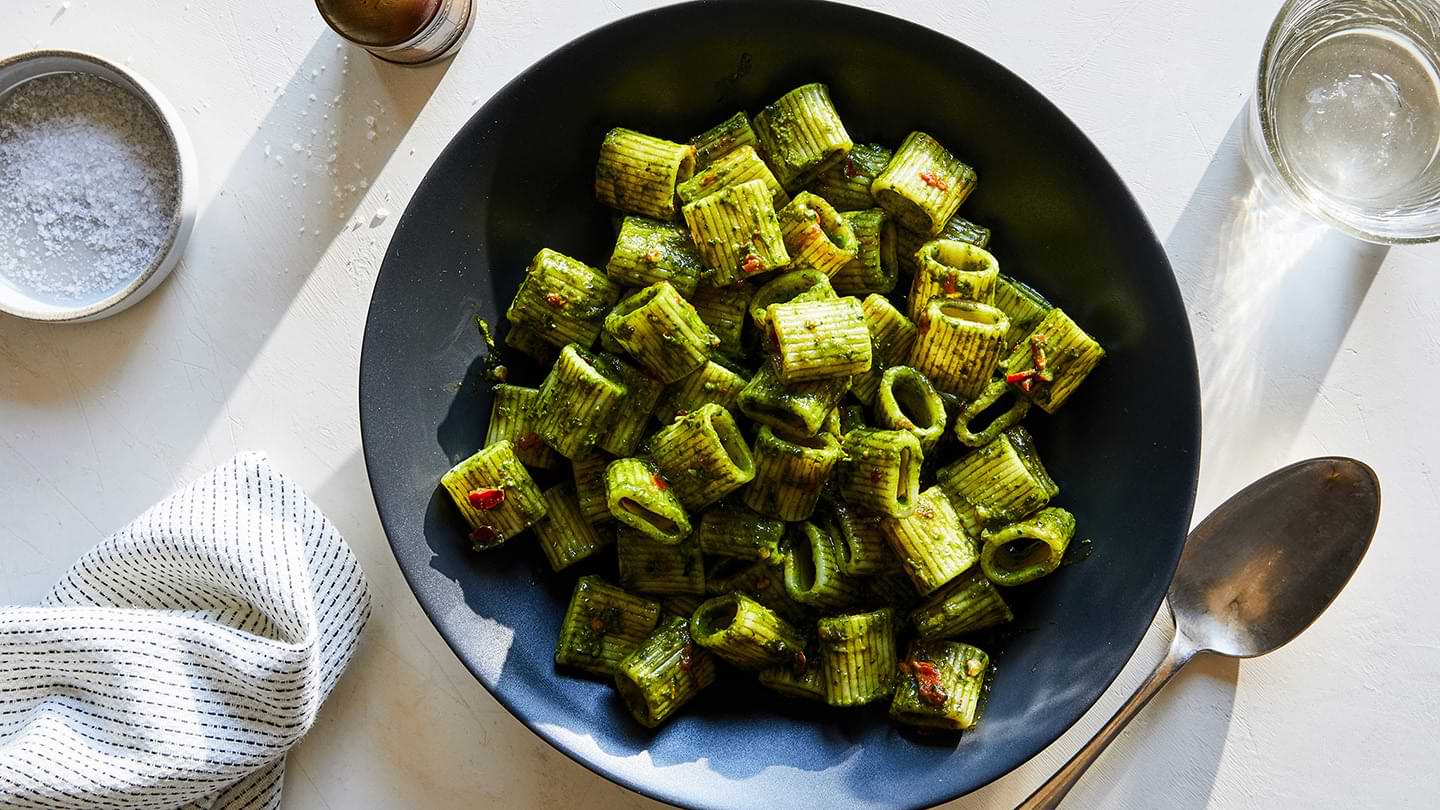
While the British cherished their gooseberries and brought to this country their liking for them, the French never really took to this sour fruit. Perhaps it is because they had already so wholeheartedly embraced sorrel—the leafy-green acidic herb native to both New England and Europe. I tasted sorrel while living in Paris in my 20s, and particularly liked potage germiny, a soup made of sorrel and cream and thickened with egg yolks. But it was years later, back in New York, before I finally found the recipe. I was editing Julia Child's first cookbook, Mastering the Art of French Cooking (Knopf, 1961), and was delighted to discover potage germiny in the manuscript. Sorrel's tart bite is a perfect balance to the rich cream, and I have made this classic soup many times since. I consider sorrel a first cousin to the gooseberry. They're the north country's answer to the lemon—and though neither has quite the same astringency, either can serve the same purpose of heightening flavors with their acidity.
Now, I grow sorrel in my hilltop garden in Vermont. When I arrive in May, my one clump of cultivated sorrel is already sending up its long, spear-shaped leaves. All around the meadows and woods there are bursts of wild sorrel that grow with the abandon of dandelions.
It was Lydie Marshall, the Paris-born cook who has taught so many Americans about good French food at her cooking school in New York City, who showed me how I could have my sorrel year-round. Although my garden variety generously sends up new shoots as I cut back the leaves from May to October (it is undaunted by cold, the hardiest of perennials), when the frost finally comes, it hunkers down for the winter. Following Lydie's instructions, I cook down the leaves from my surplus crop in a little butter, and freeze them.
Like spinach, sorrel reduces by an astonishing amount when cooked. Even more surprising is how the green leaves turn an unappealing khaki. But sorrel's intense acidity needs taming anyway, and when it is combined with cream, eggs, or mayonnaise, its color becomes more appetizing. Sorrel adds a cleansing accent to many of my favorite dishes, including braised breast of veal, and shad with shad roe, which has become for my family one of the celebrations of spring.
I have been inspired by my sorrel and gooseberries to find new ways to bring out their unique flavors. Each year, when I return to our house in Vermont, I am greeted by these vibrant harbingers of the season, so much a part of the Northeast's heritage—and my own. Now that these hardy plants have become my summer companions, I wonder how I ever did without them.
Keep Reading







Continue to Next Story