
Bibimbap
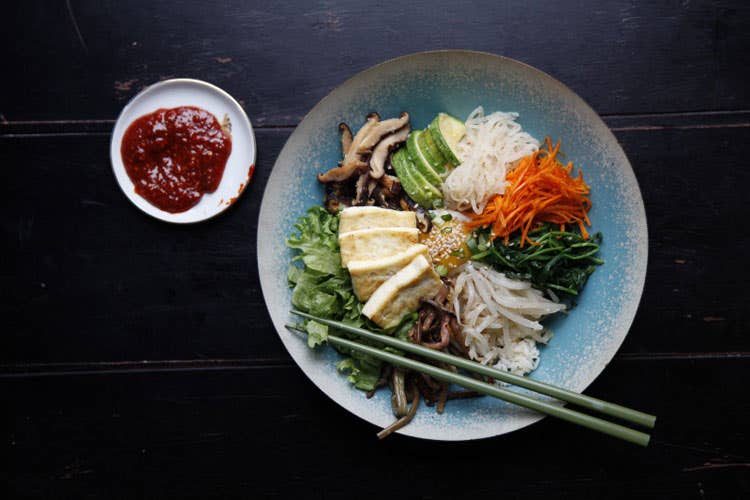
This staple Korean rice dish can be made with meat or seafood and served hot, but we love this fresh-tasting cold, vegetarian version. Get the recipe for Bibimbap »
Bibimbap, the staple Korean rice dish, can be made with meat or seafood and served hot, but we love this fresh-tasting cold, vegetarian version. This recipe first appeared with Beth Kracklauer's story Seoul Food. For step-by-step photo instructions for making bibimbap, see our photo gallery.
Ingredients
For the Sauce
- 3⁄4 cup cup gochujang (Korean spicy red pepper paste; available here)
- 6 tbsp. lemon-lime soda, such as Sprite
- 3 tbsp. doenjang (Korean soybean paste; available here) or miso
- 2 tbsp. corn syrup
- 2 tbsp. sesame oil
- 2 tbsp. minced garlic
- 2 tbsp. minced ginger
- 1 tbsp. brown rice vinegar
- 1 1⁄2 tsp. sesame seeds
For the Bibimbap
- 4 oz. mung bean sprouts
- 8 oz. baby spinach
- 12 dried shiitake mushrooms
- 6 tbsp. canola oil
- 3 tsp. sesame oil
- 2 tbsp. plus 2 tsp. minced garlic
- 2 1⁄2 tsp. minced ginger Kosher salt and black pepper, to taste
- 6 oz. gosari (called bracken fern), cut into 3″ pieces (optional)
- 2 small Korean squash or zucchini, halved and cut crosswise into 1/4″-thick slices
- 2 medium carrots, julienned
- 1⁄4 small daikon radish, julienned
- 3⁄4 tsp. sesame seeds
- 8 oz. firm tofu, cut into 1/2″-thick slabs
- 4 cups cooked white sushi rice
- 4 sunny-side-up eggs
- 2 leaves chicory, thinly sliced
- 2 leaves green-leaf lettuce, thinly sliced
- 1 scallion, thinly sliced
Instructions
Step 1
Make the sauce: In a bowl, whisk gochujang, soda, soybean paste, corn syrup, sesame oil, garlic, ginger, vinegar, and sesame until smooth; set aside.
Step 2
Make the bibimbap: Bring a 4-qt. saucepan of water to a boil, and add sprouts; cook until crisptender, about 30 seconds. Transfer to a bowl of ice water, drain, and dry with paper towels; set aside. Repeat procedure with spinach (squeeze out as much liquid as possible when draining). When finished, pour boiling water into a bowl and add mushrooms; let soften for 30 minutes. Drain, remove stems, and slice 1⁄4″-thick; set aside.
Step 3
Heat 1 tbsp. canola oil and 1⁄2 tsp. sesame oil in a 10″ nonstick skillet over medium heat. Add 1 tsp. garlic, 1⁄2 tsp. ginger, and mushrooms, season with salt and pepper; cook until hot, about 2 minutes. Transfer to a bowl; set aside. Repeat procedure, using same amounts of canola oil, sesame oil, garlic, and ginger, with the gosari, squash, carrot, and radish; season each with salt and pepper. Set each aside in separate bowls, and add 1⁄4 tsp. sesame seeds to radishes. Add 1 1⁄2 tsp. garlic, 1⁄4 tsp. sesame oil, salt, and pepper each to sprouts and spinach; stir. Heat remaining canola oil in skillet, and add tofu; cook, turning once, until browned, 4–6 minutes. Transfer to a plate; cut each in half.
Step 4
To serve, place 1 cup rice each in center of 4 bowls, and top each with a fried egg. Place 1⁄4 of mushrooms in a mound in each bowl over the rice. Working clockwise, arrange 1⁄4 each squash, carrot, radish, spinach, sprouts, gosari, chicory, and lettuce. Place tofu on lettuces; sprinkle with sesame seeds and scallions. Serve with sauce on the side.
- Make the sauce: In a bowl, whisk gochujang, soda, soybean paste, corn syrup, sesame oil, garlic, ginger, vinegar, and sesame until smooth; set aside.
- Make the bibimbap: Bring a 4-qt. saucepan of water to a boil, and add sprouts; cook until crisptender, about 30 seconds. Transfer to a bowl of ice water, drain, and dry with paper towels; set aside. Repeat procedure with spinach (squeeze out as much liquid as possible when draining). When finished, pour boiling water into a bowl and add mushrooms; let soften for 30 minutes. Drain, remove stems, and slice 1⁄4″-thick; set aside.
- Heat 1 tbsp. canola oil and 1⁄2 tsp. sesame oil in a 10″ nonstick skillet over medium heat. Add 1 tsp. garlic, 1⁄2 tsp. ginger, and mushrooms, season with salt and pepper; cook until hot, about 2 minutes. Transfer to a bowl; set aside. Repeat procedure, using same amounts of canola oil, sesame oil, garlic, and ginger, with the gosari, squash, carrot, and radish; season each with salt and pepper. Set each aside in separate bowls, and add 1⁄4 tsp. sesame seeds to radishes. Add 1 1⁄2 tsp. garlic, 1⁄4 tsp. sesame oil, salt, and pepper each to sprouts and spinach; stir. Heat remaining canola oil in skillet, and add tofu; cook, turning once, until browned, 4–6 minutes. Transfer to a plate; cut each in half.
- To serve, place 1 cup rice each in center of 4 bowls, and top each with a fried egg. Place 1⁄4 of mushrooms in a mound in each bowl over the rice. Working clockwise, arrange 1⁄4 each squash, carrot, radish, spinach, sprouts, gosari, chicory, and lettuce. Place tofu on lettuces; sprinkle with sesame seeds and scallions. Serve with sauce on the side.
Keep Reading







Continue to Next Story
ADVERTISEMENTADAD