
Adobo
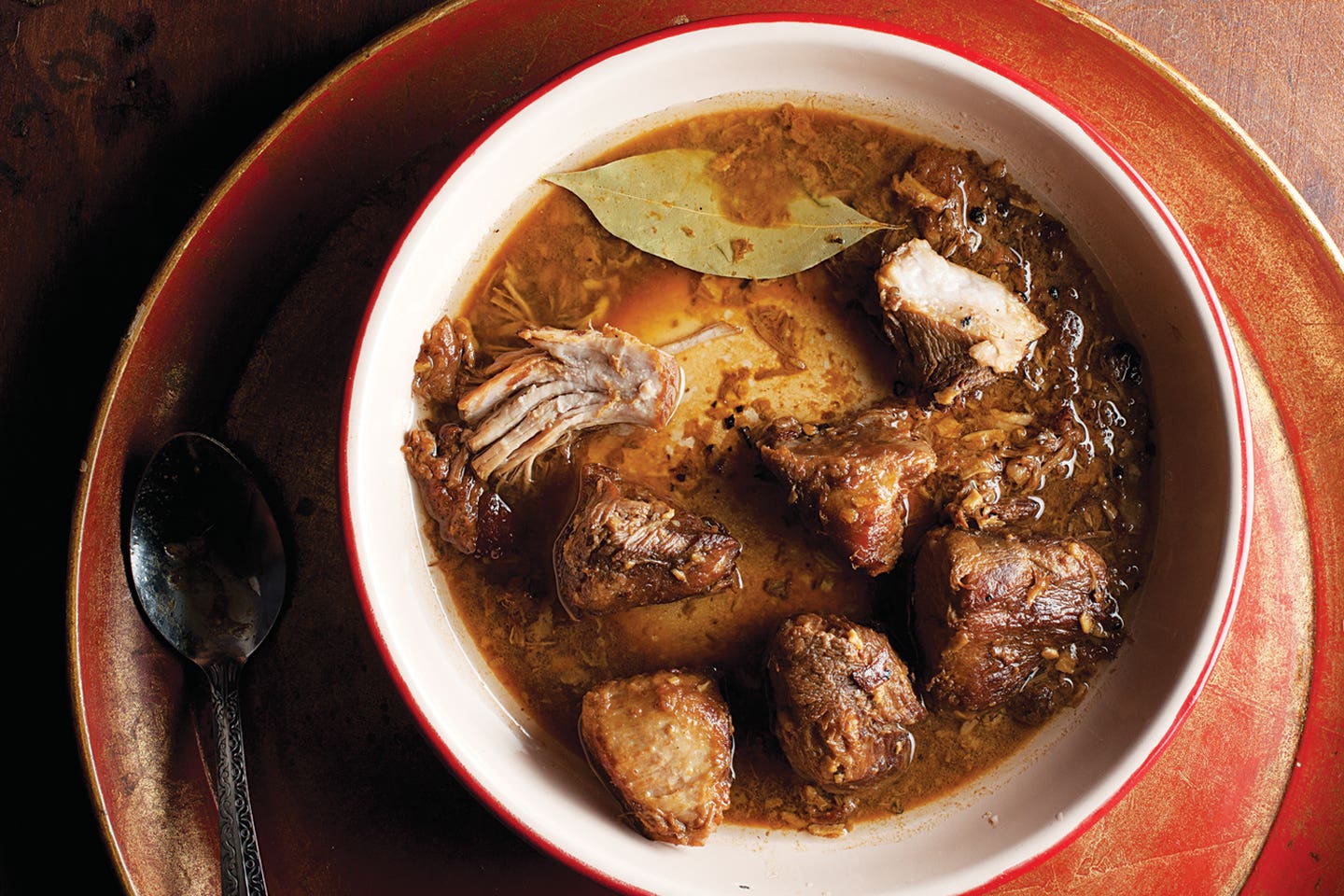
I grew up in the Philippines, and whenever I’m homesick, I cook adobo, the national dish—pork or chicken or both, braised in seasoned vinegar. Though there are all sorts of regional variations, no matter how it’s made, adobo’s piquant aroma fills me with memories of Manila. —Amy Besa. Get the recipe for Adobo »
I grew up in the Philippines, and whenever I'm homesick, I cook adobo, the national dish—pork or chicken or both, braised in seasoned vinegar. Though there are all sorts of regional variations, no matter how it's made,_ adobo's_ piquant aroma fills me with memories of Manila. —Amy Besa, from "Vinegar Stew" (October 2005)
Find this recipe in our cookbook, SAVEUR: Soups and Stews
Ingredients
- 2 1⁄2 lb. boneless pork shoulder, cut into 2″ pieces
- 1⁄2 cup palm vinegar
- 3 tbsp. soy sauce
- 1 tsp. whole black peppercorns, crushed
- 12 cloves garlic, peeled and crushed
- 1 bay leaf
- 2 tbsp. lard or canola oil
- 8 cups cooked white rice
- Patis (Philippine fish sauce; optional), for serving
Instructions
Step 1
Place the pork, vinegar, soy sauce, peppercorns, garlic, and bay leaf in a large bowl and toss to combine. Cover and refrigerate for at least 8 hours or overnight.
Step 2
Heat pork mixture and 2 cups water in a 6-qt. Dutch oven over medium-high heat; bring to a boil. Skim the foam that rises to the surface, and then reduce the heat to medium-low; cover, and cook until tender, about 1 1⁄2 hours.
Step 3
Pour the pork into a colander set over a medium bowl; discard the bay leaf, and set pork and garlic aside. Return broth to pot, and cook over medium heat until reduced to 1 1⁄2 cups, about 25 minutes. Transfer broth to a bowl and set aside.
Step 4
Melt the lard in the same pot over medium-high heat. Set the garlic aside, then, working in batches, add the pork, and cook, turning, until browned all over, about 10 minutes. Add the garlic, and cook, stirring occasionally, until garlic is lightly browned, about 2 minutes. Stir broth back into pot, reduce heat to medium-low, and cook to meld flavors, about 5 minutes.
Step 5
Divide rice between 4 bowls; serve adobo with rice. Season with fish sauce, if you'd like.
- Place the pork, vinegar, soy sauce, peppercorns, garlic, and bay leaf in a large bowl and toss to combine. Cover and refrigerate for at least 8 hours or overnight.
- Heat pork mixture and 2 cups water in a 6-qt. Dutch oven over medium-high heat; bring to a boil. Skim the foam that rises to the surface, and then reduce the heat to medium-low; cover, and cook until tender, about 1 1⁄2 hours.
- Pour the pork into a colander set over a medium bowl; discard the bay leaf, and set pork and garlic aside. Return broth to pot, and cook over medium heat until reduced to 1 1⁄2 cups, about 25 minutes. Transfer broth to a bowl and set aside.
- Melt the lard in the same pot over medium-high heat. Set the garlic aside, then, working in batches, add the pork, and cook, turning, until browned all over, about 10 minutes. Add the garlic, and cook, stirring occasionally, until garlic is lightly browned, about 2 minutes. Stir broth back into pot, reduce heat to medium-low, and cook to meld flavors, about 5 minutes.
- Divide rice between 4 bowls; serve adobo with rice. Season with fish sauce, if you'd like.
Keep Reading







Continue to Next Story
ADVERTISEMENTADAD