Why Beef Wellington Is a Versatile Party Dish Actually Worth Making
The elegant British entrée is easier—and more adaptable—than you may think.

By Cathy Erway


Published on December 23, 2025

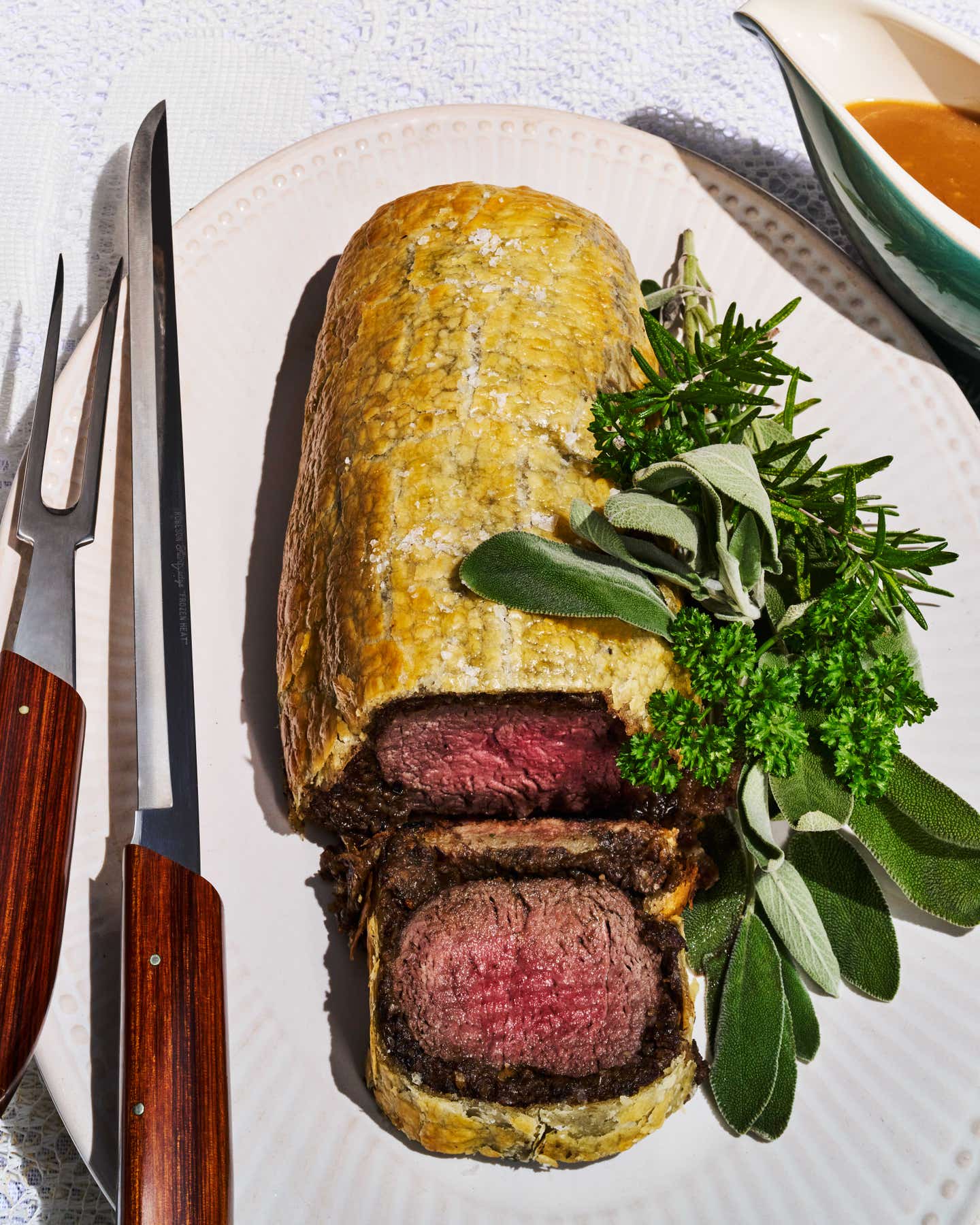
You might think there’s nothing better than a juicy, medium-rare steak kissed with fire and drenched in butter. The beef Wellington politely begs to differ. The classic British entrée of an entire beef filet encased in golden pastry and stuffed with savory mushroom paste is a culinary feat that makes a commanding impression whenever served. Named after the first Duke of Wellington, Arthur Wellesley, the exact origins of this dish are murky, but by the mid-20th century, it had become a popular grand finale for festive occasions at fine tables. Some traditional recipes include pâté tucked in between the beef and pastry; a splash of port or sherry into the mushroom mixture, or duxelles, is typical. It is often served with a savory madeira-based sauce, as the British cookbook author Elizabeth David suggests in her Wellington-esque recipe for “filet de boeuf en croûte” from her 1960 cookbook, French Provincial Cooking. (“Cold, it makes an admirable picnic dish,” the author adds.) 

Chef Jess Shadbolt of King restaurant (and soon-to-open Dean’s) in New York City remembers the first time she and her family were served a ceremonious beef Wellington for a Sunday lunch outing in London, all dressed up after seeing a show. Having spent the last 10 years away from her English homeland, however, she says that she’s become increasingly nostalgic for British heritage cuisine. 

“There’s a precision here that I really love, and actually, it’s not as difficult as you think,” says Shadbolt. 

Beef Wellington might be associated with holiday fare in the U.S., but the chef recently cooked it in her apartment on the first really cold day of fall. It was for a proper Sunday lunch, another British tradition she’s taken on the responsibility of sharing with her American friends (guests should arrive at 2 p.m. but not eat before 3:30 p.m.; if you do it right, there should be no need for dinner). It was all prepared beforehand so she could spend more time at the table, and once it was out of the oven, she served it with smashed pumpkin and leafy greens with clotted cream. Here are her tips for pulling it off in your home.

Start with the best beef
Beef Wellington
Photo: Scott Semler • Food Styling: Camille Becerra

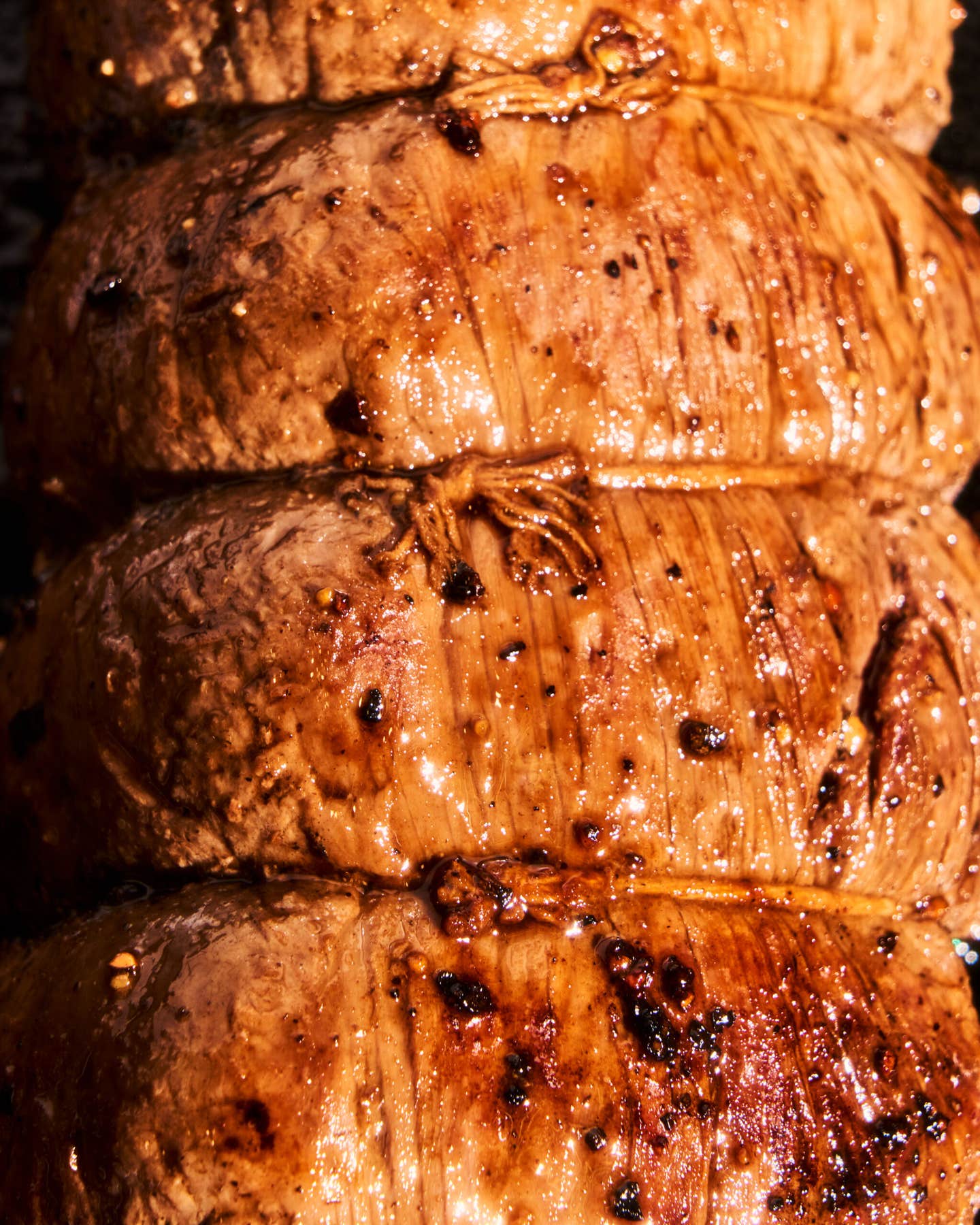
A whole beef filet is a prized cut, which Shadbolt says “deserves to be cloaked in all this deliciousness.” Find a butcher that specializes in premium meats and have a discussion with them about the best size for your party. 

Sear—but don’t over-brown—the meat

As a first step, searing the filet on all sides adds flavor to the dish—but it can be easy to overcook it. Shadbolt warns that your first instinct to deeply brown the meat may be too much cooking; at this stage, you just want to kiss it with color while leaving the center raw. This will help ensure that the meat isn’t overcooked by the time the pastry is baked around it.

Don’t be afraid to add seasonal ingredients

Photo: Scott Semler • Food Styling: Camille Becerra

There are plenty of traditional recipes for beef Wellington, and for this dish, Shadbolt hasn’t strayed too far from them, but she encourages others to incorporate seasonal ingredients they love. To the stuffing made from mushroom duxelles—finely minced mushrooms and onions that are slowly cooked down to nearly a paste—Shadbolt added bitter radicchio, sweet chestnuts, fresh sage, and a splash of balsamic vinegar for added complexity: “It feels particularly festive and helps celebrate the arrival of the winter leaves,” she says. 

Add breadcrumbs to help absorb moisture 

You’ll want to be patient and thoroughly cook down the mushrooms when making the duxelles. Mushrooms can vary greatly in moisture content, so keep stirring and slowly evaporating liquid if need be. A bit of breadcrumbs go a long way in helping to ensure your duxelles mixture isn’t too soggy, which can cause the pastry to tear. And whatever you add to the duxelles beyond that, don’t skimp on the salt: “It’s all about making sure the duxelles is really nicely seasoned, which is going to help transform the beef,” says Shadbolt. 

Go ahead and use premade puff pastry sheets

You could make your own pastry dough, but since beef Wellington requires quite a lot of steps already, Shadbolt uses frozen puff pastry sheets. Ensure the dough stays chilled as you work, and that you wrap the beef to a uniform thickness so it cooks evenly and remains buttery and crisp. The meat and duxelles mixture will steam inside of the crust while in the oven, which should bake for 30 to 40 minutes.

Make a flavor-packed sauce

Squid
Photo: Scott Semler • Food Styling: Camille Becerra

Reducing marsala wine on the stovetop while your Wellington is in the oven will help yield a complex, hearty sauce that tastes like it took hours to make. Shadbolt does this in just 10 minutes before whisking in flour, Dijon mustard, and beef stock and letting the whole mixture further thicken for another 15 to 20 minutes. But you can skip the sauce entirely—she did for her Sunday lunch with friends, where the Wellington was served with just a scoop of clotted cream. 

Be patient

For those picture-perfect, rosy-red individual portions, let the Wellington rest for 10 minutes before cutting into it. And don’t slice it until you’re definitely ready to serve it—the Wellington will keep warm longer without cutting into, but once you do, it will cool fast and can’t be reheated.

Beef Wellington
Photo: Scott Semler • Food Styling: Camille Becerra
Why Beef Wellington Is a Versatile Party Dish Actually Worth Making
PHOTO: SCOTT SEMLER • FOOD STYLING: CAMILLE BECERRA
Culture

Why Beef Wellington Is a Versatile Party Dish Actually Worth Making

The elegant British entrée is easier—and more adaptable—than you may think.

By Cathy Erway


Published on December 23, 2025

You might think there’s nothing better than a juicy, medium-rare steak kissed with fire and drenched in butter. The beef Wellington politely begs to differ. The classic British entrée of an entire beef filet encased in golden pastry and stuffed with savory mushroom paste is a culinary feat that makes a commanding impression whenever served. Named after the first Duke of Wellington, Arthur Wellesley, the exact origins of this dish are murky, but by the mid-20th century, it had become a popular grand finale for festive occasions at fine tables. Some traditional recipes include pâté tucked in between the beef and pastry; a splash of port or sherry into the mushroom mixture, or duxelles, is typical. It is often served with a savory madeira-based sauce, as the British cookbook author Elizabeth David suggests in her Wellington-esque recipe for “filet de boeuf en croûte” from her 1960 cookbook, French Provincial Cooking. (“Cold, it makes an admirable picnic dish,” the author adds.) 

Chef Jess Shadbolt of King restaurant (and soon-to-open Dean’s) in New York City remembers the first time she and her family were served a ceremonious beef Wellington for a Sunday lunch outing in London, all dressed up after seeing a show. Having spent the last 10 years away from her English homeland, however, she says that she’s become increasingly nostalgic for British heritage cuisine. 

“There’s a precision here that I really love, and actually, it’s not as difficult as you think,” says Shadbolt. 

Beef Wellington might be associated with holiday fare in the U.S., but the chef recently cooked it in her apartment on the first really cold day of fall. It was for a proper Sunday lunch, another British tradition she’s taken on the responsibility of sharing with her American friends (guests should arrive at 2 p.m. but not eat before 3:30 p.m.; if you do it right, there should be no need for dinner). It was all prepared beforehand so she could spend more time at the table, and once it was out of the oven, she served it with smashed pumpkin and leafy greens with clotted cream. Here are her tips for pulling it off in your home.

Start with the best beef

Beef Wellington
Photo: Scott Semler • Food Styling: Camille Becerra

A whole beef filet is a prized cut, which Shadbolt says “deserves to be cloaked in all this deliciousness.” Find a butcher that specializes in premium meats and have a discussion with them about the best size for your party. 

Sear—but don’t over-brown—the meat

As a first step, searing the filet on all sides adds flavor to the dish—but it can be easy to overcook it. Shadbolt warns that your first instinct to deeply brown the meat may be too much cooking; at this stage, you just want to kiss it with color while leaving the center raw. This will help ensure that the meat isn’t overcooked by the time the pastry is baked around it.

Don’t be afraid to add seasonal ingredients
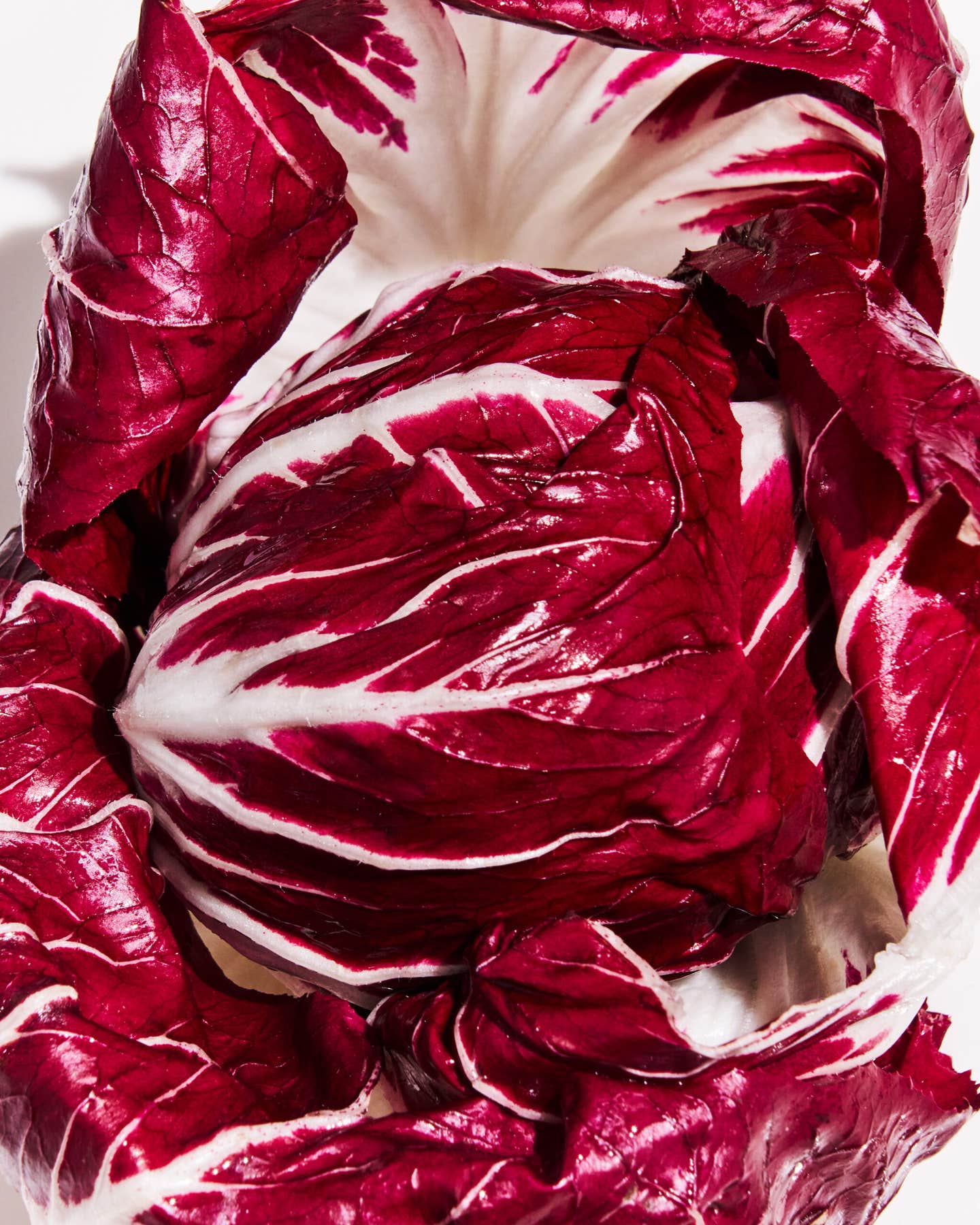
Photo: Scott Semler • Food Styling: Camille Becerra

There are plenty of traditional recipes for beef Wellington, and for this dish, Shadbolt hasn’t strayed too far from them, but she encourages others to incorporate seasonal ingredients they love. To the stuffing made from mushroom duxelles—finely minced mushrooms and onions that are slowly cooked down to nearly a paste—Shadbolt added bitter radicchio, sweet chestnuts, fresh sage, and a splash of balsamic vinegar for added complexity: “It feels particularly festive and helps celebrate the arrival of the winter leaves,” she says. 

Add breadcrumbs to help absorb moisture 

You’ll want to be patient and thoroughly cook down the mushrooms when making the duxelles. Mushrooms can vary greatly in moisture content, so keep stirring and slowly evaporating liquid if need be. A bit of breadcrumbs go a long way in helping to ensure your duxelles mixture isn’t too soggy, which can cause the pastry to tear. And whatever you add to the duxelles beyond that, don’t skimp on the salt: “It’s all about making sure the duxelles is really nicely seasoned, which is going to help transform the beef,” says Shadbolt. 

Go ahead and use premade puff pastry sheets

You could make your own pastry dough, but since beef Wellington requires quite a lot of steps already, Shadbolt uses frozen puff pastry sheets. Ensure the dough stays chilled as you work, and that you wrap the beef to a uniform thickness so it cooks evenly and remains buttery and crisp. The meat and duxelles mixture will steam inside of the crust while in the oven, which should bake for 30 to 40 minutes.

Make a flavor-packed sauce
Squid
Photo: Scott Semler • Food Styling: Camille Becerra

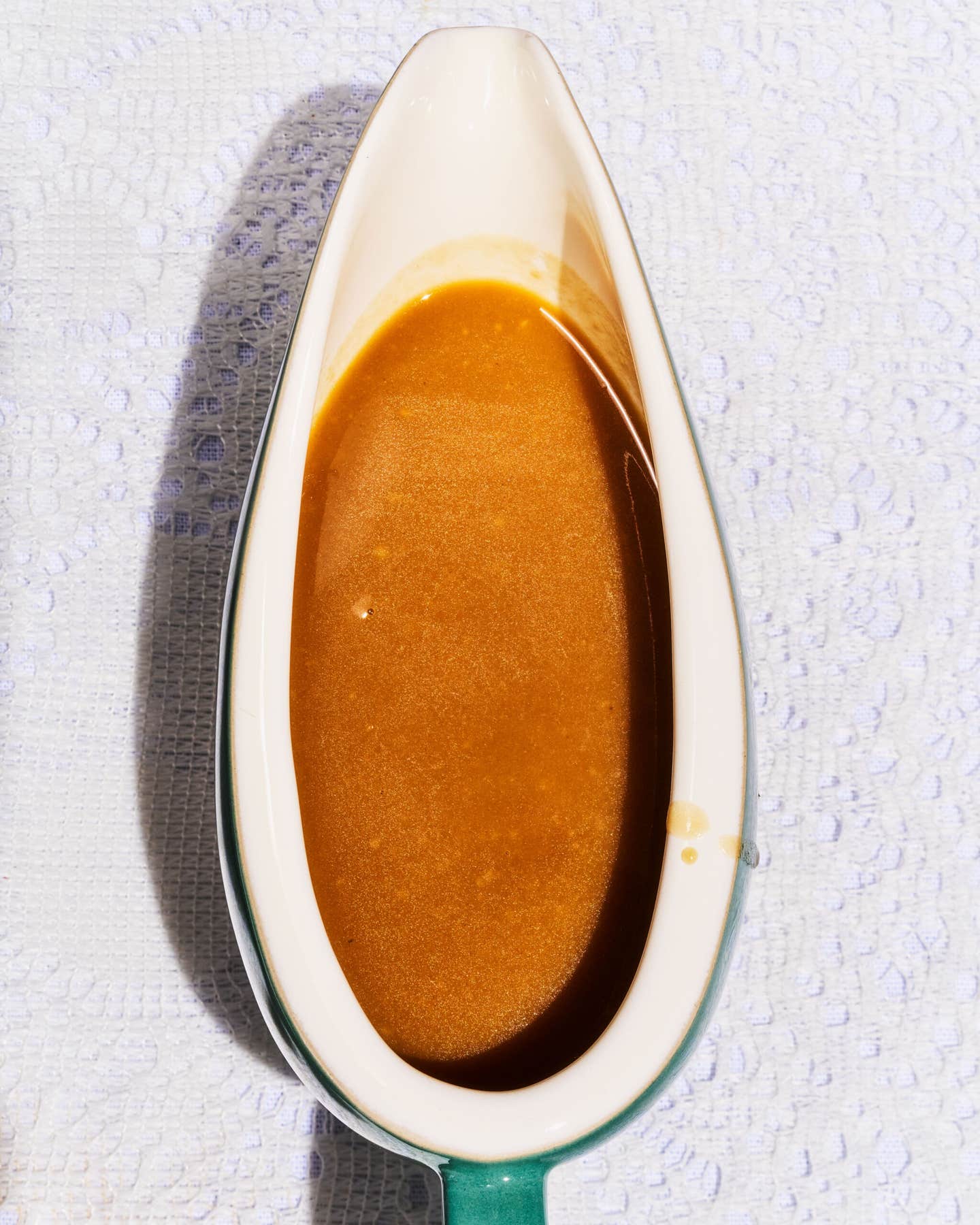
Reducing marsala wine on the stovetop while your Wellington is in the oven will help yield a complex, hearty sauce that tastes like it took hours to make. Shadbolt does this in just 10 minutes before whisking in flour, Dijon mustard, and beef stock and letting the whole mixture further thicken for another 15 to 20 minutes. But you can skip the sauce entirely—she did for her Sunday lunch with friends, where the Wellington was served with just a scoop of clotted cream. 

Be patient

For those picture-perfect, rosy-red individual portions, let the Wellington rest for 10 minutes before cutting into it. And don’t slice it until you’re definitely ready to serve it—the Wellington will keep warm longer without cutting into, but once you do, it will cool fast and can’t be reheated.

Beef Wellington
Photo: Scott Semler • Food Styling: Camille Becerra

Continue to Next Story

Want more SAVEUR?

Get our favorite recipes, stories, and more delivered to your inbox.