
I started drinking whiskey (bourbon—no rocks, thank you) in the 1990s. In Upstate New York, where I'm from, there wasn't a lot to choose from: Jim Beam, Jack Daniel's, Maker's Mark. And you drank it straight—there were no whiskey cocktails on the local bar menus. Women were drinking Cosmopolitans and margaritas, and men, if they drank whiskey, were drinking Scotch. I drank Maker's, which I liked for its sweet bite and the softness that came from the wheat used as a flavor grain; I figured that would be it for the rest of my life. Imagine my delight when, several years later, a friend brought me a bottle of Tuthilltown Spirits' Hudson Baby Bourbon Whiskey, craft-distilled from 100 percent New York corn. Here was something different, a small-batch whiskey with a full taste—loads of vanilla and caramel with hints of honey—practically made in my own backyard.
Then, last May, I found myself at Finger Lakes Distilling's Kentucky Derby party, even closer to home. I was drinking a cocktail made with beet juice, apple cider, star anise simple syrup, and rye handcrafted by a third-generation moonshiner from Alabama, who had come to Upstate New York to be Finger Lakes' distiller. The earthy beet juice and sweet cider brought out the apple in the rye. It took just a few sips to realize that I wouldn't be settling for the mass-market stuff much longer.
This is what whiskey looks like now. The spirit that fell out of fashion throughout most of the country in the 1970s is seeing a foot-stomping revival, the recipe for which goes like this: Take 300 years of U.S. whiskey-making history and add the creativity of new, small distillers. Mix in the locavore movement, which has instigated a return to traditional technologies and recipes and a desire to create spirits with a regional character; garnish with a revival of specialty cocktails, and cheers: American whiskey has never tasted so good.
It doesn't hurt that a lot of the people now making whiskey are full of character themselves. Take Thomas McKenzie of Finger Lakes Distilling. His grandfathers on both his mother's and father's sides made moonshine in Alabama, and their grandfathers before them, he told me when I visited him recently. "My granddaddy would sell it in Coke bottles."
McKenzie makes corn whiskey, bourbon, and rye. His bourbon is aged, like all bourbon is by law, in new, charred oak barrels that infuse it with toasty vanilla flavor, but he finishes it in local chardonnay casks, which add mellow hints of tropical fruit. His rich, applelike rye is aged in small oak quarter casks that accentuate its woodiness, and finished in sherry barrels from local wineries, which add sweetness.
In many ways, McKenzie is representative of the entire movement—someone with a personal connection to the drink's history, a predisposition to individualism ("I don't much care for government," he told me), a love of local ingredients, and who is making something new and traditional at once. He distills his whiskey "the old-fashioned way," he said, "using barley malt to convert the grain starch to sugar," rather than employing commercial enzymes to break down the starches.
And while it might seem odd to find a New York craft distiller making bourbon—Kentucky's signature corn-based, aged whiskey—in some ways it's exactly where McKenzie should be. Upstate New York, like much of the Northeast, used to be full of small stills—1,129 of them in 1825, according to one contemporary survey. Since widespread commercial refrigeration was still years away, there was an overabundance of local corn, rye, wheat, and apples. Farmers found that if they distilled their crops down to spirits and shipped them out on the Erie Canal, they could make their surpluses profitable. You could say that it was because of canals like the Erie, or rivers like the Mississippi, which runs between Kentucky's bourbon country and cities like New Orleans, that whiskey got good back in the day. The time it spent in barrels on the barges aged it, and people noticed the difference.
Finding out about my region's distilling past and tasting some of the incredible whiskeys being produced now made me want to know more; I longed to sample craft whiskeys from other places in the country, and to hear the distillers' stories. So I packed a bag and flew out to Portland, Oregon, to peek in on the Great American Distillers Festival.
There I met more distillers like Thomas McKenzie, guys with a pioneering passion that evokes the history of a spirit that was first produced stateside in the 1700s by Scottish and Irish pioneers on the Pennsylvania frontier. Those early distillers used rye, which flourished in the Northeast's cool climate. After the Whiskey Rebellion in 1794, many of them moved to Virginia's ungoverned western territory, called Kentucky, to escape taxation. That's where corn—the primary grain in bourbon—flourished.
By the 19th century, whiskey was considered patriotic, as it was made on American soil. People drank it neat, but also in drinks, such as the mint julep and, later, bitters-enhanced cocktails like the manhattan. In the 1830s, we were downing 88 bottles per person per year—more than two times what we drink now. You could say we loved whiskey too much, in fact. The problems that ensued from alcohol abuse—lost farms, suffering families—helped give rise to the temperance movement and, ultimately, Prohibition.
Prohibition changed the American palate—people got used to smuggled Canadian blends and lighter "bathtub" spirits like gin. Over the decades following Prohibition, much of the country's bourbon and rye was bought up by massive companies like Seagram's, ending up mixed with unaged grain alcohol into lighter, less flavorful blended whiskeys. By the mid-1970s, those blends had been eclipsed by an even lighter spirit: vodka.
Nowadays, as I found out in Portland, the darker spirits are hurtling back. The festival buzzed with excitement over new whiskeys, new distillers, and a new energy for traditional methods. Producing those complex spirits, said Chip Tate of Texas' Balcones Distillery, handing me a taste of his grassy Baby Blue corn whiskey, "is like impromptu poetry."
The poetry is in the choices distillers make that affect flavor. All whiskey starts the same way, with a mash of grain, yeast, and water. For rye, the mash is at least 51 percent rye, a spicy grain; for bourbon, it's the same percentage of corn, while corn whiskey contains 80 percent or more of that sweet grain. There are also wheat whiskeys, which tend to be soft and round, and smokey ones made from malted barley. The remaining grains in any mash bill, or recipe—rye, corn, barley, wheat, oats—add their own personalities, and craft distillers have been experimenting with recipes.
The mash is heated in a still, which releases an alcoholic vapor that's captured to make the spirit. Industrial producers use a continuous still that mechanically monitors temperature and proof, and removes congeners, impurities produced during fermentation. Yet it's these congeners that give the spirit much of its character. Distillers like McKenzie and Tate have gone back to using the less-mechanized copper pot still (or a hybrid version of it), which allows them to rely on their own senses to modulate flavors and aromas.
You can smell the difference, for instance, in a pour of High West's Double Rye!, a rye, corn, and malted barley whiskey made in Park City, Utah. There's peach, banana, and gooseberry jam on the nose—all from the esters left in the spirit after pot distilling. You can taste it in the peppery, minty bite of the all-rye spirit from the Bowling Green, Kentucky, micro-distillery Corsair. The character of the mash bill shines through.
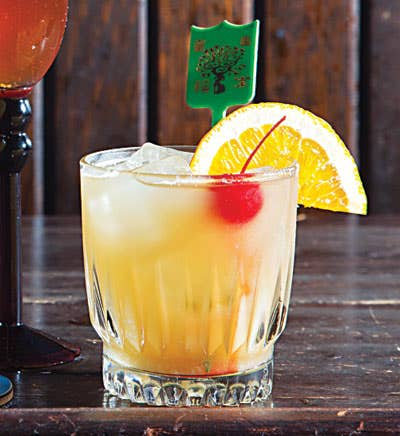
White Whiskey Punch
Clear, unaged white whiskey stars in this potent, tropical-inspired punch. Get the recipe for White Whiskey Punch »
Once whiskey is distilled, it's barreled. Depending on how long it ages, its storage temperature and humidity, and the char and volume of the barrel, the whiskey picks up flavors, from floral and fruity to smoky and butterscotch. Every barrel is unique. Industrial distillers, historically, have blended many barrels to attain consistency. The new craft distillers are experimenting with small-batch, single-barrel (a spirit not mixed with that from other casks), rebarreled (in used bourbon or wine casks), and even artisanally blended whiskeys (made with premium bourbon and rye, unadulterated by neutral spirits). Each of these whiskeys is defined by its uniqueness—and sometimes its potency. Whereas water is added to most whiskey before bottling to lessen the intensity of the alcohol, some of the newer ones are bottled at full barrel strength.
The results are thrilling for a whiskey lover like me: Never in the history of the spirit has there been such an exciting range of styles and flavors. Vibrant, spicy ryes; rich, chocolatey bourbons; edgy, sweet corn whiskeys and mellow wheat ones; Scotchlike single malts with their American-style wood. These are brazen, complex, and highly enjoyable spirits. Even bigger outfits like Jim Beam and Jack Daniel's are starting to bottle their own artisanal whiskeys made from exceptional barrels that have sat aging in their vast warehouses.
Back when I started drinking whiskey, U.S. craft distilleries—those making fewer than 65,000 annual proof gallons (measured in gallons of 50 percent alcohol), as opposed to, say, Jim Beam's tens of millions of proof gallons—were unheard of; now there are more than 300. One aide to this growth is a loosening, finally, of post-Prohibition state laws. Washington State's Craft Distiller's Bill, for example, lobbied for by Kent Fleischmann of Spokane's Dry Fly Distilling, allows distillers to have tasting rooms where they can circumvent expensive distributors and sell their spirits directly to visitors, like wineries do. "It was about agriculture," says Fleischmann of the bill. "It allowed craft distillers to sell out of their distilleries providing they use at least 51 percent ingredients indigenous to the state."
Dry Fly is one of the few distilleries making a 100 percent wheat whiskey—with Washington State wheat. With its mouthwatering creaminess and smoky subtlety, you can enjoy it with dinner, like a good wine—one that expresses the terroir of where it was made and its ingredients were grown.
Similarly, Balcones' Chip Tate makes his whiskeys using blue corn, a grain distinctly of the American West. Like other new whiskeys, his spirits represent a return to tradition and to the land, as well as a maverick departure from the status quo. Taking a cue from Scottish whiskey, which is traditionally made with barley malt dried over smoking peat moss, Tate makes his Brimstone whiskey by smoking not the grain, but the spirit itself, over native scrub oak; Brimstone screams of bacon and burning brush. Like others of the new spirits, it's a delicious experiment, one that whiskey drinkers can really raise a glass to.
Keep Reading

Continue to Next Story