The Traditional Latkes Recipe I Always Come Back To
Variations on the quintessential Hanukkah treat abound, but it’s hard to improve on the classic.

By Joan Nathan


Published on December 4, 2025

This piece originally appeared in SAVEUR’s December 2007 issue. See more stories from Issue 107.

The author Sholem Aleichem got it right when he wrote in the 1899 short story “Hanukkah Gelt”, “Can you guess, children, which is the best of all holidays? Hanukkah, of course.... You eat latkes every day.” These crisp potato pancakes have been a festive treat at Jewish tables since the mid-19th century, when the potato was becoming a widespread crop in Eastern Europe. Fried foods like latkes have long been favored during the eight days of Hanukkah because oil is considered symbolic of the miracle that is central to the holiday, which commemorates the Jews’ victory over the Syrian Greeks in 164 B.C.E. and the rededication of the Second Temple in Jerusalem. According to Jewish scripture, a single day’s worth of oil kept the temple’s sacred lamp lit for eight days.
Classic Latkes
Matt Taylor-Gross

The basic original recipe for latkes—grated potatoes formed into small cakes and fried—was similar to ones popular at the time among gentiles in Eastern Europe during the Christmas season. The Yiddish word latke most likely derives from the Ukrainian oladok for pancake. These words are related to the Greek word eladion, “little oily thing,” which in turn comes from elaion, ancient Greek for olive oil, the primary cooking oil of ancient Jews. Since olive oil wasn’t commonplace in their diet, Eastern European Jews usually fried their latkes in goose fat. Here in the United States, where latkes arrived with Jewish immigrants in the late 19th century, they are most often cooked in vegetable oil.

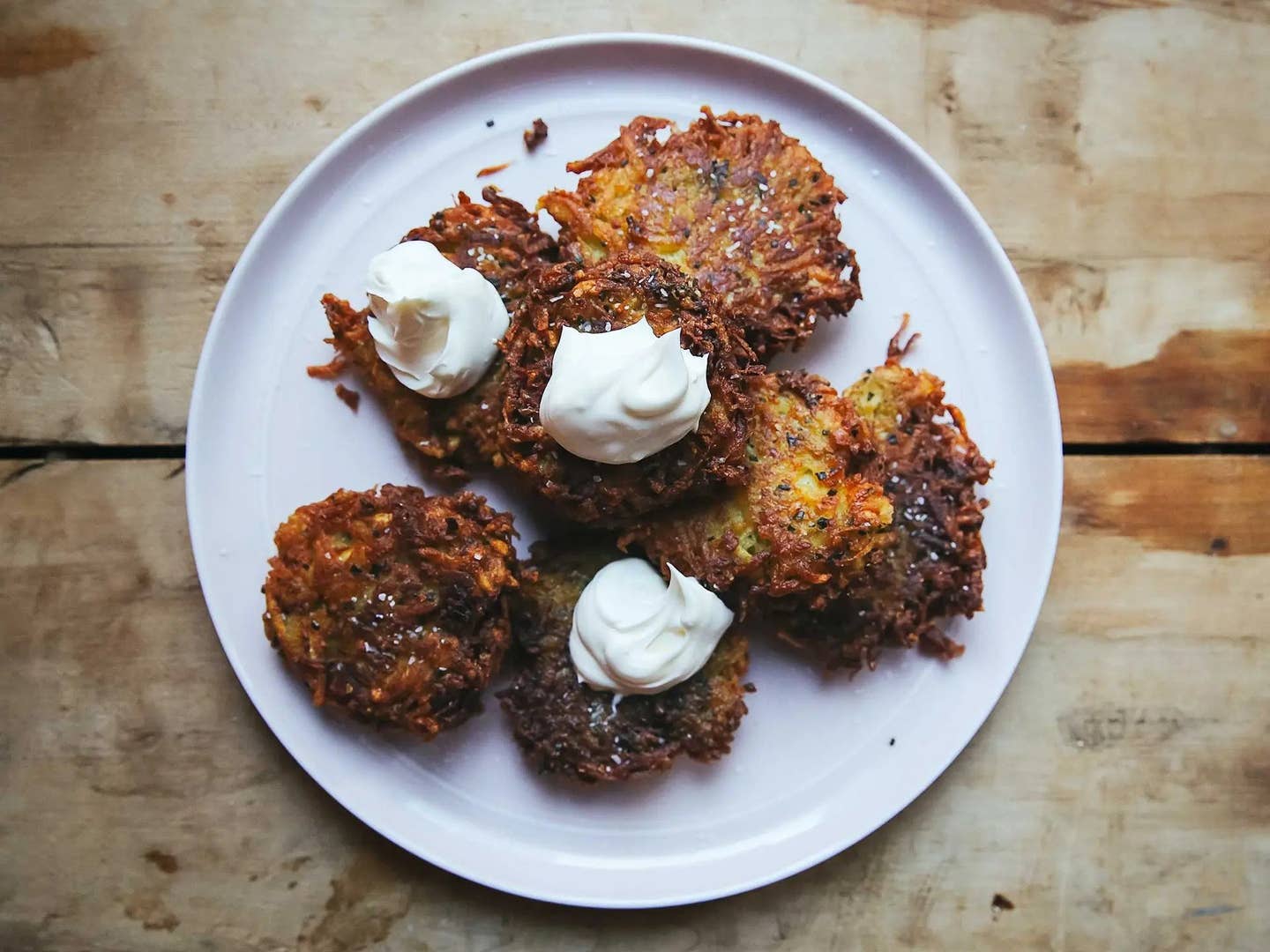
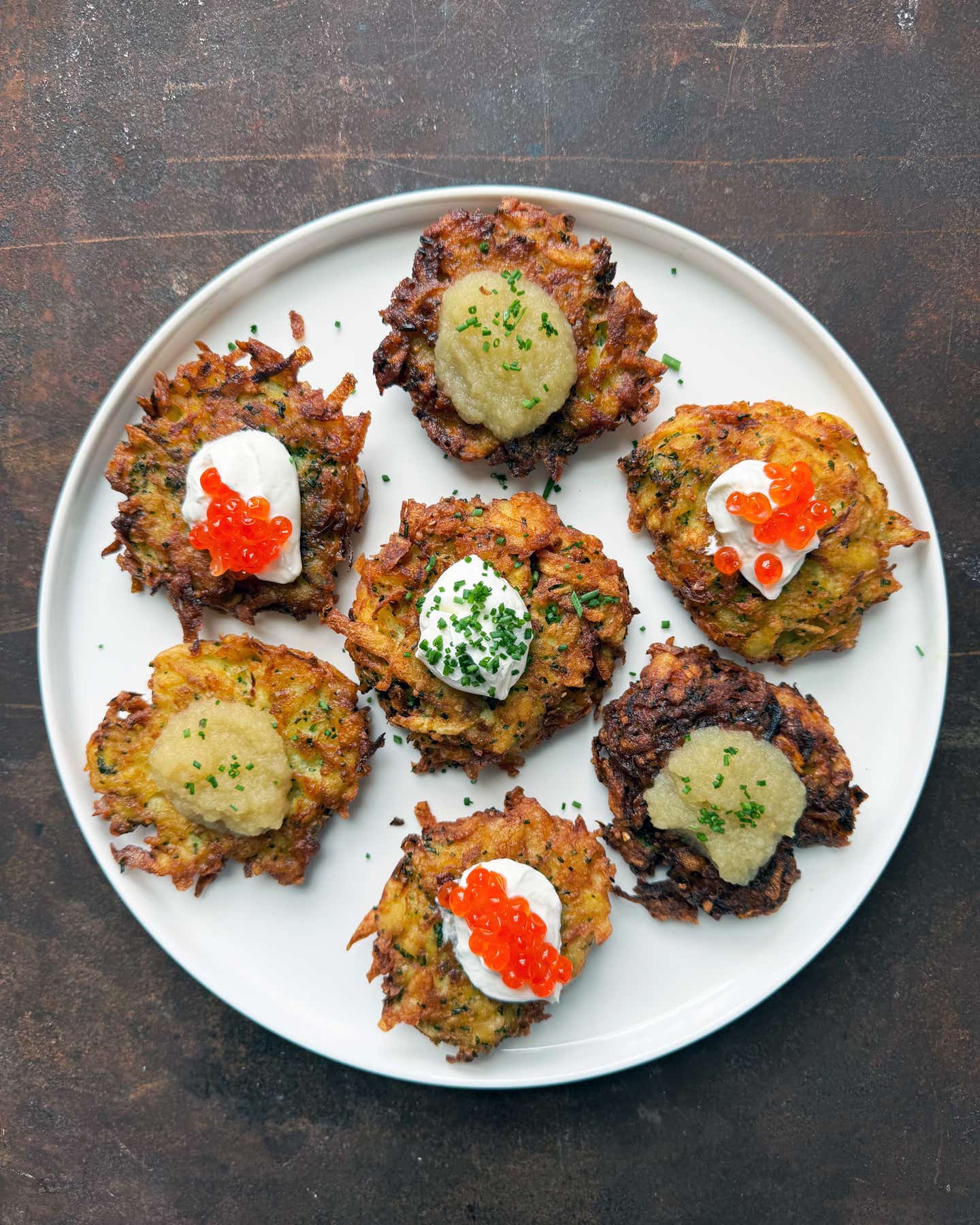
Every latke lover has strong opinions about the best way to prepare the dish. Some argue for using a food processor to grate the potatoes; others insist on hand-grating them and proudly flaunting scraped knuckles. Most agree that a condiment is called for to provide a counterpoint to the dish’s distinctive, crunchy-soft texture: typically sour cream, applesauce, or, sometimes, a sprinkle of sugar, though I’ve seen latkes garnished with caviar, crème fraîche, or smoked salmon. Many contemporary cooks enhance the classic potato version by adding grated celery root, apple, zucchini, beets, or acorn squash to the mix, and I’ve eaten one seasoned with garam masala, the piquant Indian spice mix. Latkes also come in many sizes, from the one-bite cocktail party kind to versions like the brittle, paper-thin one, wide as a dinner plate, that I ate years ago in a tiny restaurant in the Ardèche region of France.
Classic Latkes
Matt Taylor-Gross

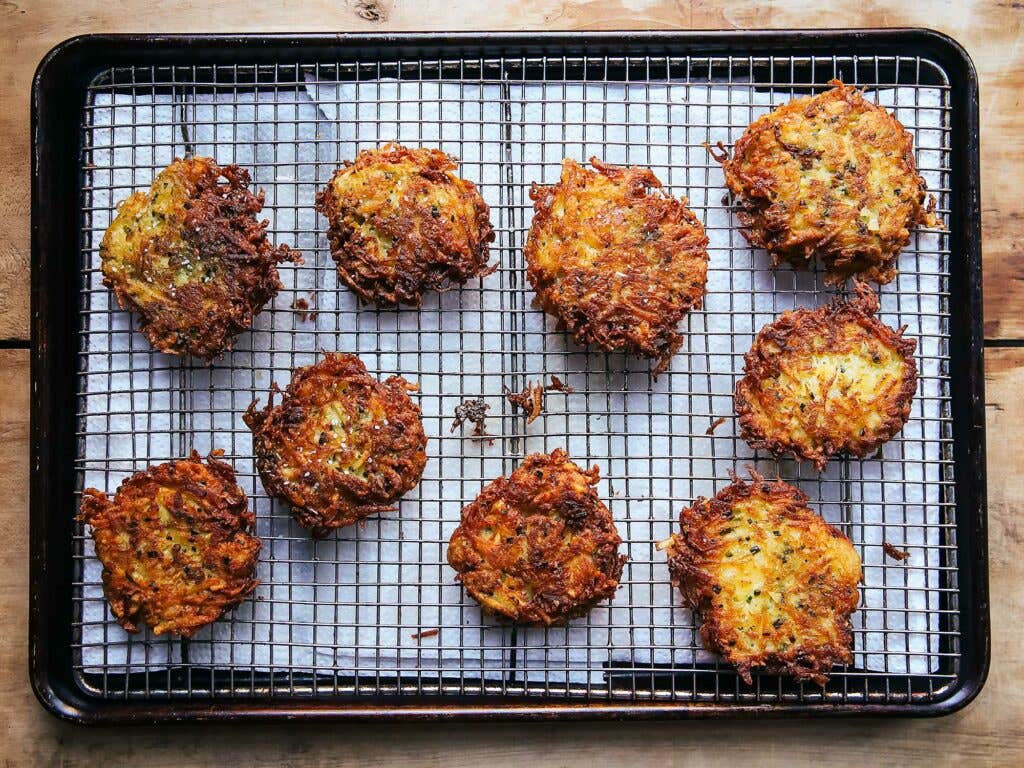
In my own kitchen, I remain a purist. I make medium-size latkes by coarsely grating a reasonably starchy potato like russet or Yukon Gold and adding a little matzo meal or somebread crumbs, as well as an egg, to help hold the pancakes together. Then I gently fry them in vegetable oil until they’re crisp on the edges and pliant in the middle. Finally, I carry them to the table with some homemade applesauce and watch them disappear.

Recipe
Joan Nathan’s Classic Latkes
Thomas Payne
Andre Baranowski
Culture

The Traditional Latkes Recipe I Always Come Back To

Variations on the quintessential Hanukkah treat abound, but it’s hard to improve on the classic.

The Traditional Latkes Recipe I Always Come Back To
ANDRE BARANOWSKI

By Joan Nathan


Published on December 4, 2025

This piece originally appeared in SAVEUR’s December 2007 issue. See more stories from Issue 107.

The author Sholem Aleichem got it right when he wrote in the 1899 short story “Hanukkah Gelt”, “Can you guess, children, which is the best of all holidays? Hanukkah, of course.... You eat latkes every day.” These crisp potato pancakes have been a festive treat at Jewish tables since the mid-19th century, when the potato was becoming a widespread crop in Eastern Europe. Fried foods like latkes have long been favored during the eight days of Hanukkah because oil is considered symbolic of the miracle that is central to the holiday, which commemorates the Jews’ victory over the Syrian Greeks in 164 B.C.E. and the rededication of the Second Temple in Jerusalem. According to Jewish scripture, a single day’s worth of oil kept the temple’s sacred lamp lit for eight days.

Classic Latkes
Matt Taylor-Gross

The basic original recipe for latkes—grated potatoes formed into small cakes and fried—was similar to ones popular at the time among gentiles in Eastern Europe during the Christmas season. The Yiddish word latke most likely derives from the Ukrainian oladok for pancake. These words are related to the Greek word eladion, “little oily thing,” which in turn comes from elaion, ancient Greek for olive oil, the primary cooking oil of ancient Jews. Since olive oil wasn’t commonplace in their diet, Eastern European Jews usually fried their latkes in goose fat. Here in the United States, where latkes arrived with Jewish immigrants in the late 19th century, they are most often cooked in vegetable oil.

Every latke lover has strong opinions about the best way to prepare the dish. Some argue for using a food processor to grate the potatoes; others insist on hand-grating them and proudly flaunting scraped knuckles. Most agree that a condiment is called for to provide a counterpoint to the dish’s distinctive, crunchy-soft texture: typically sour cream, applesauce, or, sometimes, a sprinkle of sugar, though I’ve seen latkes garnished with caviar, crème fraîche, or smoked salmon. Many contemporary cooks enhance the classic potato version by adding grated celery root, apple, zucchini, beets, or acorn squash to the mix, and I’ve eaten one seasoned with garam masala, the piquant Indian spice mix. Latkes also come in many sizes, from the one-bite cocktail party kind to versions like the brittle, paper-thin one, wide as a dinner plate, that I ate years ago in a tiny restaurant in the Ardèche region of France.

Classic Latkes
Matt Taylor-Gross

In my own kitchen, I remain a purist. I make medium-size latkes by coarsely grating a reasonably starchy potato like russet or Yukon Gold and adding a little matzo meal or somebread crumbs, as well as an egg, to help hold the pancakes together. Then I gently fry them in vegetable oil until they’re crisp on the edges and pliant in the middle. Finally, I carry them to the table with some homemade applesauce and watch them disappear.

Recipe

Joan Nathan’s Classic Latkes
Thomas Payne

Continue to Next Story

Want more SAVEUR?

Get our favorite recipes, stories, and more delivered to your inbox.