The Secret History Behind a Prohibition-Era Cocktail Syrup
Everything you need to know about sweet, fruity fassionola—and why it all but disappeared from the speakeasy scene.
Under a railway arch near London’s famous Borough Market, there’s what looks like an entrance to a post office straight out of a World War II film. But one detail gives it away: a neon sign above the “mail by rail services” advertisements that simply reads “Cahoots.” If you step inside, you may have to answer a pay phone or give a password before you’re let through a discrete door and into Cahoots Postal Office, a cocktail bar rife with mail-themed whimsy—animatronic carrier pigeons, secret code menus, and cocktails delivered by a pneumatic tube.
Despite all of this, the most mysterious thing at Cahoots isn’t part of the decor but rather something on the menu: fassionola syrup, which just might be the cocktail world’s most mysterious ingredient. The legendary sweetener is currently experiencing a revival across the cocktail scene but, strangely, no one is quite certain how it should be made. According to Jonathan English Co., the original company to sell fassionola, it was first bottled during World War I. But since the company quietly closed several years ago, there’s no one left to elaborate.
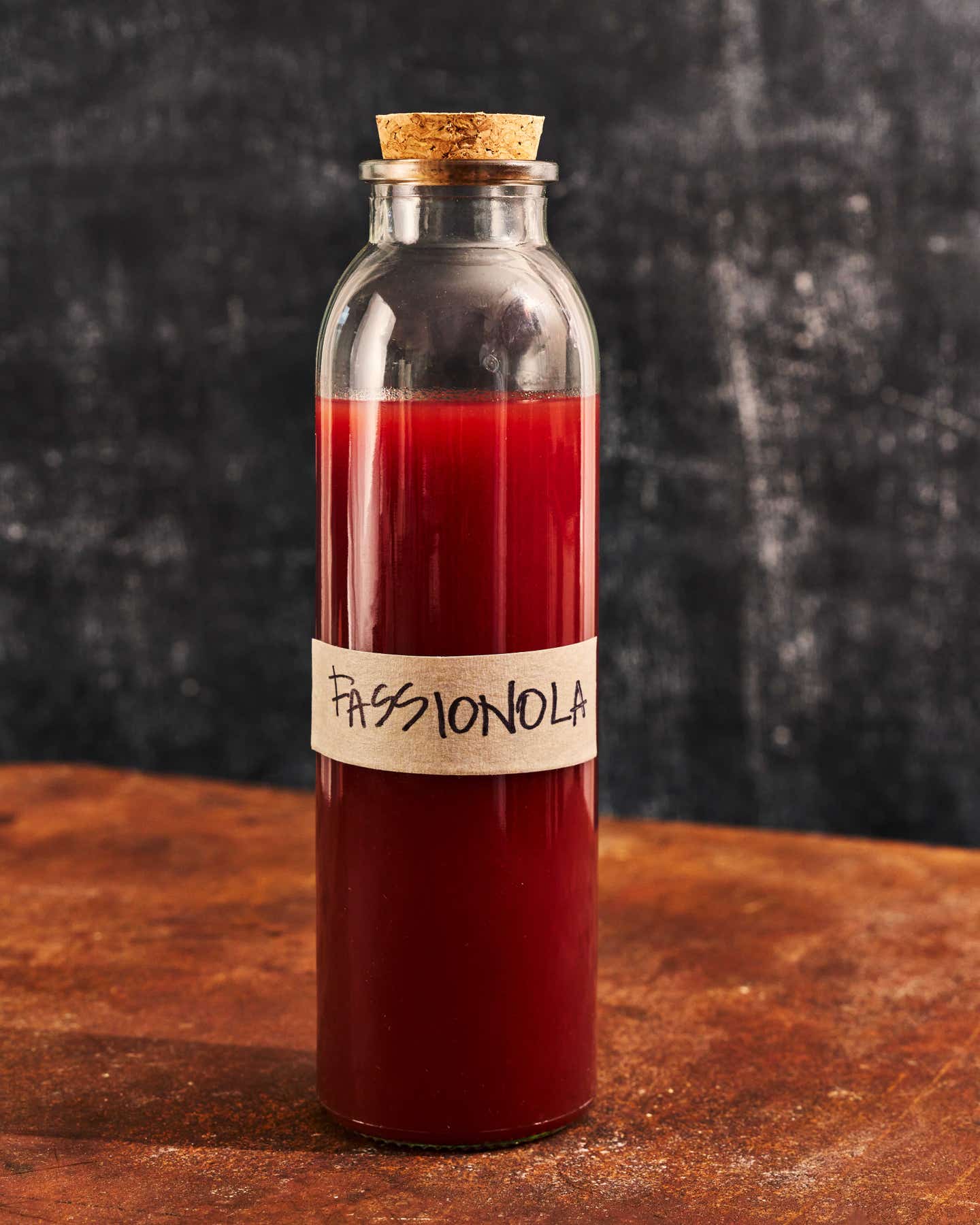
The intensely sweet and ambiguously fruit-flavored syrup has little to no recorded history, and its origins remain murky. What is known is that by the time Prohibition came about in the U.S., fassionola was firmly on the menu, and it came in three varieties: red, green, and gold.
Of the three, red was made with strawberries or cherries, and is likely the version you’ll find today. Green is the rarest, infused with lime, and modern recipes call for food dye to get the hue just right. Gold is considered the most natural, perhaps because the ingredient that unites all three versions is passion fruit, which is a vibrant yellow when juiced or puréed. In fact, it’s highly likely that “fassionola” is a corruption of “passionola,”a name for a cocktail mixer derived from the fruit.
Passionola was trademarked as a name in the United States during the Second World War, but the claim didn’t elaborate on the syrup’s ingredients, only that it was “for fruit juice and flavoring of nonalcoholic drinks,” and had use claims going back to 1932. No mention was made of its use in cocktails, but then again, Prohibition would have made such drinks—or the mention of them—illegal at the time. The syrup fell from grace in 1963, when it found itself the subject of a government investigation. A hearing titled “Frauds and Quackery Affecting the Older Citizen” reported that an “organization which masquerades under a religio-scientific name” was selling “Genuine Passionola” made from passion fruit, pineapple, and other fruit juices, as a fraudulent aphrodisiac for women. Confoundingly, a trademark for fassionola was filed one year later, with a first use case in 1945—the same year the trademark for passionola had been filed. Regardless, it was apparent that by the 1960s, folks had been drinking the syrup under one name or another for decades.
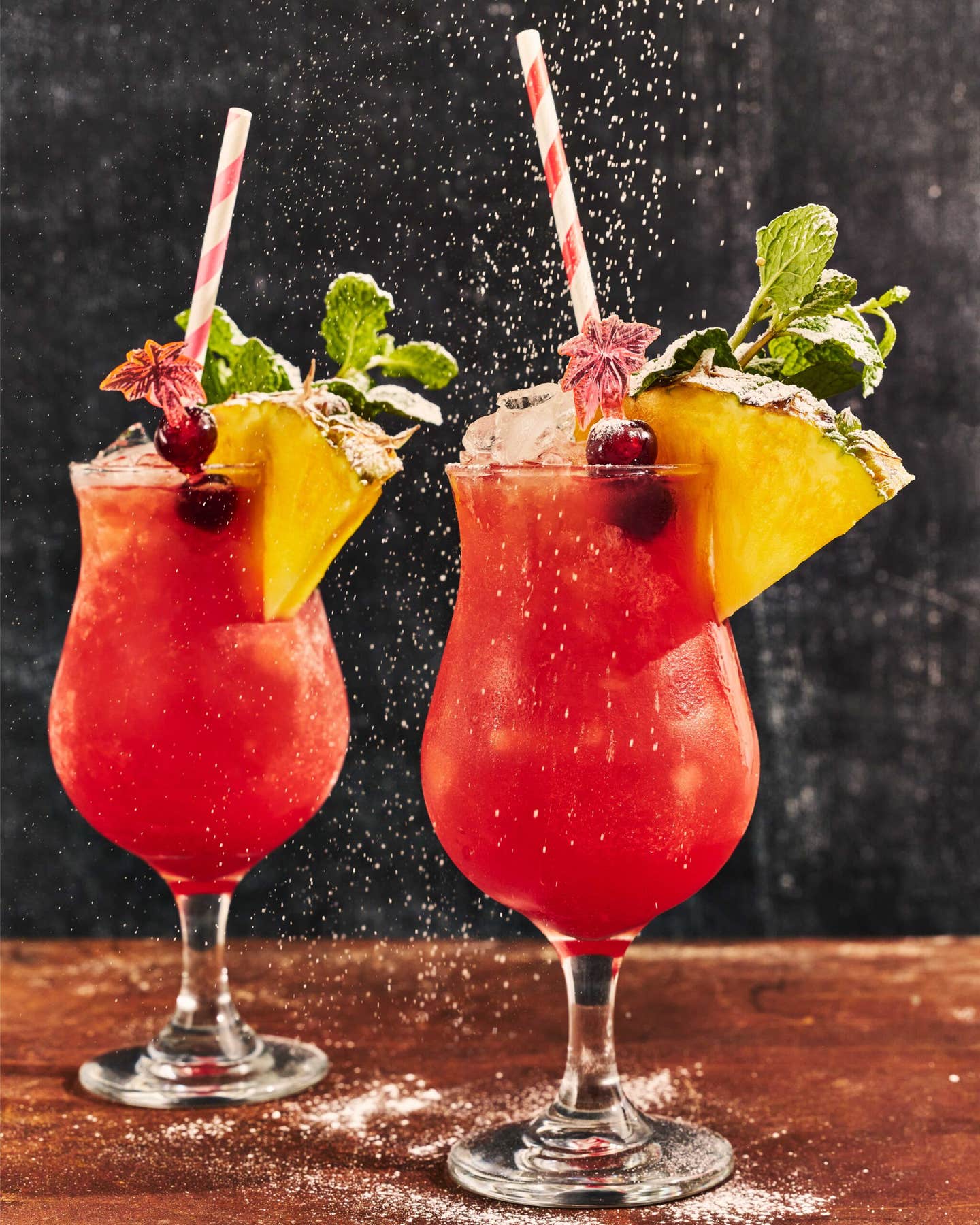
Despite being officially created for nonalcoholic drinks, fassionola’s renown in the cocktail scene likely came about in New Orleans with the invention of the tropical rum-based Hurricane. Pat O’Brien’s, a speakeasy in the French Quarter, claims to have first invented it, and it’s likely that the original formula was fueled by a form of fassionola, specifically the red variety. Sheila Arndt, the bar lead at New Orleans’ Restaurant R’evolution, agrees that the Crescent City should be your first stop to explore fassionola. Before Arndt moved to New Orleans eight years ago, she was unfamiliar with the syrup but now says “it’s an essential component to making a beautiful Hurricane—one that’s really worth ordering.”
But ask Arndt where she thinks the sweetener came from and a new story unfolds: “It’s allegedly from Don the Beachcomber,” she says, referring to Donn Beach, the legendary tiki drink pioneer—and she may be onto something. The first tiki bars opened in the 1940s—around the same time as the first uses of fassionola as a trademark—and the following decade ushered in the golden age of tiki culture, when the craze for tropical-themed watering holes and colorfully garnished drinks reached its zenith, and fassionola played a role in many of them. “When you consider how wildly secretive tiki culture can be,” Arndt says, “it’s unclear to me if [Donn’s] original recipe exists anywhere!”
Today, though, Arndt isn’t too worried about the original recipe. Restaurant R’evolution has perfected its own house formula, which is used to create the Love in a Hurricane cocktail. She describes it as “really passion fruit-forward, with strawberry, guava, and hibiscus,” and slightly more tart than the older, heavily sweetened fassionolas, which fell out of favor in the second half of the 20th century.
Conrad Harshaw, bar manager at London’s The Magicians Table, an immersive magic and cocktail experience with a 1930s aesthetic, also first encountered fassionola in a New Orleans Hurricane. And he’s got his own theories about its mysterious origins: “It’s essentially a blanket term for fruit syrups,” he says, “created during Prohibition when bootleg spirits—whiskey, moonshine, and all sorts of ‘bathtub’ distillates—often tasted harsh.” As Pat O’Brien likely discovered, “Fassionola disguised that raw ethanol bite with fruit and sugar,” Harshaw says.
Harshaw is less interested in recreating fassionola than in reinventing it: “What excites me about fassionola now is its versatility,” he says. “You’ll find an enormous range of infusions, and many bartenders experiment with making their own. Just a few drops can completely transform a drink.” To Harshaw, that is the beauty of it. “Because no original recipe survived, fassionola is open to interpretation,” he says.
In a craft cocktail scene that’s increasingly defined by innovation as much as by appeals to legacy, perhaps a fascination with fassionola was inevitable—it’s a sip of the past that can be whatever the mixologists of the present want it to be.
Recipes


Keep Reading

Continue to Next Story