11 Must-Try Paris Restaurants That Go Beyond the French Classics
Visitors and locals alike are foregoing bistro and brasserie staples in favor of these bold, international flavors.


Rain battered the streets of Paris as I biked from my apartment in the 9th arrondissement to the 11th to chase the restaurant that had taken over my Instagram feed: technicolor dishes, like achcharu—Sri Lankan spiced, pickled produce—made with juicy cherries and white peaches and seasoned with chiles and cracked black pepper; and turmeric ice cream the color of a farm-fresh egg yolk sprinkled with lime-green masala. It all looked worlds away from the beige meats and heavy sauces of old-school French cooking—and unlike anything I’d seen while covering Paris’ food scene in the past seven years. I had to taste those dishes for myself.
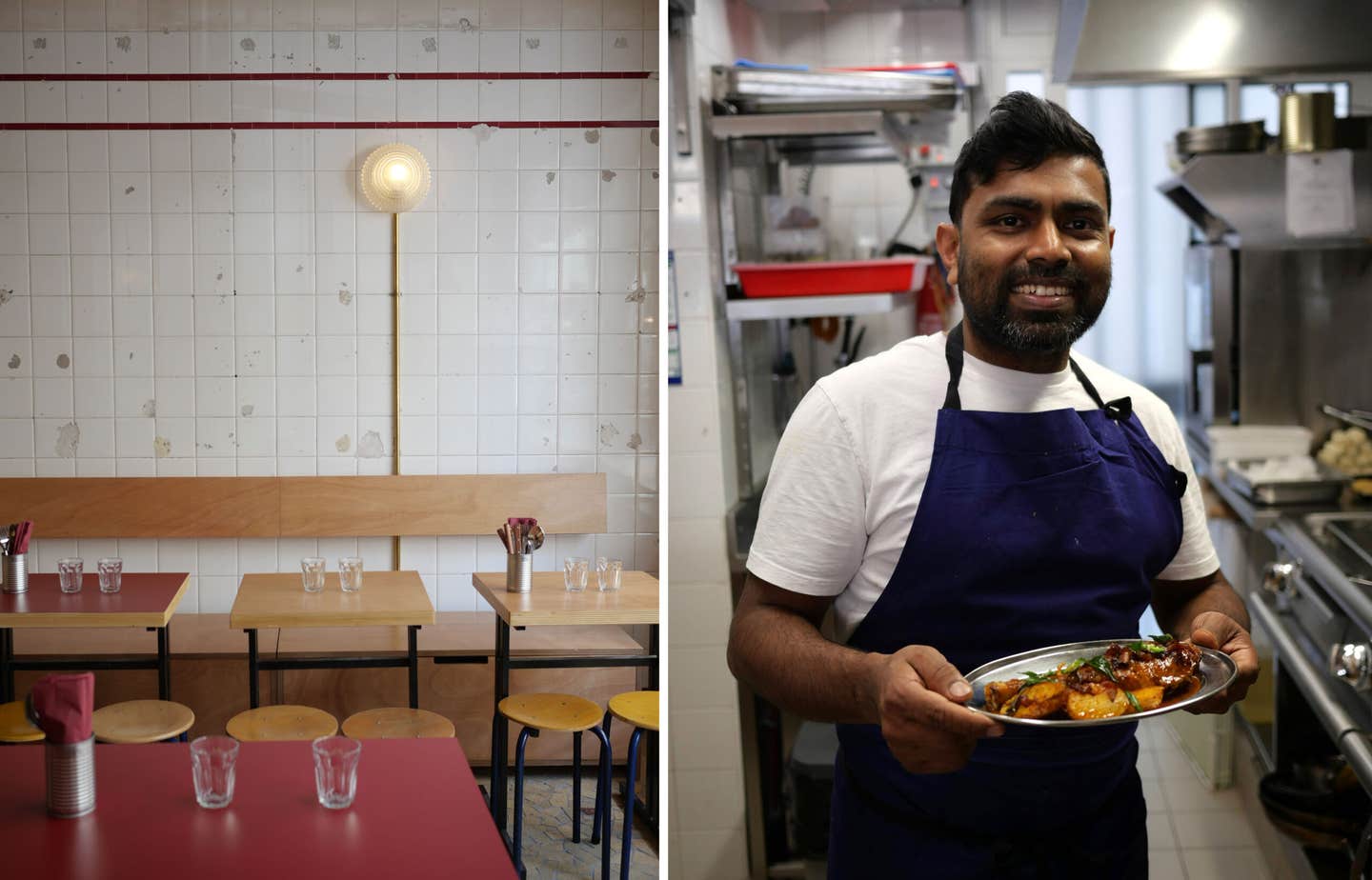

At La Joie, a compact 11-table Sri Lankan spot inside a former butcher shop, my mouth watered as chef and co-owner Minod Dilakshan prepared his signature dish: a crispy, paper-thin hopper cradling an egg, topped with caramelized onions and toasted coconut sambol that crackled with texture. By the open kitchen, a smooth wood counter gleamed with bottles of natural wine waiting to be poured.
La Joie nails the zeitgeist of a certain Parisian diner—the kind who scrolls Le Fooding and sidesteps Instagram traps. More and more, this crowd is seeking out restaurants that offer cuisines beyond traditional French cooking in places designed for lingering. Paris has always been multicultural—especially neighborhoods like Belleville, with institutions like Lao Siam and Dong Huong—but today the range feels wider and more exciting than ever.Like many chefs in Paris, Dilakshan first made a name for himself with French fare, turning out seasonal neo-bistro plates and pizzettes at Café du Coin before weaving in flavors from his native Sri Lanka. Others hone their craft abroad and bring it back to the city—like Julien
Catelain and Matthieu Haddak, the Parisian duo behind Mehmet in the 18th, where the glistening, twirling chicken döner is Turkish at heart.
Before COVID-19, neo-bistros tyrannized the scene with their raw wood tables, industrial pendant bulbs, and indigo-aproned servers. The pandemic wiped out some independents, and chefs like Erica Paredes and Carlos Moreno found new audiences for their cooking, launching ghost kitchens that sent their flavors across the city.
When the world reopened, the city felt less reverent. People wanted bolder, spicier food. Soon after, Paredes and Moreno debuted brick-and-mortar spots—Reyna, a French-leaning Filipino restaurant in the 11th, and Comer, a Mexican cantina in the 10th. In post-pandemic Paris, chefs could color outside the lines, adding global influences to bistro staples or forgoing the French canon entirely in favor of other cuisines.
For example, Paredes quickly won diners over with her riff on bistek, the Filipino dish of thinly sliced beef braised in soy sauce. “It’s basically a steak au poivre with calamansi pepper sauce,” she says. “Filipinos think it’s fancy bistek, but the French think it’s steak au poivre with a little something.”
The past few years have seen a flurry of international restaurants launching across Paris. Take a look at some of the most exciting openings, plus some destination-worthy institutions, below.
For Filipino Kinilaw and Hainan Burrata: Reyna
41 Rue de Montreuil
+33 01 40 09 06 82
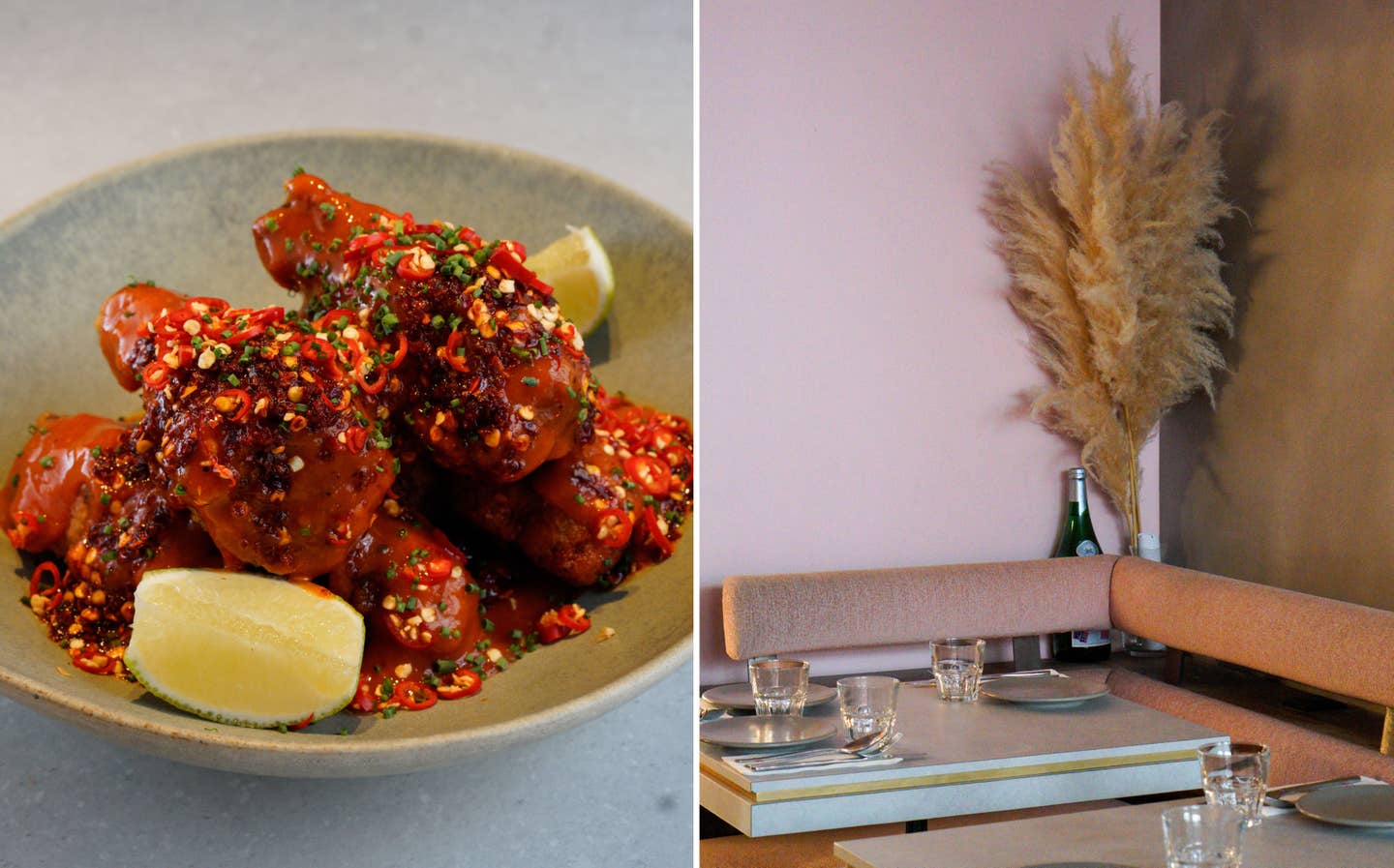

At Reyna, you go to take on the signature spicy chicken wings, which come in three levels of heat, the hottest made with mango, habanero, and bird’s-eye chiles. Stay and try all of Paredes’ genre-bending creations, like the Hainan burrata topped with ginger and fiery chili crisp, or the Filipino Mexican kinilaw-aguachile hybrid with cherry-hibiscus sauce, trout roe, and nori chips. The vibe is laid-back, and the staff are friendly, attentive, and always ready with a thoughtful natural wine pairing.
21 Rue de la Villette
+33 07 45 11 16 47
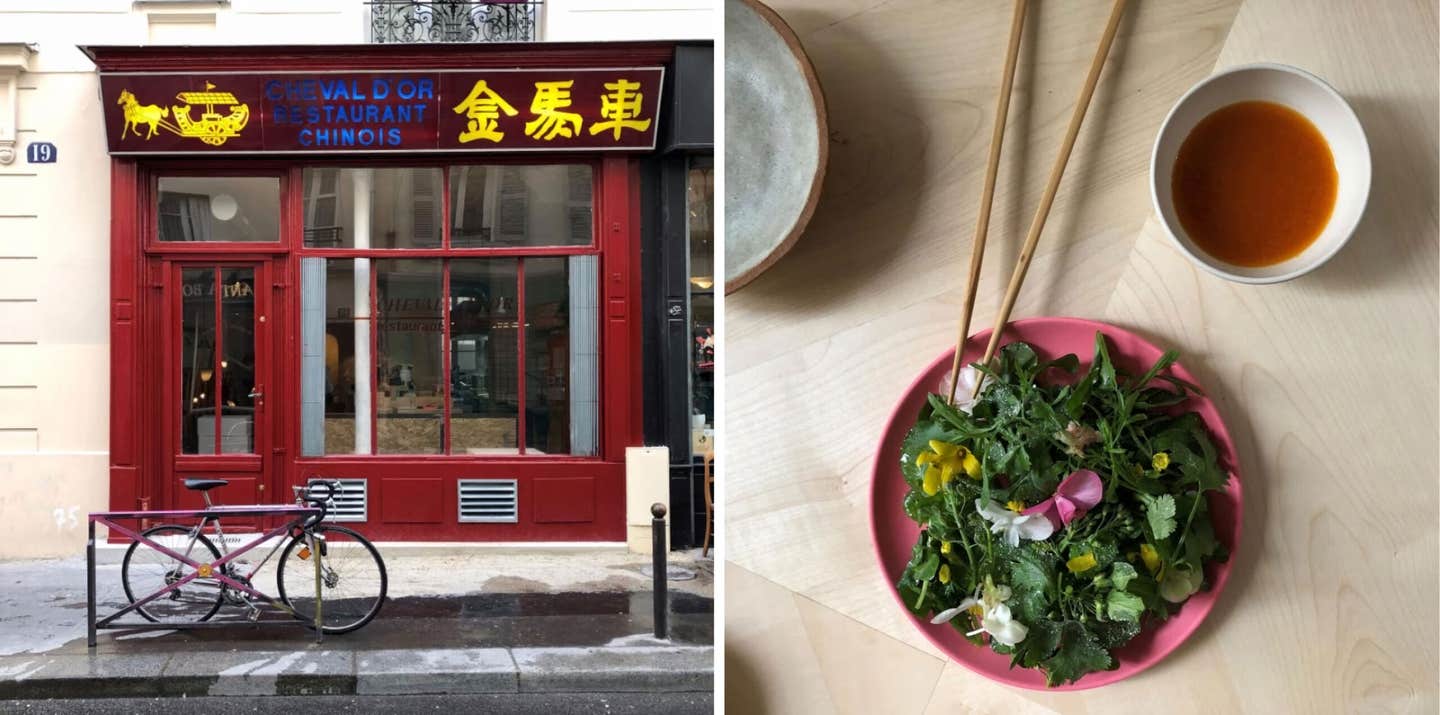

Revived by new ownership in 2023, this legendary Chinese-inflected bistro in upper Belleville has become one of Paris’ hippest spots, with six-course menus starting around $90. The team hails from across the globe, including Filipino Australian head chef and co-owner Hanz Gueco, but Cantonese influence still appears in dishes like the shrimp toast-inspired croque madame piled with cilantro and dill; and barbajuans, the typical niçois pastries, filled with corn, shiitake, and scallions, and served with a sweet-and-sour sauce. If you’re down to splurge, I highly recommend the rösti de nouilles add-on—a crispy noodle pancake topped with crème fraîche, chives, and caviar.
Outside, the façade remains untouched since the restaurant’s opening in 1987. Inside, warm, dim lighting flatters everyone, while the open kitchen offers a quiet ballet in the backdrop. Co-owned by Crislaine Medina, who was once a sommelier at Les Pipos and Le Rigmarole, Le Cheval d’Or is also known for its compelling wine list, with plenty of options for vin nature purists.
For a Wine Bar-Meets-Taquería: Furia
2 Rue Lacharrière
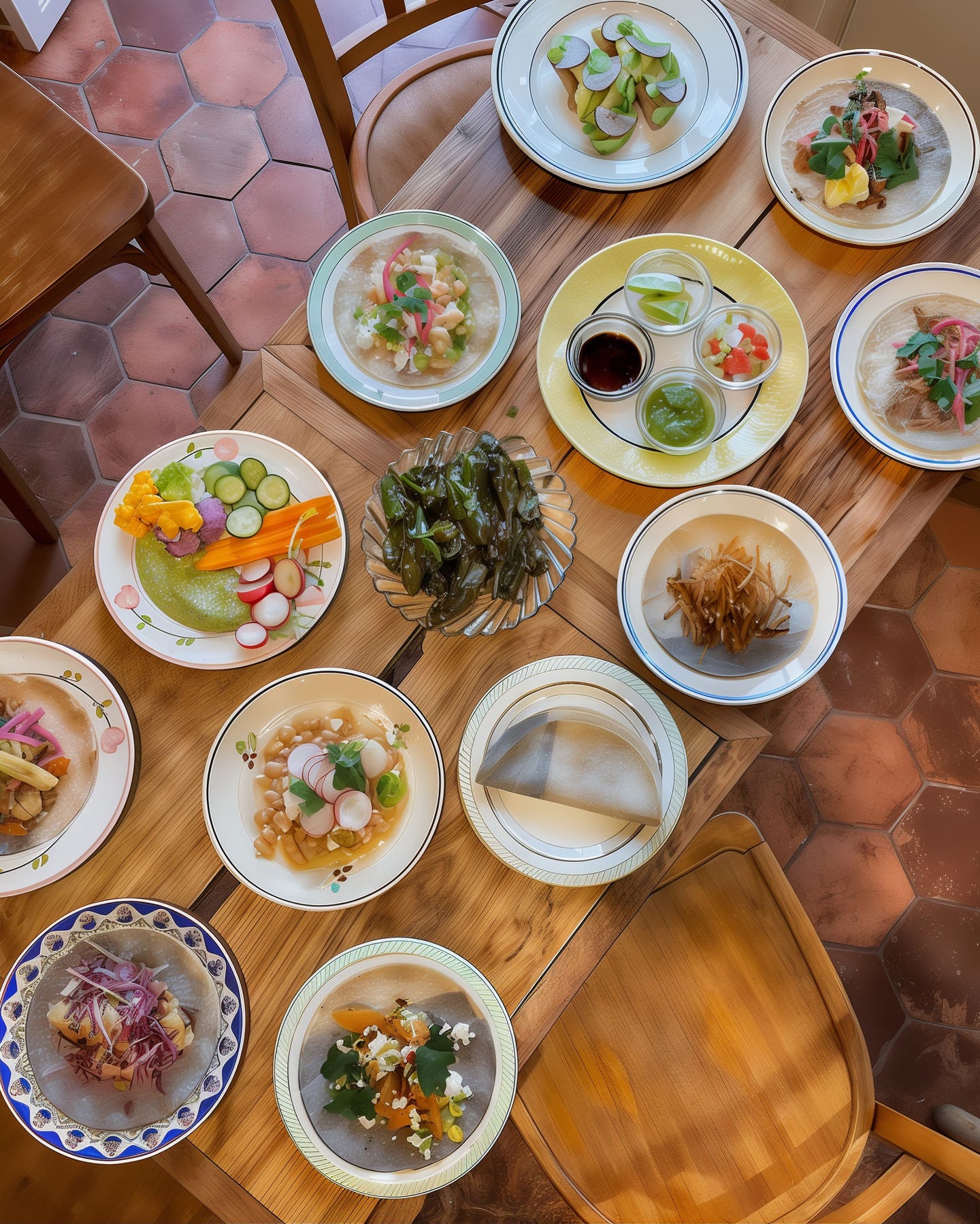

Opened in 2023, Furia is always packed and operates sans reservations. I have no shame in resorting to American habits, arriving at 6:00 p.m. for dinner before the inevitable line forms outside.
With daily specials scrawled on a chalkboard, each taco is a thoughtful combination of umami, creamy, herby, spicy, or crunchy notes. “Our goal is to change the menu according to the season,” says co-owner Julio Guerrero. He cites some of the rotating specialties, like oyster mushrooms al pastor in the fall, oven-roasted carrots with salsa macha in the spring, and butternut squash tacos and raclette cheese quesadillas in the winter.
Recent favorites include a blue corn tostada topped with tuna tartare and bright pops of salmon roe, and panko-crusted chicken layered with ripe avocado and pickled red onions. To drink, there’s Pacífico by the bottle, along with natty wines and mezcal by producers like Almamezcalera, Mezcal Lalocura, and Neta. “We like to use mezcal salvaje,” or wild mezcal, says Guerrero, who prefers the complexity that comes from uncultivated agaves like bicuixe, madrecuixe, and tepeztate.
For Sri Lankan Hoppers and Coconut Curries: La Joie
117 Rue du Chemin Vert
+33 01 80 87 17 19
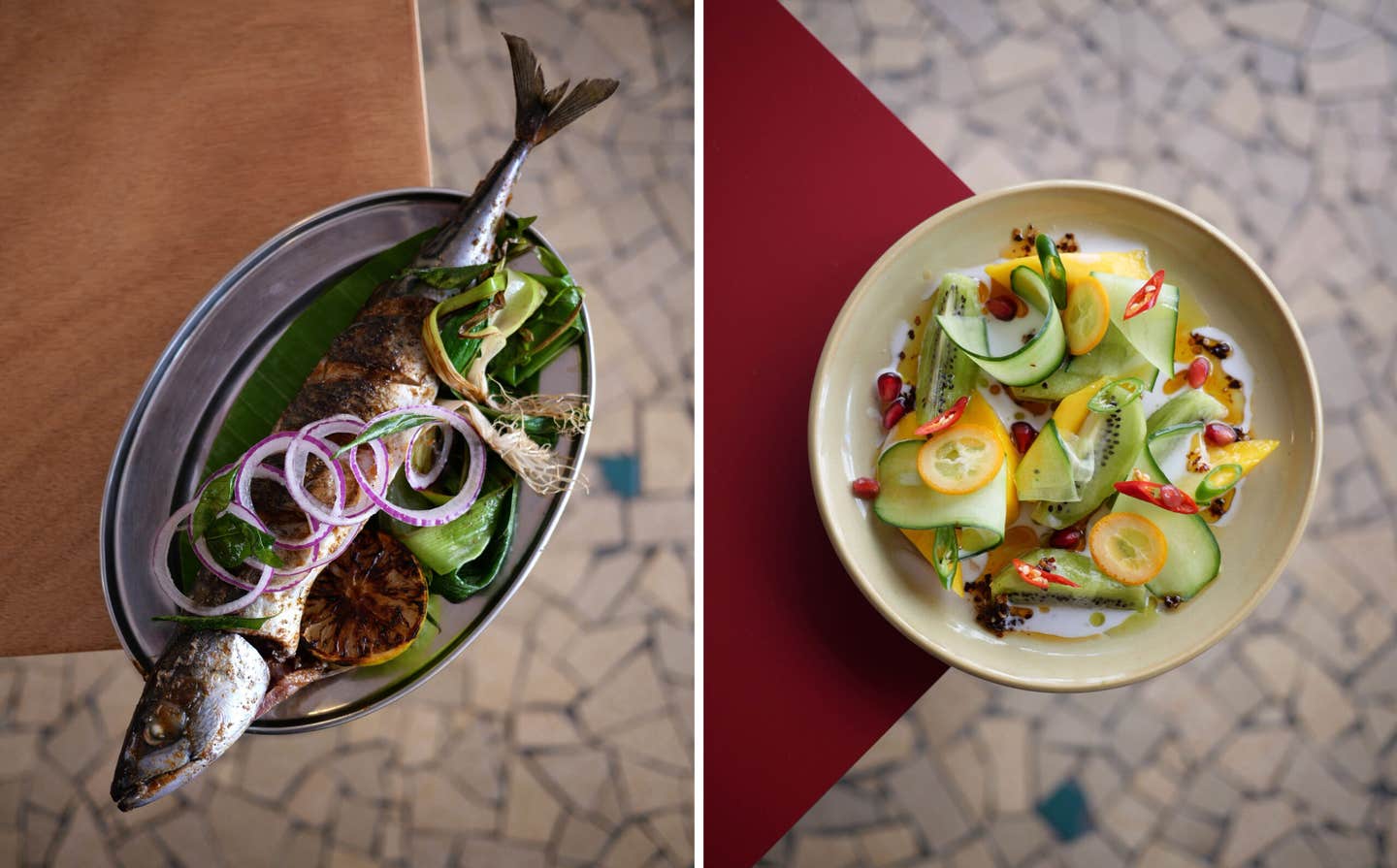

At La Joie, both decor and cuisine combine Sri Lankan elements with French sensibility. The exterior is mostly untouched, with “boucherie” (butcher shop) written in bright gold lettering. Inside, Sri Lankan masks and coconut husk dolls in traditional frocks pop against the mosaic floors and ceramic tiled walls.
Chef and co-owner Minod Dilakshan says his partner, Florent Ciccoli, the bistronomy whisperer behind favorites like Café du Coin, suggested reimagining classic Sri Lankan dishes with seasonal French produce—knowing full well their target clientele swoons for ramps. Seeing as La Joie is one of the hottest reservations in Paris right now, it’s working.
Decidedly French, the menu is organized in three courses. A recent hit was the striped mullet fish with toasted butternut squash and kiri hodi, a fragrant Sri Lankan coconut milk gravy made with fenugreek, cinnamon, and turmeric.
For Cameroonian-Spiced Oeufs Mayo: Touki Bouki
68 Rue Julien Lacroix
+33 06 16 74 33 84
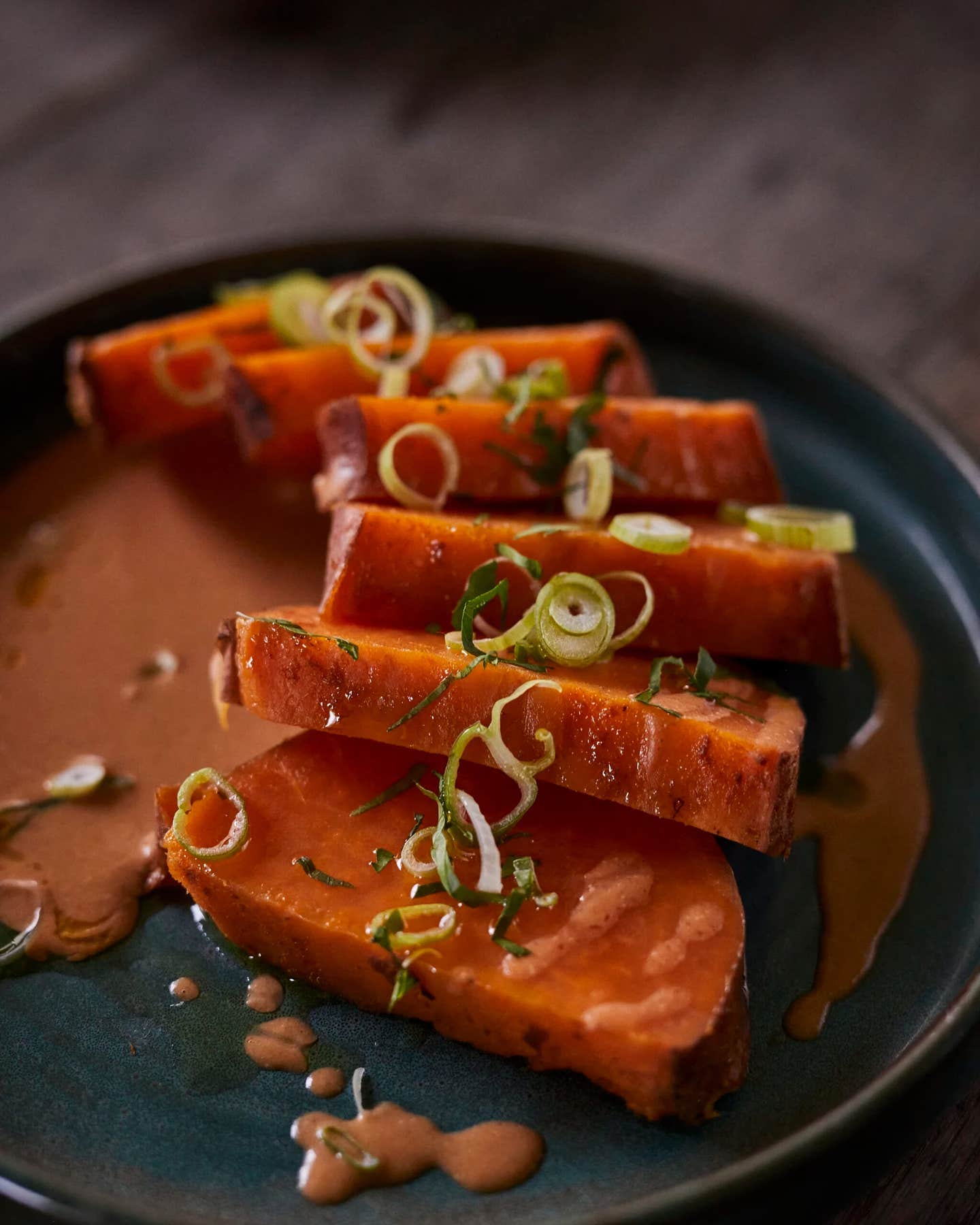

Just off Parc de Belleville, Touki Bouki combines West African and French influences. Dishes like sesame-crusted rock octopus with harissa and black-eyed peas, and charcoal-hued oeufs mayo with bongo spices (inspired by the Cameroonian mbongo spice blend, which is smoky from roasted alligator pepper) showcase the kitchen’s mashup cooking. Housemade bissap, a sweet-tart West African drink made from dried hibiscus flowers, flows alongside cocktails like the Afro Martini, a mix of rum and espresso with a touch of peanut butter.
Every other month, Touki Bouki invites guest chefs from around the globe to bring their own twists to the menu, keeping the offerings fresh. Recently, chef Malik Bouzid (formerly of L’Orillon and Gramme) cooked an Algerian-inspired menu with dishes like lamb shoulder bourek—shredded lamb rolled inside lightly fried, paper-thin pastry sheets, served with labneh and rose harissa; and crispy sardines with smoked cod cream, broccolini, and roasted hazelnuts.
For Soulful Beef Pho: Loan
25 Boulevard de la Villette
+33 06 52 88 09 61
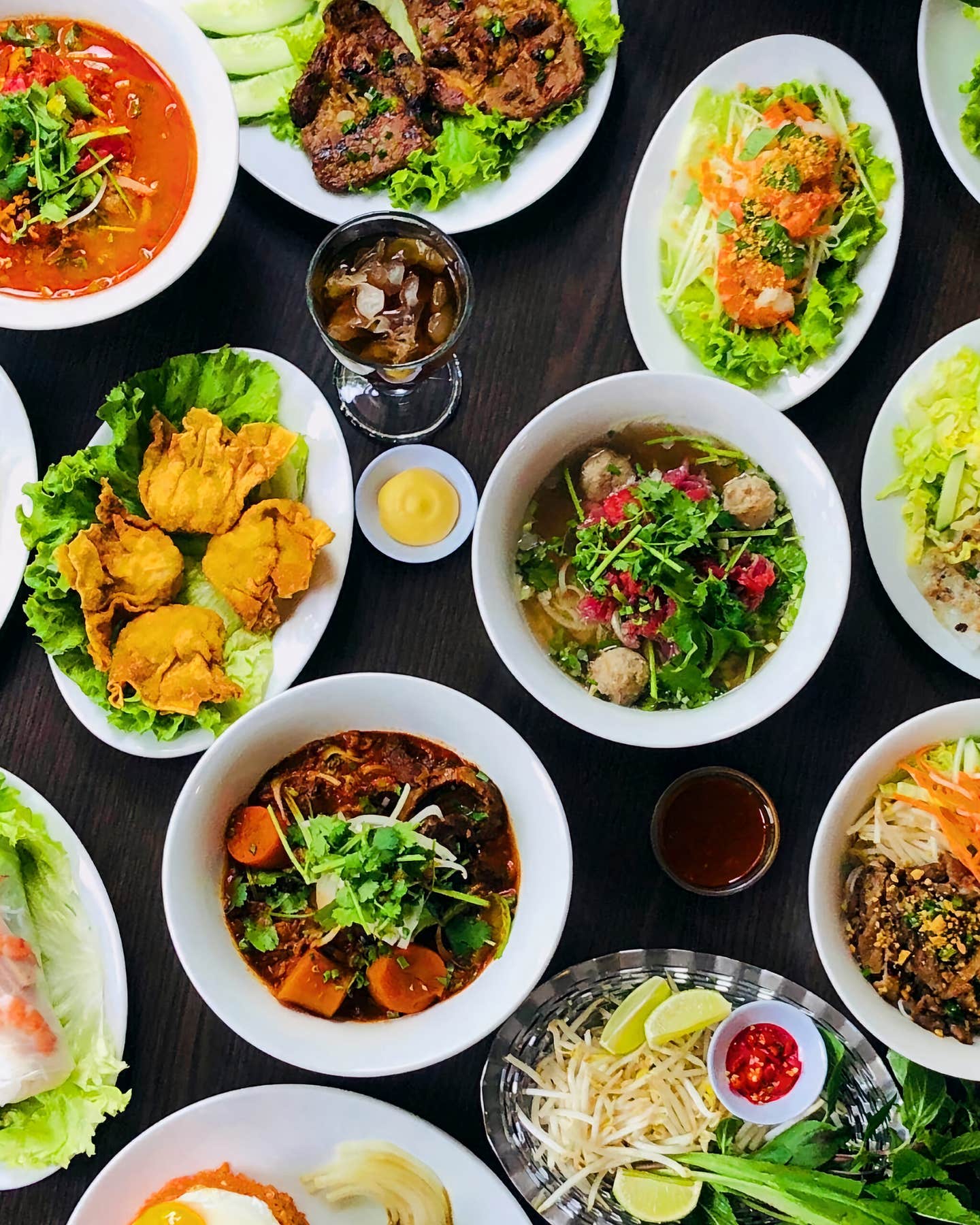

In the heart of Belleville, Loan is the Vietnamese soup spot locals would rather keep to themselves. The owners don’t bother with much marketing or publicity; they prefer to focus on their regulars and on perfecting their broth.
Yannick Hg, whose family took over the restaurant in 2017, explains their approach of offering just a handful of incredibly well-executed menu items. “Pho is very difficult to make every day and taste the same,” he says. That’s why his father works closely with the restaurant’s chef, Loan—whose name the restaurant carries—to ensure the daily 150-liter batch of broth is consistently balanced.
The specialties are the classic pho and the pho saté—a French Vietnamese creation and my personal go-to—where the broth is enriched with a rich, peanutty, generously spiced saté sauce. Their other signature is the ragoût de boeuf, which is chef Loan’s grandmother’s recipe. It resembles a tomato-based boeuf bourguignon but with beef tendon, which adds texture and richness.
For a Touch of Savannah by the Seine: L’Arrêt by The Grey
36 Rue de l’Université
+33 09 84 00 09 08
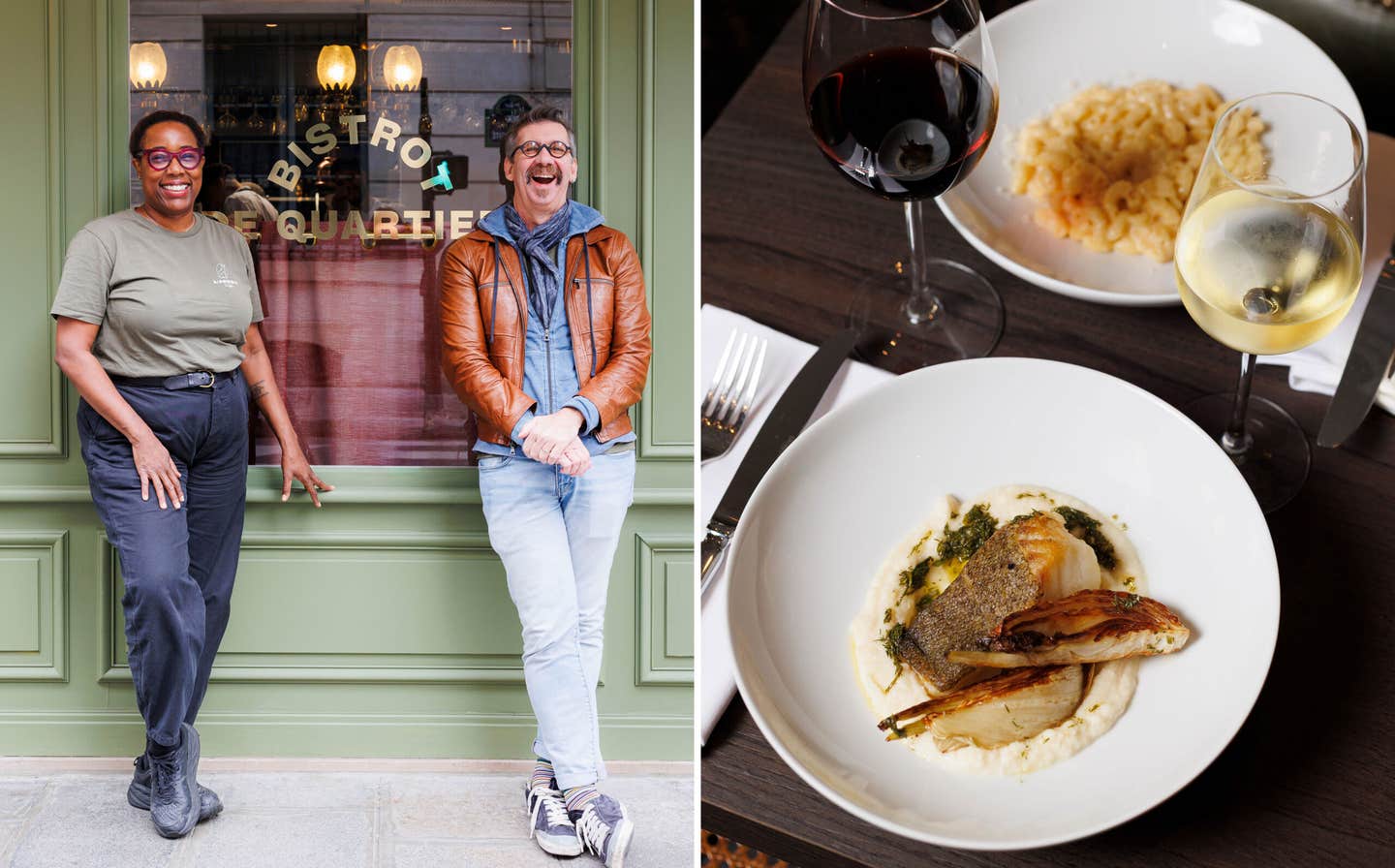

At L’Arrêt by The Grey, on Paris’ Left Bank, the philosophy mirrors that of its American sister restaurant in Savannah, Georgia: “We cook what we like to eat, with a focus on Black American foodways,” says James Beard Award-winning chef Mashama Bailey. With business partner Johno Morisano, Bailey continues a long tradition of Black Americans seeking creative freedom in Paris through art, literature, dance—and now, food.
Bailey has carried the spirit and flavors of her Savannah restaurant, The Grey, across the Atlantic, infusing them into this charming neighborhood bistro. The space blends Southern warmth with Parisian elegance—leather banquettes, vintage bronze chandeliers, and crown moldings framing a béton brut (raw concrete) wall. French diners will find novelty in the bold flavors of the American South, while U.S. visitors will be comforted by familiar dishes like creamy mac and cheese with aged Comté, or moist cornbread with honey chile butter.
There’s also a nod to the origins of American fine dining. “James Hemings, Thomas Jefferson’s chef, was the first Black chef to travel to Paris, train in French kitchens, and bring those techniques back to the United States,” Bailey explains. “He laid the foundation for American haute cuisine.”
A recent meal ended on a bright note: a citrusy chess pie topped with a tuft of lavender-tinged lemon cream—well worth my trip across the Seine.
For Lebanese Meze and Kebabs: Qasti Shawarma & Grill
214 Rue Saint-Martin
+33 01 45 30 31 63
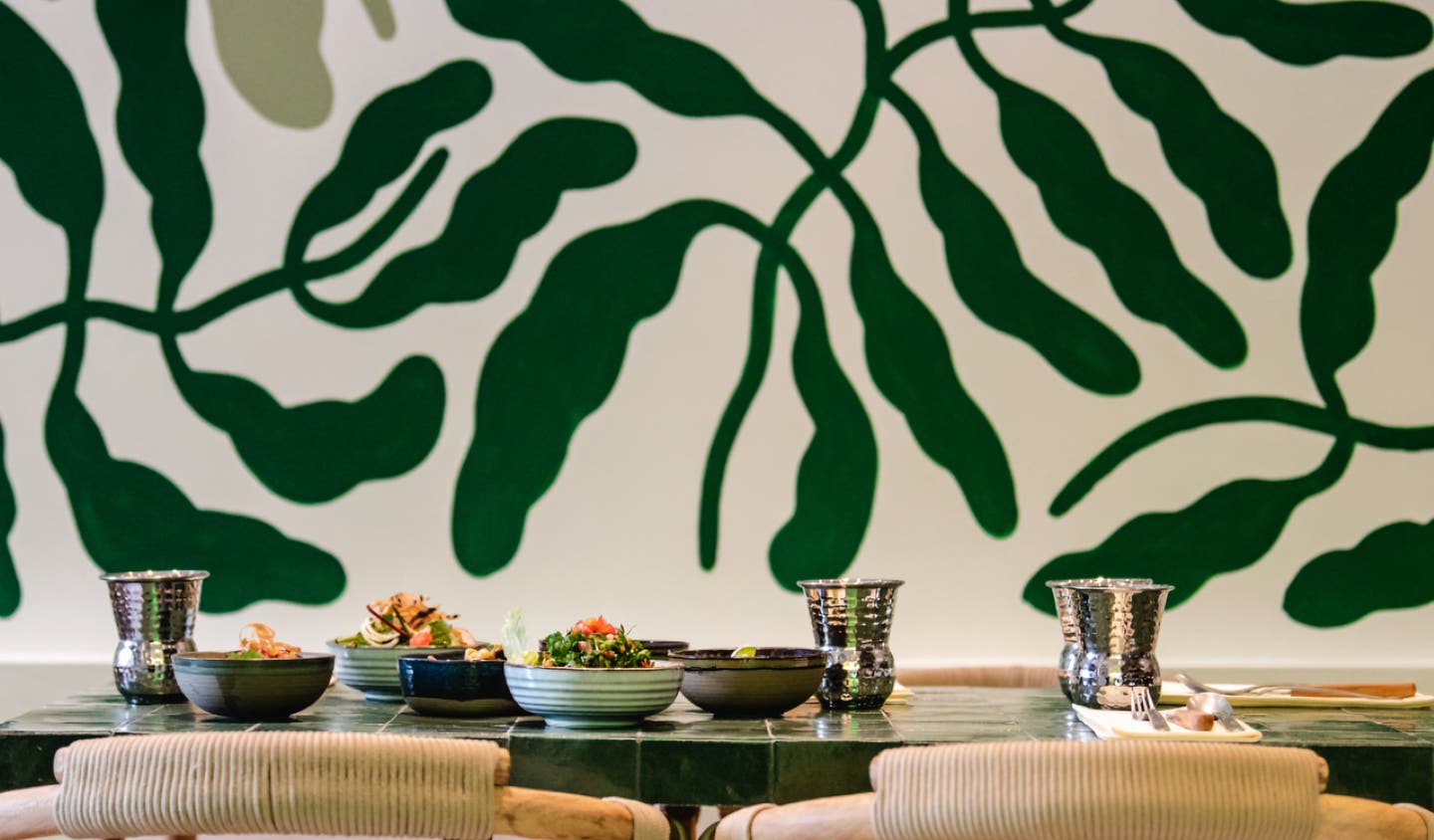

Come lunchtime, don’t be surprised to find a line snaking outside Qasti Shawarma & Grill. The Beaubourg neighborhood has no shortage of casual Lebanese spots, but the takeaway crowd shows up here in droves for house specialties like the beef shawarma sandwich, its spit-roasted meat packed with flavor; the juicy chicken taouk; and the spicy kefta, made with ground lamb and beef. Qasti is part of Liberia-born, Lebanon-raised chef Alan Geaam’s small empire of Lebanese restaurants in Paris, which also includes his Michelin-starred eponymous restaurant.Order a sandwich to go, then sit along the Stravinsky Fountain and marvel at the primary colors of the Centre Pompidou. Or linger over shawarma, burgers (crispy taouk or smash kefta), and meze like silky hummus and well-spiced batata harra (fried potatoes with red peppers, chiles, and garlic). For dessert, there’s housemade knafeh, a stretchy cheese pastry soaked in sweet syrup; and ashta ice cream from cult-favorite Lebanese ice cream shop Bachir.
For West African Mafé: Waly-Fay
6 Rue Godefroy Cavaignac
+33 01 40 24 17 79
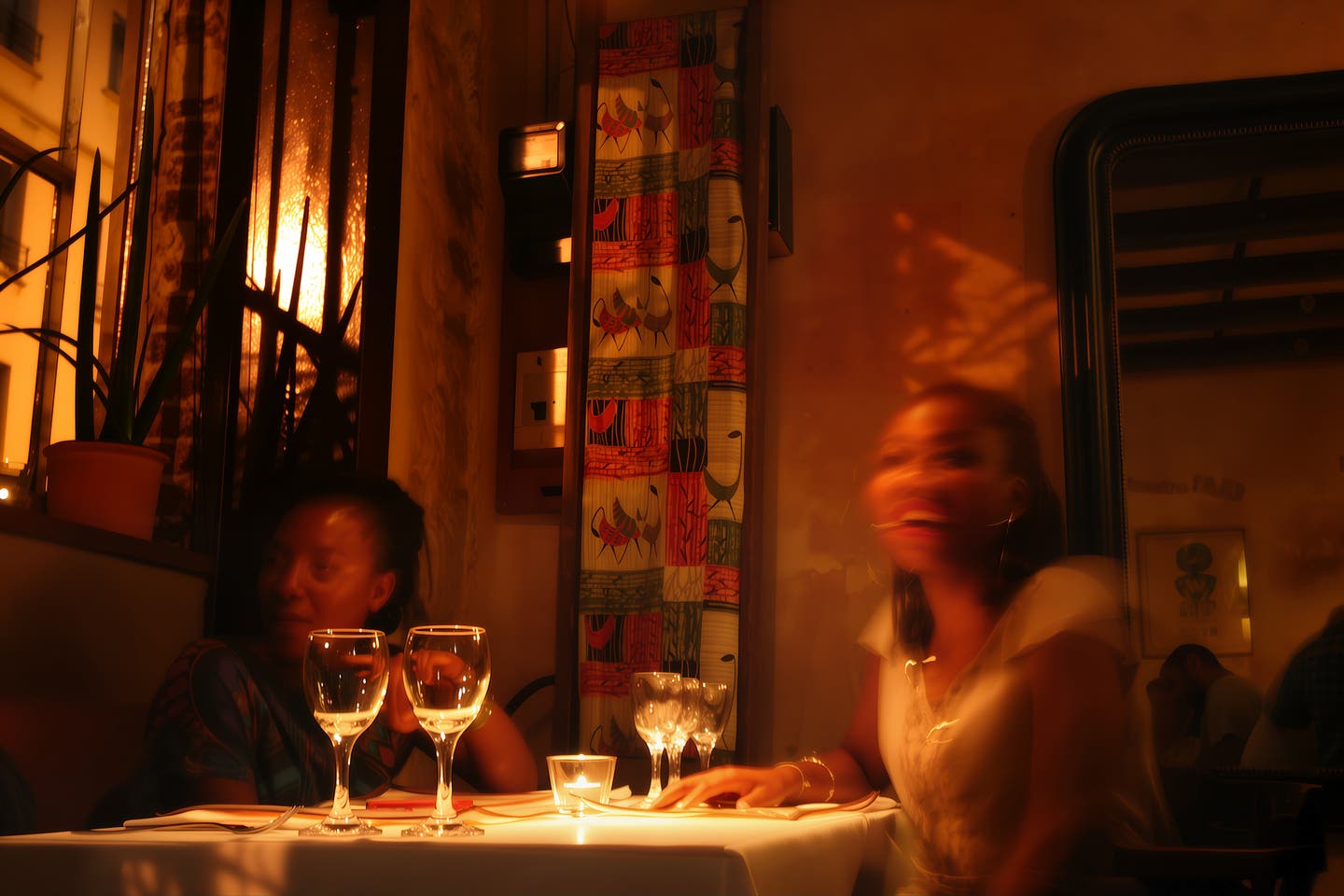

Stepping inside Waly-Fay, with its industrial pendant lights, exposed brick, and subway-tile walls, I couldn’t help but feel a vibe more Brooklyn than Paris. But the soul of the open kitchen—led by Cameroonian chef Jeannie Tientcheu and Senegalese chef Dalla Sankare—is decidedly West African.
Opened in the early 2000s, Waly-Fay was a pioneer among West African bistro-style restaurants in Paris and has since become a reference point in the 11th. During a recent lunch, I ordered a fèroce d’avocat—literally “fierce avocado”—which turned out to be a surprisingly gentle mix of ripe avocado, lime, and garlic with a touch of briny salt cod and fiery chile. I also couldn’t resist the vegetable mafé, a flavor-packed peanut stew served with seasoned broken rice that was just the right amount of glutinously sticky. My friend was equally pleased with her braised chicken, dressed in the lightest herb sauce and served with plantains that were perfectly tender inside and caramelized outside.
For Tried-and-True Thai Curries: Lao Siam
49 Rue de Belleville
+33 01 40 40 09 68
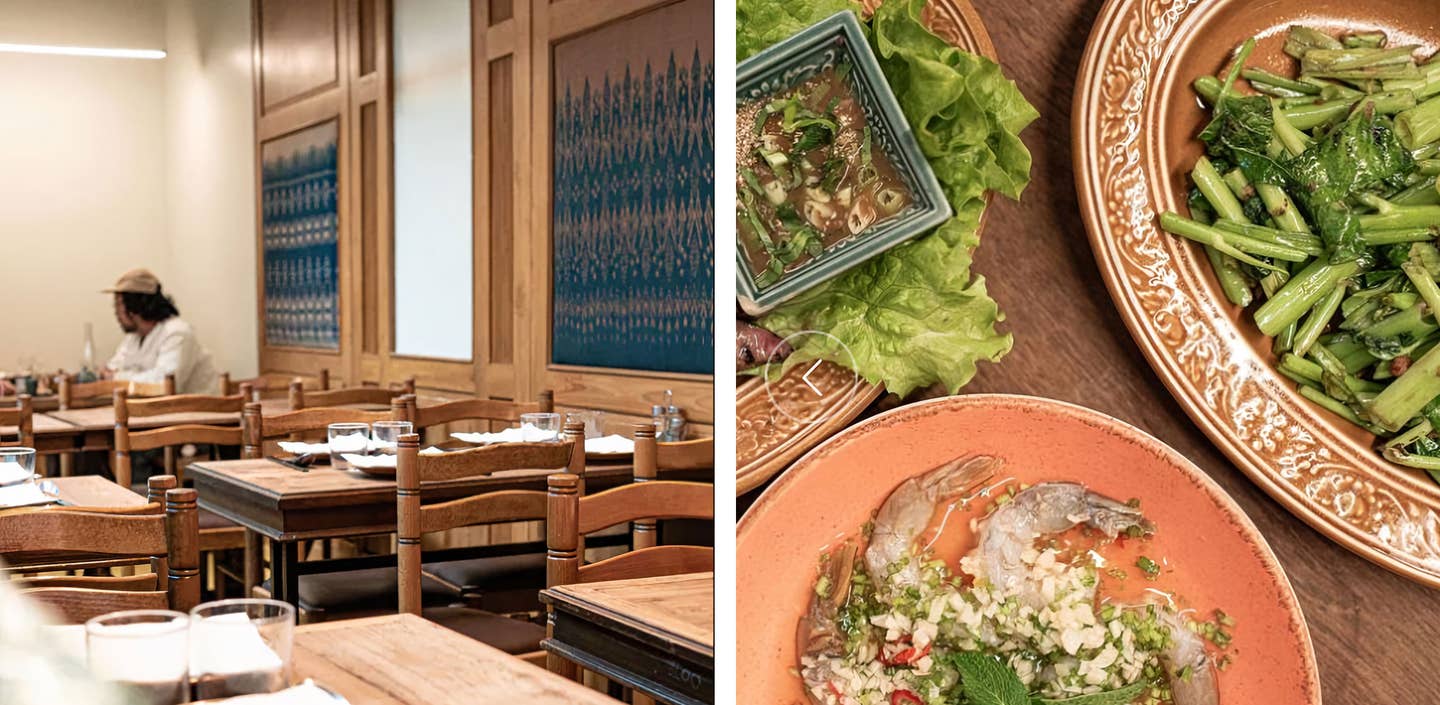

On the main drag of Belleville, Lao Siam draws off-duty chefs and industry insiders, who queue for Thai and Laotian staples like glossy ribbons of pad see ew or whole pineapples stuffed with sausage fried rice. In a city as dynamic as Paris, its unchanging menu is part of the appeal—along with the big, lively space where kids can be kids and adults can discreetly nurse their hangovers with steaming bowls of tom yum. Family-run since 1985, the restaurant recently spawned an offshoot next door, Ama Siam, where the next generation spreads its wings, changing up the menu with dishes like khao soi with a homemade coconut curry broth, wheat noodles, and pickled mustard greens.
For Chicken Döner Worth Lingering Over: Mehmet
43 Rue Ramey
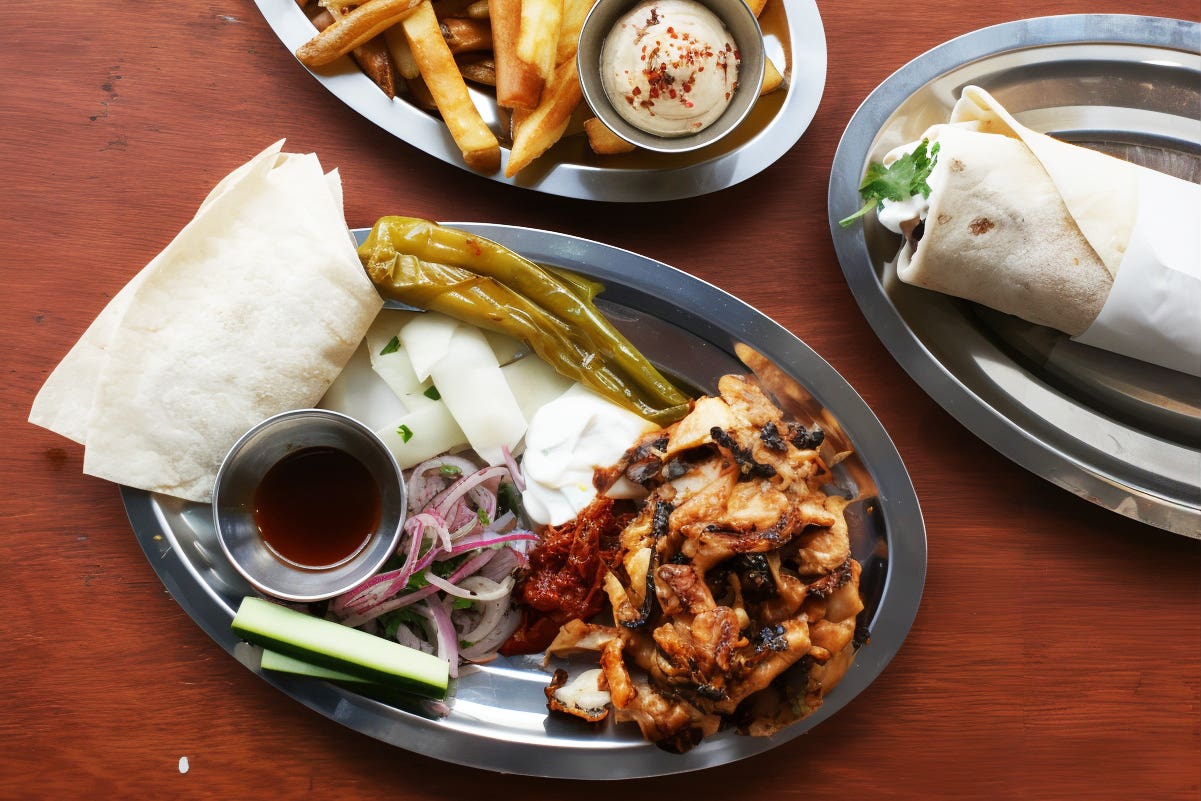

As college roommates in Grenoble, Julien Catelain and Matthieu Haddak discovered a shared passion for late-night kebabs. In 2022, the two Parisians traveled to Turkey to immerse themselves in local recipes and techniques, aiming to open a restaurant serving their favorite street food. There, they not only learned the secrets to ultra-juicy chicken döner, but also a different way to enjoy it—seated at a table, with drinks, friends, and family. That’s the concept behind Mehmet, which opened in 2023.
Mehmet, a common surname in Turkey, has no particular connection to the duo. The menu sticks to the classics: chicken döner, housemade mezes, their locally loved fries (which, according to Catelain, are double-fried in vegetable oil, not beef fat), and lavash baked daily in-house. To curb their carbon footprint, they work exclusively with local ingredients, including Label Rouge free-range Normandy chicken.
Their pop-up collaborations with cool-kid restaurants like Tarántula and Le Cadoret are hugely popular with Parisians—check their Instagram to see the latest kitchen takeover.
Keep Reading
Continue to Next Story