These Cookbooks Explore the Link Between Mindful Cooking and Self-Care
New releases show how the simple act of making a meal can bring strength and comfort.

By Jamie Feldmar


Published on December 12, 2025

This piece originally appeared in SAVEUR’s Fall/Winter 2025 issue. See more stories from Issue 205.

The first cookbook I ever wrote was with Naomi Pomeroy, a self-taught chef whose French-inspired dishes were so elegant, you’d swear she trained under Paul Bocuse ­himself. Taste & Technique is heavy on instruction, but its most enduring lesson comes in the intro: ­Cooking should feel like a pleasure, not a chore. Naomi delivers this message with near-evangelical zeal, insisting that your mindset matters. Walk into the kitchen in a miserable mood, and chances are, your food will follow suit.

Our book is nearly 10 years old, but I’ve been thinking about that notion a lot lately—­partly ­because Naomi passed away last year, and ­partly ­because it’s been hard to hold on to joy at all. Every day, the news destroys me. I am anxious, angry, and exhausted, often all at once. In times like these, cooking—once a comfort—can feel like ­another load to bear.

I’m not alone. Several prominent cookbook authors with new releases are writing candidly about how depression dimmed their desire to cook—and about their long road to rekindling ­happiness in the kitchen.

Tamar Adler, author of An Everlasting Meal, has a new book, Feast On Your Life. Less cookbook and more, as she describes it, “daily devotional,” it chronicles her cooking and eating over the course of a year. (This technique is also employed, movingly, by the British cookbook author Nigel Slater in his seminal 2013 book, Notes From the Larder.)

In Adler’s introduction, she recalls a recent bout of “crippling depression” yet finds unexpected solace in documenting everyday delights. She writes lovingly about cinnamon toast, slow-simmered beans, and “outrageous sausages”—comforts that helped soothe the pain of election fallout, distant wars, and her own private sorrow. Beneath Adler’s graceful prose reverberates her strain as she wills herself to enjoy cooking even the simplest meals.

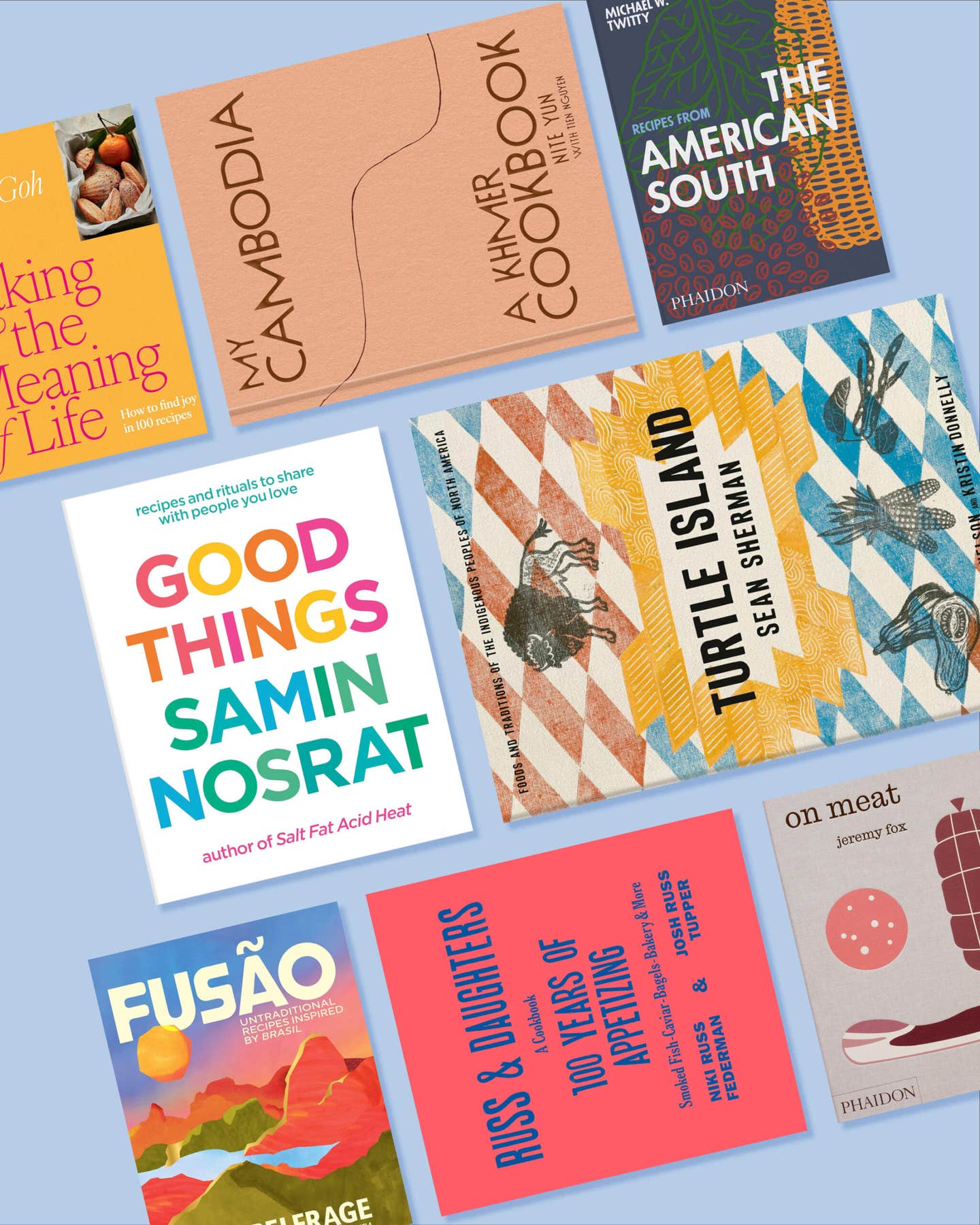
Perhaps it’s unsurprising that Adler is friendly with Samin Nosrat, her West Coast spiritual counter­part and the author of Salt, Fat, Acid, Heat. Nosrat has a new cookbook of her own, Good Things, in which she, too, speaks of prolonged “turmoil and melancholy.” To cope, she asks herself what constitutes a good life and determines that the answer involves both time and attention—for which cooking is a conduit.

In Good Things, Nosrat trades restaurant-level perfectionism for recipes that prioritize time with her chosen family. These aren’t gimmicky time-savers—her golden chicken soup and “sky-high” focaccia are all about relishing the cooking process while still leaving the reader with energy to savor the fruits of their labor with loved ones.

Nosrat’s approach also reminds me of Ruby Tandoh’s 2021 book Cook As You Are, full of affordable, accessible recipes rooted in real-life time and budget constraints. But in the final chapter, “For The Love Of It,” Tandoh offers slower, more involved dishes, such as pierogi with homemade cheese and flaky roti canai that “give you a chance to anchor ­yourself—mind and body—in the fabric of your own life.” These dishes aren’t fussy, but they do require time and focus.

These lessons may feel more urgent today, but they’re hardly new: For generations, cookbook authors have urged us to slow down, cook with intention, and find meaning in the everyday act of making a meal. When done with care, cooking remains one of the most powerful ways we have to restore ourselves—and resist the chaos around us. 

Tristan deBrauwere
A stack of cookbooks in a kitchen
TRISTAN DEBRAUWERE
Culture

These Cookbooks Explore the Link Between Mindful Cooking and Self-Care

New releases show how the simple act of making a meal can bring strength and comfort.

By Jamie Feldmar


Published on December 12, 2025

This piece originally appeared in SAVEUR’s Fall/Winter 2025 issue. See more stories from Issue 205.

The first cookbook I ever wrote was with Naomi Pomeroy, a self-taught chef whose French-inspired dishes were so elegant, you’d swear she trained under Paul Bocuse ­himself. Taste & Technique is heavy on instruction, but its most enduring lesson comes in the intro: ­Cooking should feel like a pleasure, not a chore. Naomi delivers this message with near-evangelical zeal, insisting that your mindset matters. Walk into the kitchen in a miserable mood, and chances are, your food will follow suit.

Our book is nearly 10 years old, but I’ve been thinking about that notion a lot lately—­partly ­because Naomi passed away last year, and ­partly ­because it’s been hard to hold on to joy at all. Every day, the news destroys me. I am anxious, angry, and exhausted, often all at once. In times like these, cooking—once a comfort—can feel like ­another load to bear.

I’m not alone. Several prominent cookbook authors with new releases are writing candidly about how depression dimmed their desire to cook—and about their long road to rekindling ­happiness in the kitchen.

Tamar Adler, author of An Everlasting Meal, has a new book, Feast On Your Life. Less cookbook and more, as she describes it, “daily devotional,” it chronicles her cooking and eating over the course of a year. (This technique is also employed, movingly, by the British cookbook author Nigel Slater in his seminal 2013 book, Notes From the Larder.)

In Adler’s introduction, she recalls a recent bout of “crippling depression” yet finds unexpected solace in documenting everyday delights. She writes lovingly about cinnamon toast, slow-simmered beans, and “outrageous sausages”—comforts that helped soothe the pain of election fallout, distant wars, and her own private sorrow. Beneath Adler’s graceful prose reverberates her strain as she wills herself to enjoy cooking even the simplest meals.

Perhaps it’s unsurprising that Adler is friendly with Samin Nosrat, her West Coast spiritual counter­part and the author of Salt, Fat, Acid, Heat. Nosrat has a new cookbook of her own, Good Things, in which she, too, speaks of prolonged “turmoil and melancholy.” To cope, she asks herself what constitutes a good life and determines that the answer involves both time and attention—for which cooking is a conduit.

In Good Things, Nosrat trades restaurant-level perfectionism for recipes that prioritize time with her chosen family. These aren’t gimmicky time-savers—her golden chicken soup and “sky-high” focaccia are all about relishing the cooking process while still leaving the reader with energy to savor the fruits of their labor with loved ones.

Nosrat’s approach also reminds me of Ruby Tandoh’s 2021 book Cook As You Are, full of affordable, accessible recipes rooted in real-life time and budget constraints. But in the final chapter, “For The Love Of It,” Tandoh offers slower, more involved dishes, such as pierogi with homemade cheese and flaky roti canai that “give you a chance to anchor ­yourself—mind and body—in the fabric of your own life.” These dishes aren’t fussy, but they do require time and focus.

These lessons may feel more urgent today, but they’re hardly new: For generations, cookbook authors have urged us to slow down, cook with intention, and find meaning in the everyday act of making a meal. When done with care, cooking remains one of the most powerful ways we have to restore ourselves—and resist the chaos around us. 

Continue to Next Story

Want more SAVEUR?

Get our favorite recipes, stories, and more delivered to your inbox.