The Dish That Keeps the Spirit of the Aral Sea Alive
In Karakalpakstan, Uzbekistan, fish plov hearkens back to a bountiful time near the vanishing saline lake.
This piece originally appeared in SAVEUR’s Fall/Winter 2025 issue. See more stories from Issue 205.
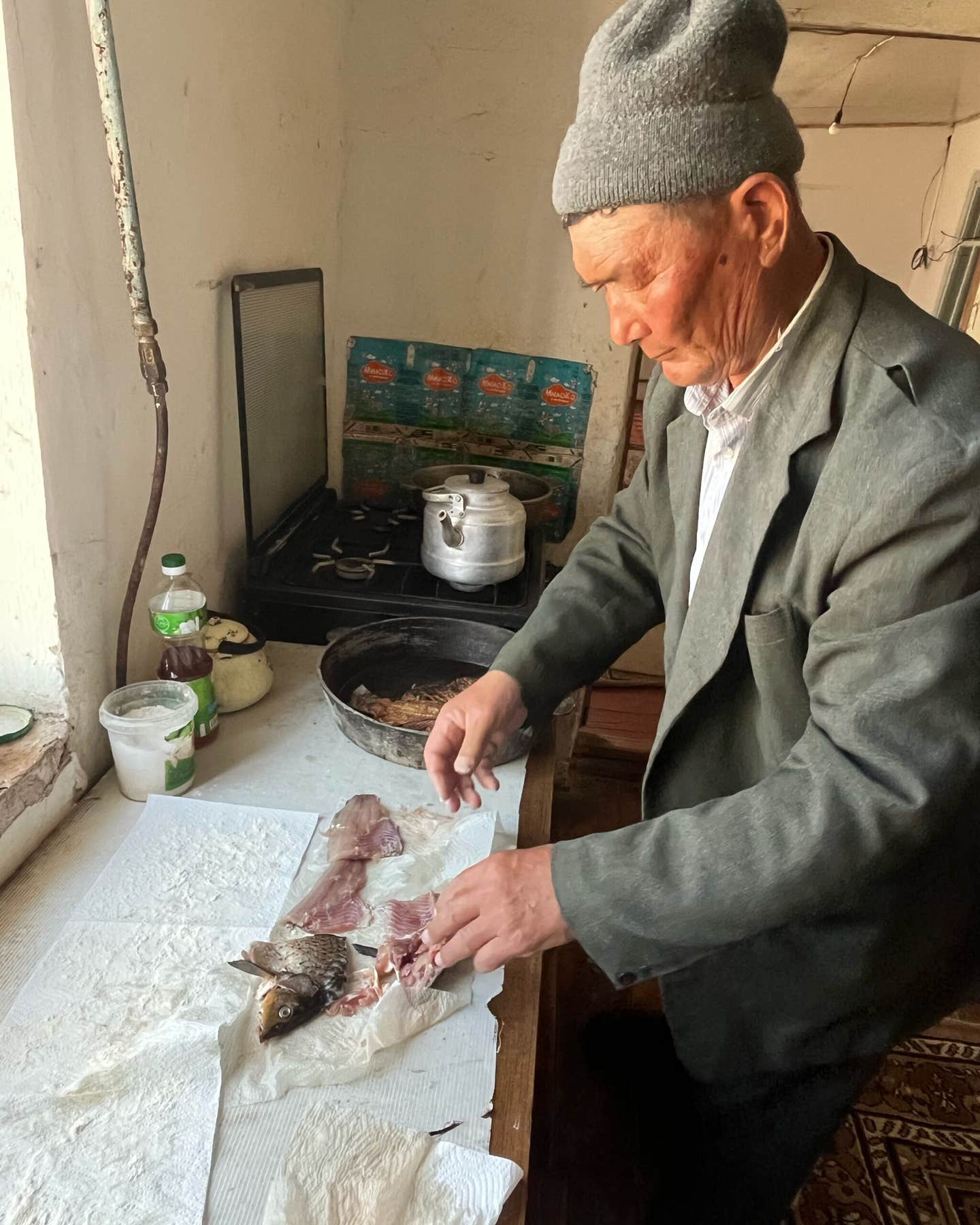
Like many in Karakalpakstan, an autonomous republic in western Uzbekistan, Klishbay Jumanyazov learned to cook while fishing. He spent his days on the Amu Darya delta, where Central Asia’s most important river meets the Aral Sea, once the world’s fourth-largest lake. Born under Soviet rule in 1948 near the fishing town of Moynaq, Jumanyazov spent weekends on the water catching sturgeon and bream, which he’d boil into soups, stew with flour into a porridge called qarma, or simmer with rice, carrots, and onions for fish plov, a local variant of the emblematic dish.

Like most outsiders, I came to Moynaq to understand the tragedy of the Aral Sea, which has lost 90 percent of its surface area since the 1960s. For generations, the Sea had been the lifeblood of the Karakalpak people, who lived as seminomadic pastoralists under various rulers, including khanates, tsars, the USSR, and now independent Uzbekistan. “Everything here was made with fish,” Jumanyazov told me on a blustery April day. Some cooks even mixed roe into dense sorghum bread. But fish plov emerged more recently, in parallel with the disaster that upended life here—a potent symbol for a place increasingly foreign to itself.
In the boom years of the 1950s, Soviet workers flocked to Moynaq’s fisheries, including ethnic Uzbeks who brought plov from the fertile east. Though legend attributes the dish’s invention to the 10th-century scientist Ibn Sina, of the Silk Road city of Bukhara, its true origins are obscure. In the Soviet period, when national identities were reorganized around culinary traditions, plov became a hallmark of Central Asia—especially Uzbekistan—where it exists in countless regional renditions. While Uzbeks often gem their plovs with raisins and chickpeas, Karakalpaks use only root vegetables and a shimmer of cottonseed oil—a reflection of scarcity in a dish usually defined by abundance. Moynaq’s fish plov is geographically bound, virtually unknown even in the nearby Karakalpak capital of Nukus.
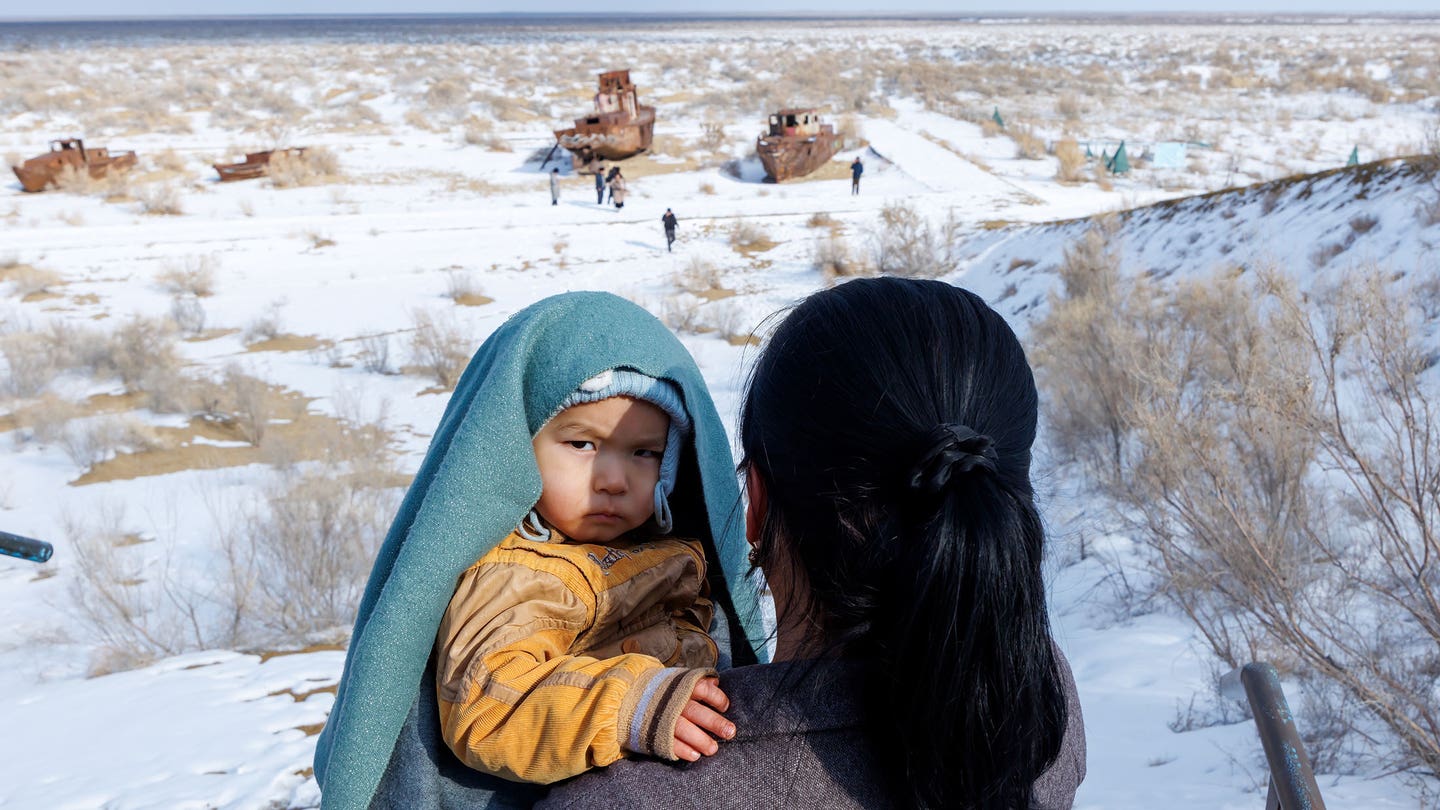

Oktyabr Dospanov, curator of the Nukus Museum of Art’s archaeology department, explained that rice cultivation in Karakalpakstan took off in the 1960s, when Soviet agronomists introduced it as a salt-tolerant crop for the area’s saline soil. Concurrently, state engineers began diverting water from the Amu Darya to irrigate farms. “We would joke that Karakalpakstan was like Amsterdam because we had so many canals,” Dospanov recalls. That water would dry up with shocking speed; by the ’80s, all the fisheries had shut down.
The shrinking lake left behind a wasteland crusted in toxic salt. Declining rainfall, rising temperatures, and storms that kick up dense dust clouds have rendered vast swaths of once-arable land unusable. Most fish in Moynaq’s bazaar—centered around a fountain of golden carp leaping from a dried-up well—now come from farms.
In Nukus, I attended the Aral Culture Summit, organized by the Uzbekistan Art and Culture Development Foundation. Architects, artists, and scientists discussed plans to reforest the sea bed with saxaul trees and replace rice and cotton with drought-resistant crops like licorice root and sesame. I met Islambek Arepbaev, a biologist at Karakalpak State University, who called the sea’s disappearance a devastating blow. “The Aral sturgeon,” extinct since the 1980s, “was a symbol of the Sea and its people,” he told me. “I miss it, even if I’ve never seen it.”
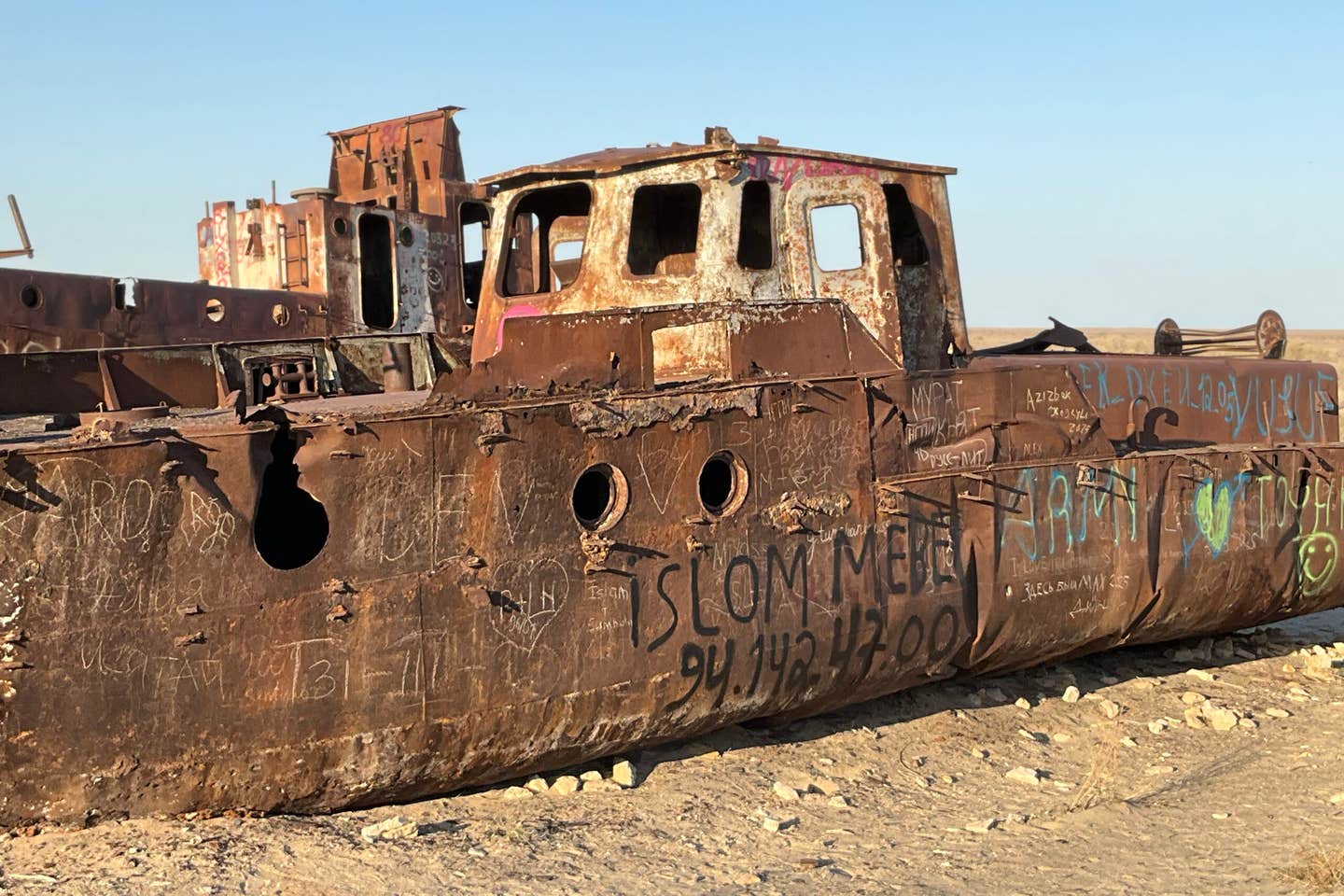

The next day, I drove to Moynaq with Makhmud Aytjanov, a translator and guide who, like so many from the erstwhile port, moved to Nukus years ago. Born in 1981, Aytjanov told me he “never saw the Sea” as we bumped along a salt-chewed highway into town. The loss is palpable, yet the town survives. Schoolchildren play around rusted hulls of fishing boats moored in the desert—quiet memorials to what’s been lost.
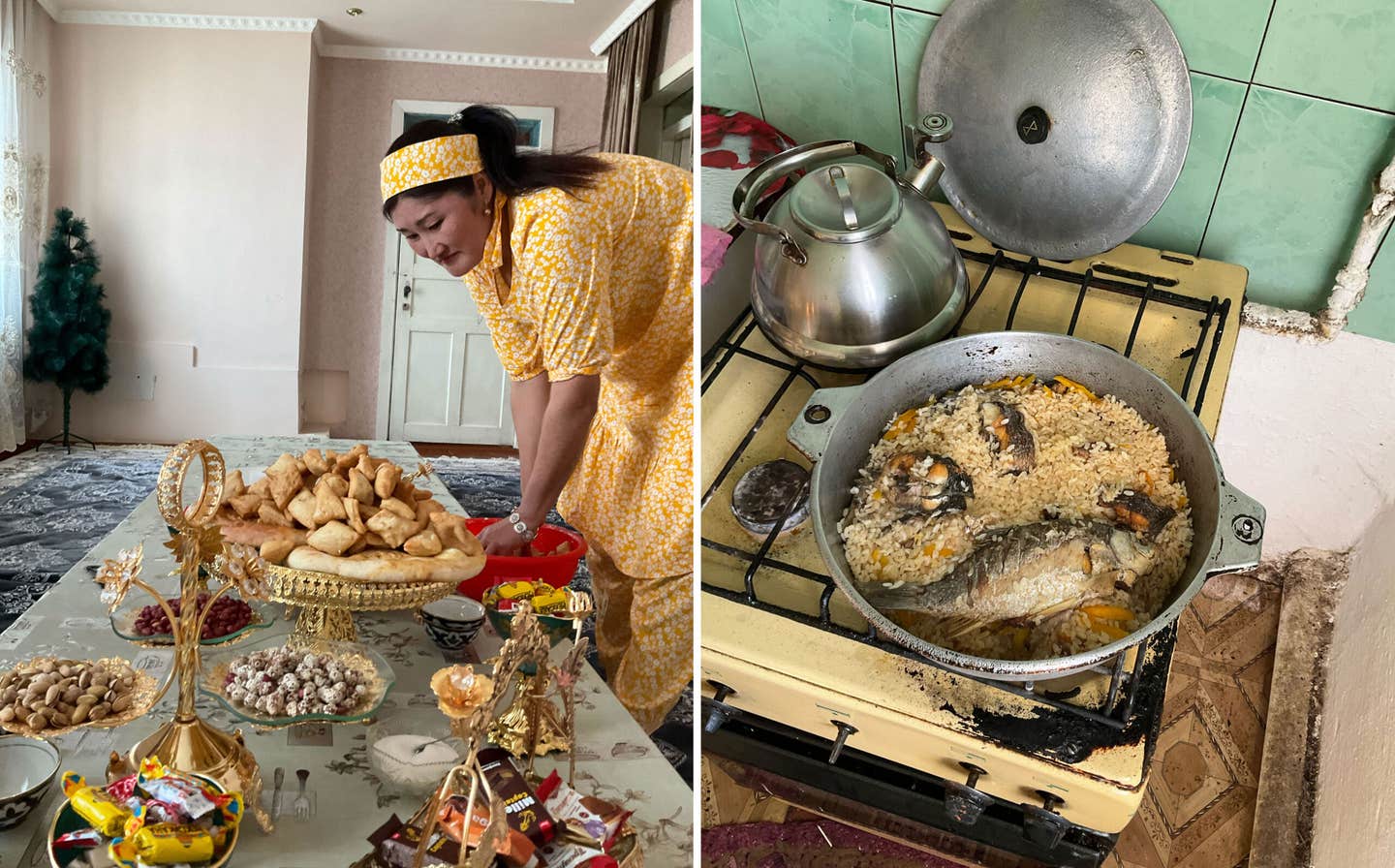

That afternoon, after feasting on Jumanyazov’s plov, gleaming with oil and piled high with carrots, Aytjanov took me to the home of Gawxar Abdikarimova, a researcher at the Regional History and Aral Sea Museum who was also born into a post-Sea world. She’s watched the town’s last remaining lake, where her husband still goes to fish, shrink. Yet as she cooked with choreographed efficiency, she said, “When there’s fish, I make fish plov.” Traditions form faster than ecosystems, but here, it seems, they’ll take longer to disappear.
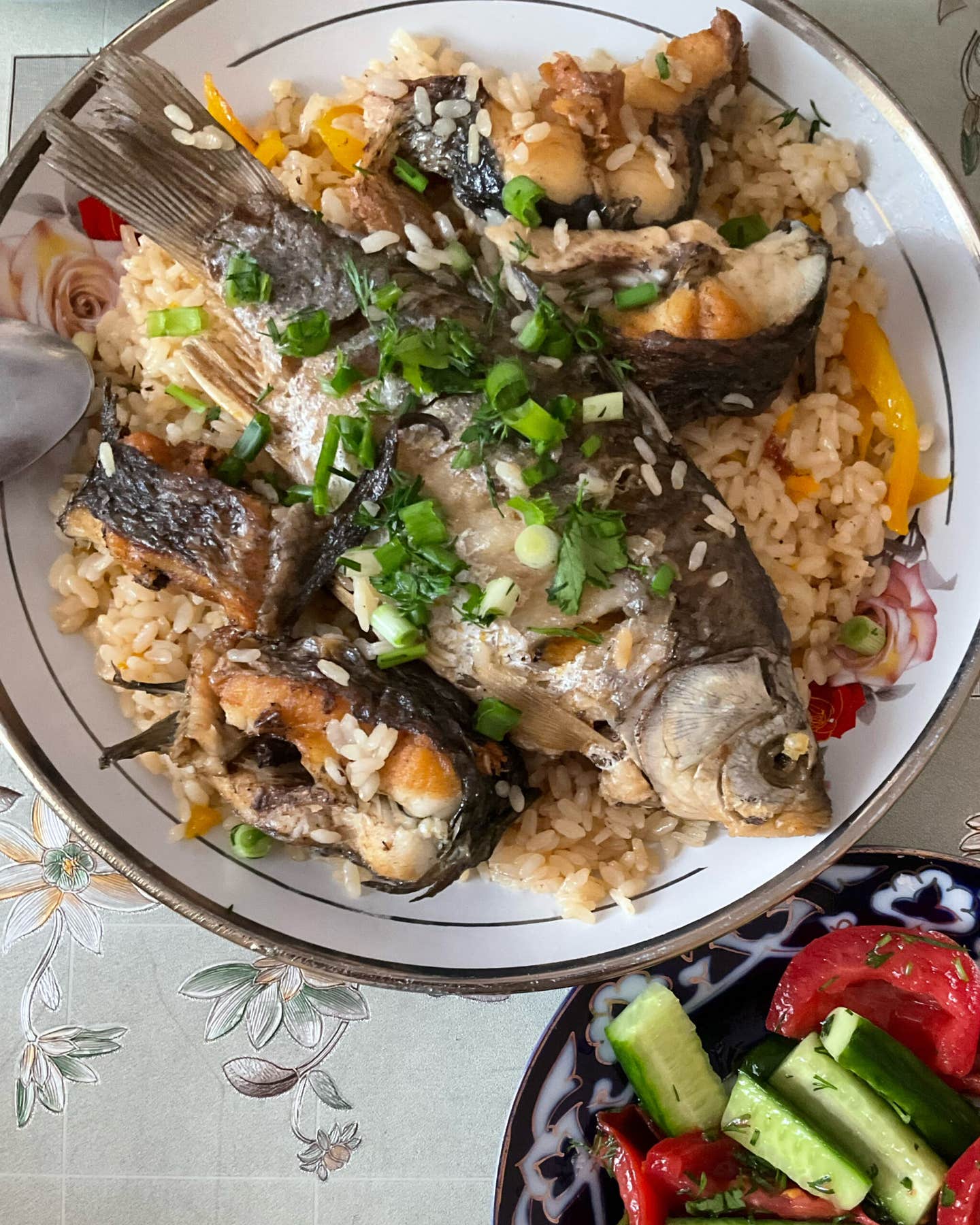
Twenty minutes later, her plov was ready: a cushion of rice embroidered with sweet strands of carrot and onion, crowned with golden carp and a flurry of dill. Fragrant steam swirled through the slanting sunlight, redolent of a lost sea.
Recipe: Fish Plov

Keep Reading




Continue to Next Story