Why Marmite Deserves a Place in Your Pantry
Love it or hate it, the umami-packed yeast spread has a dedicated following for a reason.

By Kristen Hartke


Published on March 12, 2026

If there’s a food product that speaks to our times, it’s Marmite.

In a world that seems to thrive on division, from politics to music to AI-generated cat videos, Marmite proudly points to the schisms it creates within even the most devoted families under the slogan, “Love it or hate it.” Rather than shrinking from its strong flavor, Marmite embraces it, much like social media influencers who loudly declare their attenuated views to a public that claims to be weary of debate but is unable to look away.

Here in the United States, there’s not much of a conversation around Marmite because this classic British condiment, a salty umami bomb made from a byproduct of beer, is simply unfamiliar to our palates. As actor Steve Carrell once quipped, “When you see yeast on a label, it doesn’t naturally lead you to think of delicious eating.” Spoiler alert: he’s not a fan. 

You might recognize Marmite’s charmingly bulbous brown jar with its bright yellow lid from the international section in your supermarket, tucked alongside Robertson’s Golden Shred Marmalade and Cadbury Crunchie bars. The internet is littered with videos of incredulous, pursed-lip Americans confounded by pieces of toast too-liberally smeared with a glossy goo that looks like chocolate sauce but is, in fact, Marmite.

I’m planted firmly in the “love it” category, and let me count the reasons why.

First, Marmite packs a punch of rich, deep flavor. Given that Americans have cuddled up to miso to the point of adding it to chocolate chip cookies, it stands to reason that Marmite is ready for its close-up, too. Like miso, just a soupçon adds instant complexity—stir it into marinara sauce, drizzle it over caramelized onions, or whip it into softened butter. A classic cheese toastie—grilled cheese to us on the eastern side of the Atlantic—suddenly gets turned up to 11 with the addition of Marmite.

Marmite Cheese Toastie
Photo: Murray Hall • Food Styling: Ben Weiner

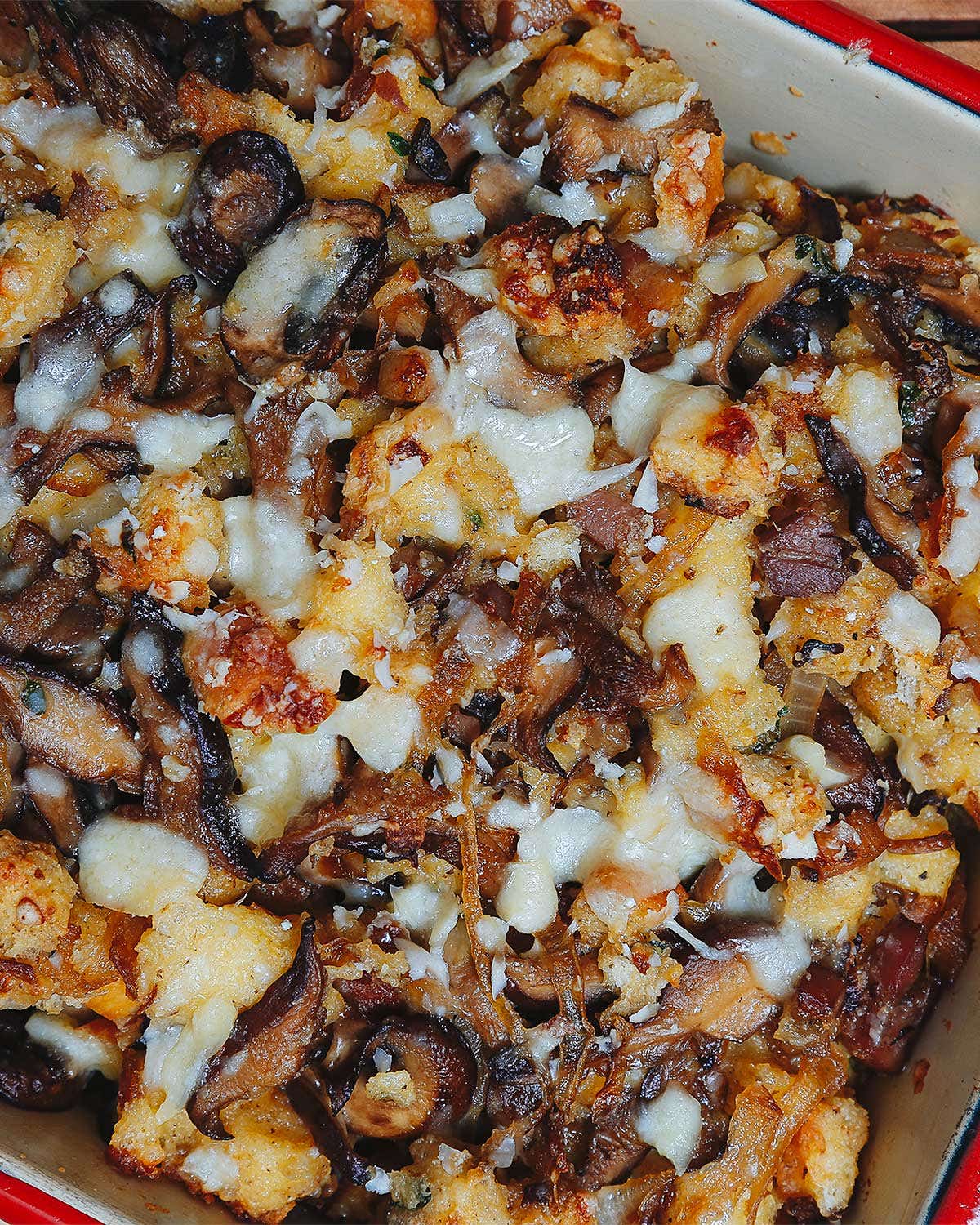
At Lord’s, a decidedly English hotspot in New York City’s Greenwich Village, chef-owner Ed Szymanski serves grilled mushrooms with a Marmite-spiked hollandaise. This dish inspired Jennifer Pulidore, owner of Myers of Keswick, the N.Y.C.-based British foods store, to make mushrooms on toast at home with a schmear of mascarpone and Marmite. She gushed, “It’s delicious!”

Not only is Marmite vegan, it’s also sustainable. To understand the yeast extract, we have to go back to its invention. Justus von Liebig, a 19th-century organic chemist who studied food (he is credited with developing beef concentrate and an early form of infant formula), discovered how to condense yeast byproducts. In 1902, the Marmite Food Extract Company opened up operations near the Bass Brewery in Staffordshire, England. The brewery supplied Marmite with leftover yeast after fermentation. More than a century later, the factory still follows the same process. Salt is added to the byproduct and heated, the yeast is broken down, the solids removed, and the resulting liquid is concentrated into a thick paste, to which a secret combination of vegetable and spice extracts are then added. And those discarded solids? They get turned into feed for local farms and biofuel to make even more Marmite.

Circular food production, and it’s tasty? More, please!

And finally, Marmite is a nutritional powerhouse. Just a teaspoon contains 50 percent of the recommended daily allowance of B12, folic acid, and thiamin, plus it’s chock-full of iron, magnesium, and potassium. Marmite’s high concentration of B6 has also been linked to lower stress levels, a theory that was furthered by a study at the University of Reading in which participants struggling with anxiety disorders found relief from daily doses of B6. Toss a bit of Marmite with buttered noodles, and it becomes the ultimate comfort food—this time with scientific bona fides.

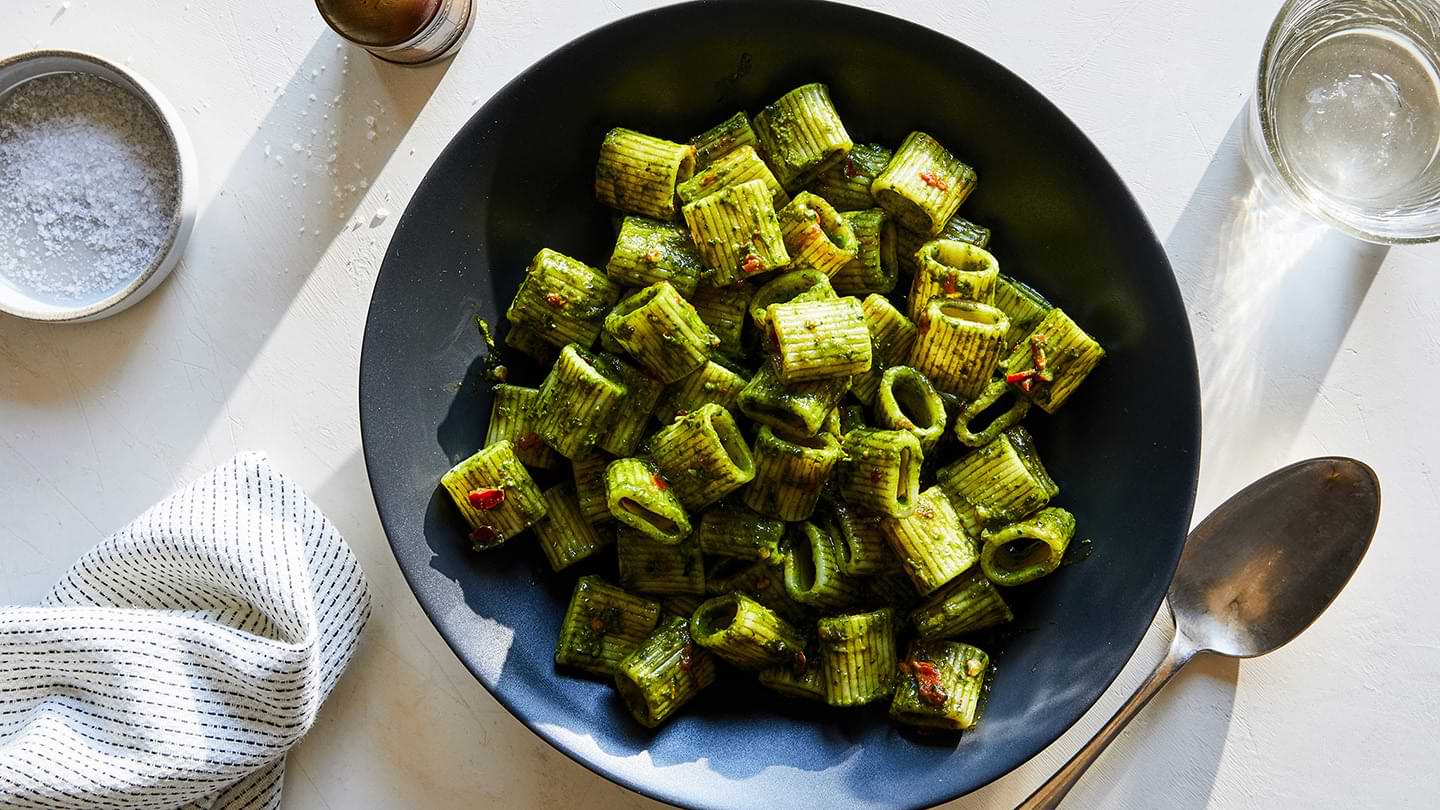
Marmite Pasta Primavera
Photo: Murray Hall • Food Styling: Ben Weiner

Herein lies the Marmite dichotomy: It may be divisive, but it’s also a natural stress-buster.

“All the people who come in and veer straight for it are either stocking up on it, or they just hate it and want to point it out to someone else,” Pulidore says. Even her husband, who is generally not a fan of Marmite on its own, loves Twiglets, a British snack similar to pretzel sticks coated with a yeasty Marmite-like seasoning. When Pulidore recently carried Marmite-flavored rice cakes, one obsessed customer came in and purchased 40 cases. “The mistake that people make with Marmite is not understanding that a little goes such a long way,” she says. “Even a lot of Brits say they don’t like it, but they may have been eating it stirred into gravy their whole lives and never even known.”

Marmite is made with a closely-guarded proprietary seasoning blend, but its flavor lends some clues as to how to use it in everyday cooking: Its deep, smoky undertone contrasts well with a range of ingredients, including onions, carrots, sweet peas, maple syrup, and chocolate. Marmite busts the winter doldrums when whisked into a glossy pasta primavera, while bringing a pleasantly savory hint to a dark chocolate ganache for a spiced snacking cake.
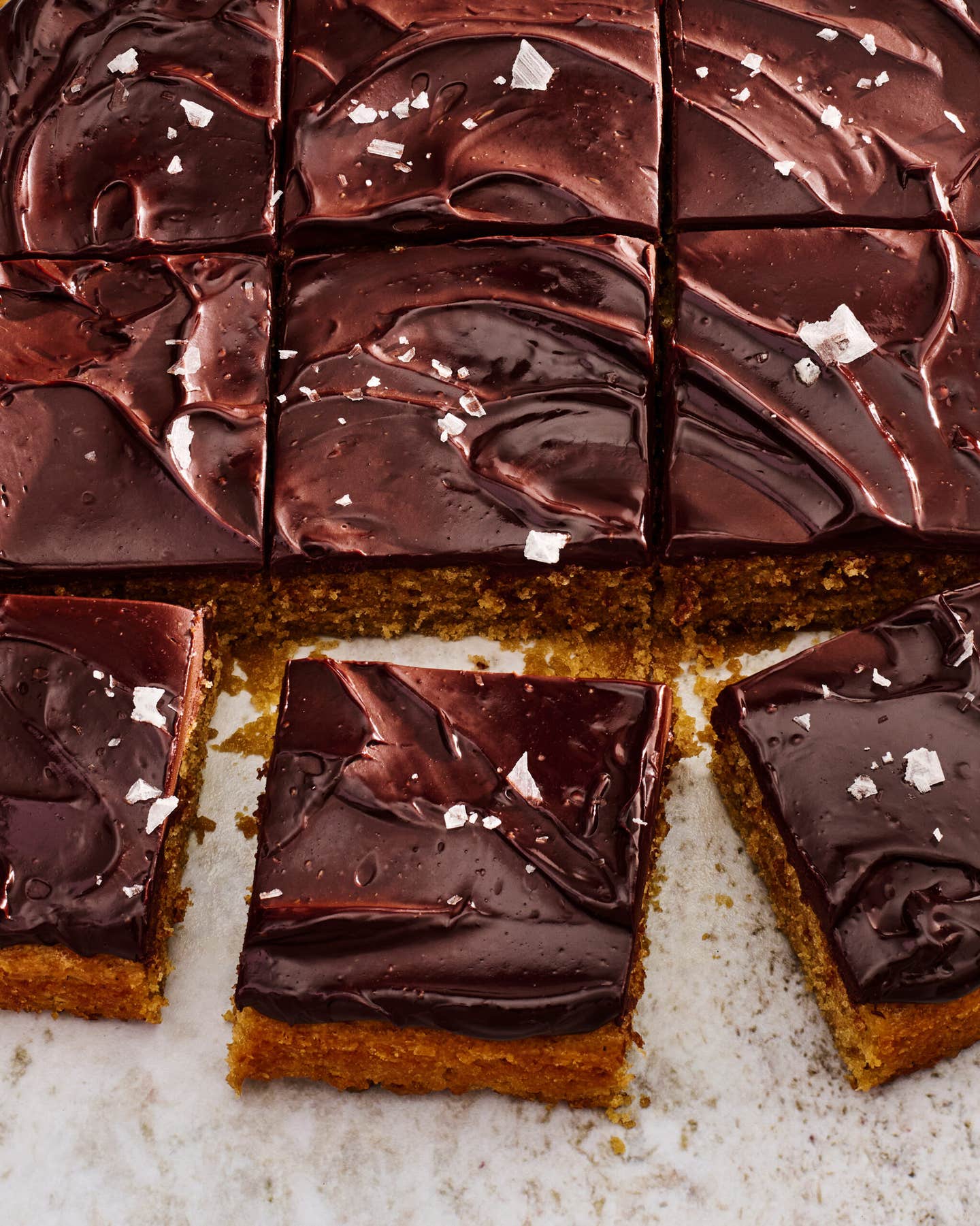
Espresso Snacking Cake with Chocolate Marmite Ganache
Photo: Murray Hall • Food Styling: Ben Weiner

A natural complement to mushrooms, avocado, nuts, coffee, butter, and sharp cheeses, Marmite is an easy, shelf-stable flavor enhancer to add to your regular rotation of seasonings. Just remember to reduce any salt if you’re using it. Here are some ideas to get you started. 

1. Thick or thin, spread it on

Marmite and toast is a classic option. If you are new here, be liberal with the butter and sparing with the Marmite. Try mashing ripe avocado or ricotta cheese with a little Marmite to taste, then spread it on toast and top with thinly sliced radishes and fresh pea shoots.

2. Make it your secret ingredient

The exact composition of Marmite is highly confidential, and you can use that to your advantage to bring a certain je ne sais quoi to your own recipes. Stir Marmite into bolognese sauce, add it to a weeknight stir-fry, or whisk it into cheese sauce for mac and cheese or nachos.

3. Think outside the jar

Crumble brown sugar and Marmite together to top sweet potatoes before roasting. Toss it into hot buttered popcorn or onto toasted maple pecans. Drizzle it into balsamic vinaigrette, or take the plunge and whip it into caramel pots de crème.

Murray Hall
Culture

Why Marmite Deserves a Place in Your Pantry

Love it or hate it, the umami-packed yeast spread has a dedicated following for a reason.

Marmite Beauty Shot
MURRAY HALL

By Kristen Hartke


Published on March 12, 2026

If there’s a food product that speaks to our times, it’s Marmite.

In a world that seems to thrive on division, from politics to music to AI-generated cat videos, Marmite proudly points to the schisms it creates within even the most devoted families under the slogan, “Love it or hate it.” Rather than shrinking from its strong flavor, Marmite embraces it, much like social media influencers who loudly declare their attenuated views to a public that claims to be weary of debate but is unable to look away.

Here in the United States, there’s not much of a conversation around Marmite because this classic British condiment, a salty umami bomb made from a byproduct of beer, is simply unfamiliar to our palates. As actor Steve Carrell once quipped, “When you see yeast on a label, it doesn’t naturally lead you to think of delicious eating.” Spoiler alert: he’s not a fan. 

You might recognize Marmite’s charmingly bulbous brown jar with its bright yellow lid from the international section in your supermarket, tucked alongside Robertson’s Golden Shred Marmalade and Cadbury Crunchie bars. The internet is littered with videos of incredulous, pursed-lip Americans confounded by pieces of toast too-liberally smeared with a glossy goo that looks like chocolate sauce but is, in fact, Marmite.

I’m planted firmly in the “love it” category, and let me count the reasons why.

First, Marmite packs a punch of rich, deep flavor. Given that Americans have cuddled up to miso to the point of adding it to chocolate chip cookies, it stands to reason that Marmite is ready for its close-up, too. Like miso, just a soupçon adds instant complexity—stir it into marinara sauce, drizzle it over caramelized onions, or whip it into softened butter. A classic cheese toastie—grilled cheese to us on the eastern side of the Atlantic—suddenly gets turned up to 11 with the addition of Marmite.

Marmite Cheese Toastie
Photo: Murray Hall • Food Styling: Ben Weiner

At Lord’s, a decidedly English hotspot in New York City’s Greenwich Village, chef-owner Ed Szymanski serves grilled mushrooms with a Marmite-spiked hollandaise. This dish inspired Jennifer Pulidore, owner of Myers of Keswick, the N.Y.C.-based British foods store, to make mushrooms on toast at home with a schmear of mascarpone and Marmite. She gushed, “It’s delicious!”

Not only is Marmite vegan, it’s also sustainable. To understand the yeast extract, we have to go back to its invention. Justus von Liebig, a 19th-century organic chemist who studied food (he is credited with developing beef concentrate and an early form of infant formula), discovered how to condense yeast byproducts. In 1902, the Marmite Food Extract Company opened up operations near the Bass Brewery in Staffordshire, England. The brewery supplied Marmite with leftover yeast after fermentation. More than a century later, the factory still follows the same process. Salt is added to the byproduct and heated, the yeast is broken down, the solids removed, and the resulting liquid is concentrated into a thick paste, to which a secret combination of vegetable and spice extracts are then added. And those discarded solids? They get turned into feed for local farms and biofuel to make even more Marmite.

Circular food production, and it’s tasty? More, please!

And finally, Marmite is a nutritional powerhouse. Just a teaspoon contains 50 percent of the recommended daily allowance of B12, folic acid, and thiamin, plus it’s chock-full of iron, magnesium, and potassium. Marmite’s high concentration of B6 has also been linked to lower stress levels, a theory that was furthered by a study at the University of Reading in which participants struggling with anxiety disorders found relief from daily doses of B6. Toss a bit of Marmite with buttered noodles, and it becomes the ultimate comfort food—this time with scientific bona fides.

Marmite Pasta Primavera
Photo: Murray Hall • Food Styling: Ben Weiner

Herein lies the Marmite dichotomy: It may be divisive, but it’s also a natural stress-buster.

“All the people who come in and veer straight for it are either stocking up on it, or they just hate it and want to point it out to someone else,” Pulidore says. Even her husband, who is generally not a fan of Marmite on its own, loves Twiglets, a British snack similar to pretzel sticks coated with a yeasty Marmite-like seasoning. When Pulidore recently carried Marmite-flavored rice cakes, one obsessed customer came in and purchased 40 cases. “The mistake that people make with Marmite is not understanding that a little goes such a long way,” she says. “Even a lot of Brits say they don’t like it, but they may have been eating it stirred into gravy their whole lives and never even known.”

Marmite is made with a closely-guarded proprietary seasoning blend, but its flavor lends some clues as to how to use it in everyday cooking: Its deep, smoky undertone contrasts well with a range of ingredients, including onions, carrots, sweet peas, maple syrup, and chocolate. Marmite busts the winter doldrums when whisked into a glossy pasta primavera, while bringing a pleasantly savory hint to a dark chocolate ganache for a spiced snacking cake.

Espresso Snacking Cake with Chocolate Marmite Ganache
Photo: Murray Hall • Food Styling: Ben Weiner

A natural complement to mushrooms, avocado, nuts, coffee, butter, and sharp cheeses, Marmite is an easy, shelf-stable flavor enhancer to add to your regular rotation of seasonings. Just remember to reduce any salt if you’re using it. Here are some ideas to get you started. 

1. Thick or thin, spread it on

Marmite and toast is a classic option. If you are new here, be liberal with the butter and sparing with the Marmite. Try mashing ripe avocado or ricotta cheese with a little Marmite to taste, then spread it on toast and top with thinly sliced radishes and fresh pea shoots.

2. Make it your secret ingredient

The exact composition of Marmite is highly confidential, and you can use that to your advantage to bring a certain je ne sais quoi to your own recipes. Stir Marmite into bolognese sauce, add it to a weeknight stir-fry, or whisk it into cheese sauce for mac and cheese or nachos.

3. Think outside the jar

Crumble brown sugar and Marmite together to top sweet potatoes before roasting. Toss it into hot buttered popcorn or onto toasted maple pecans. Drizzle it into balsamic vinaigrette, or take the plunge and whip it into caramel pots de crème.

Continue to Next Story

Want more SAVEUR?

Get our favorite recipes, stories, and more delivered to your inbox.