How to Make a Cheese Wheel Cake, the Ultimate Holiday Centerpiece
It’s a surprisingly easy and beautiful way to change up your cheese routine.



The saying “have your cake and eat it, too” is usually reserved for sweet confections. But this holiday season, we’re giving you a reason to go savory. Not a cheesecake, but a cake of cheese. If you’ve been to a wedding in the last decade—or even just consumed wedding content on Instagram or Pinterest—chances are you’ve seen one of these beauties. As true turophiles, we say, why stop there? Stack up some wheels for the ultimate holiday party flex—they’ll make a centerpiece so stunning that you can use it as your holiday card photo.
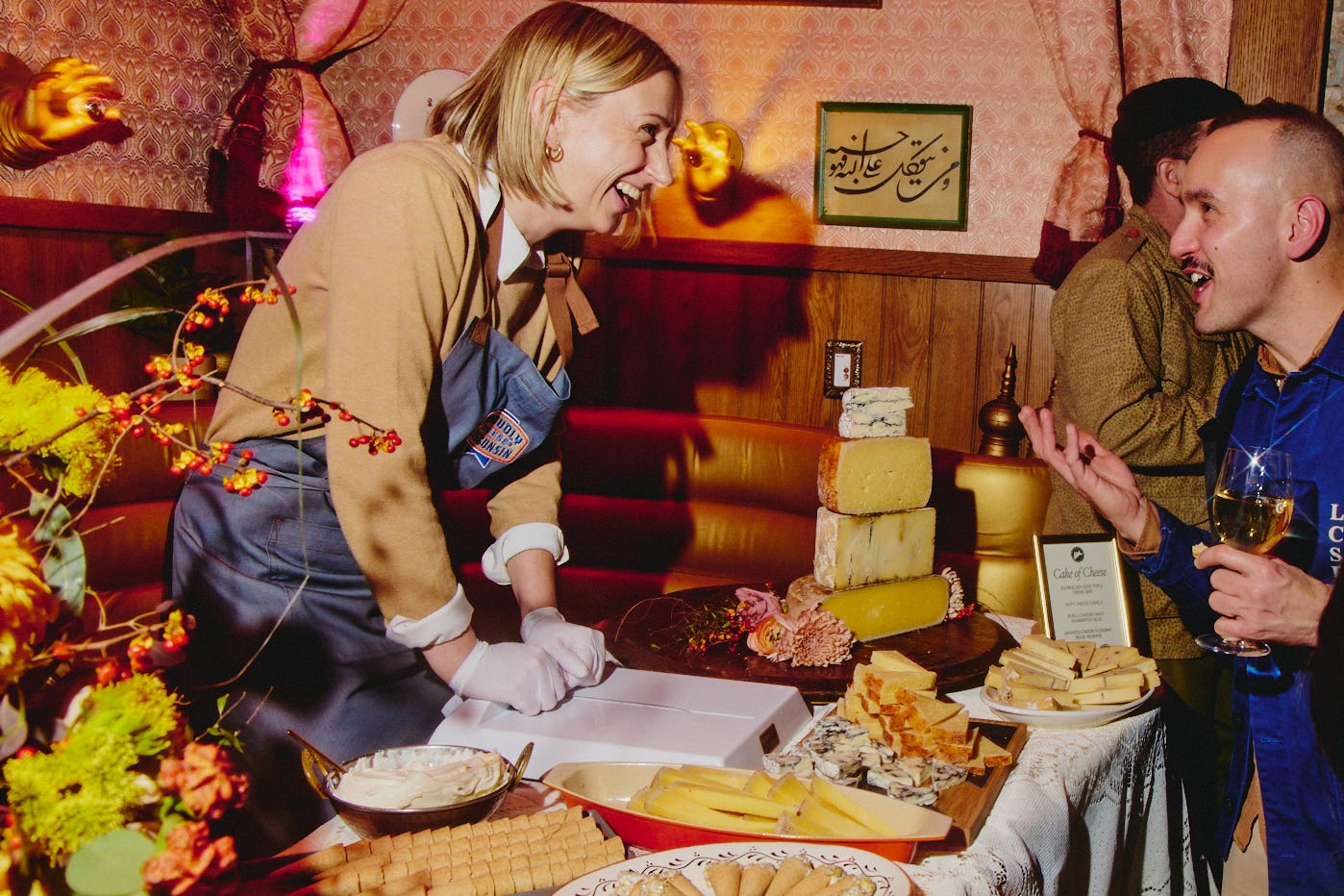

There isn’t a lot of labor involved to make this kind of cake, but it does require some critical cheese thinking to decide what styles to use and how to prep and serve the wheels so they can shine in not just looks but flavor, too. To help tee up your new cheese cakes this holiday season, we asked cheesemongers Shannon Bonilla (American Cheese Society Certified Cheese Professional and Dairy Farmers of Wisconsin cheese marketing manager) and Leah Park (pastry chef and owner of Los Angeles cheese shop Milkfarm) for their key tips for building and breaking down this style of savory cake.
There is a cake of cheese for everyone, regardless of how many people you’re hosting or the budget you’re working with. Ultimately, it’s not too different from selecting cheeses for a cheese board or cheese cart experience—you’re just stacking them up instead of arranging them across a surface. The sky’s the limit for your cheesy creativity.
Selecting Cheeses for a Cake of Cheese

Making a layered cake of cheeses only requires a few ingredients, and the decision-making process is mostly about how they’ll stack up. “You can start your base out at any size, whether that’s a two-pound wheel or a 20-pound wheel. Then build it from biggest to smallest going from the bottom to the top,” Park says. “It’s always smart to start with pieces that are semi-firm or hard for a sturdy base, and then pick wheels that are smaller and softer as you layer up.”
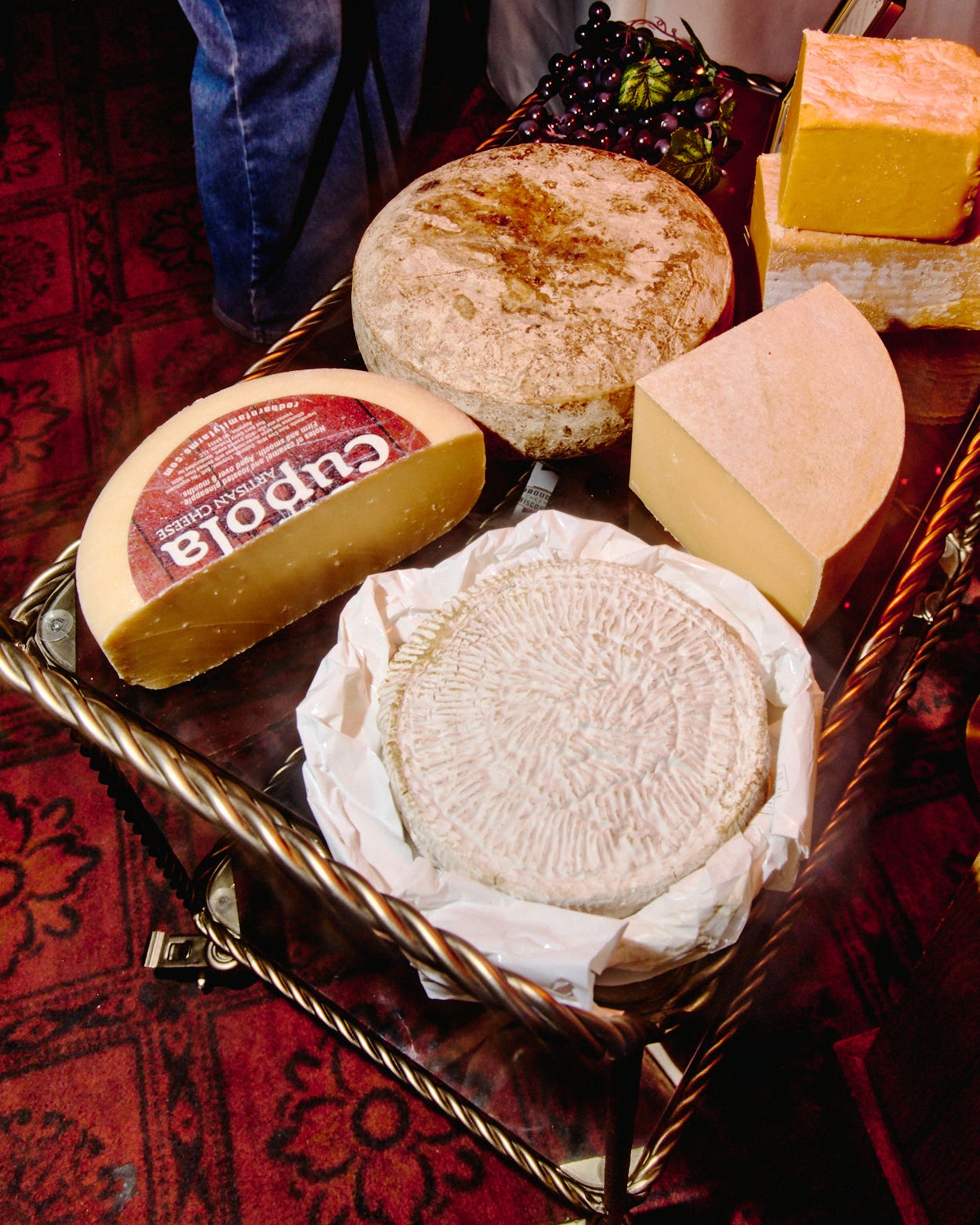
At SAVEUR’s recent soiree in New York City, we snacked on a towering cake of award-winning Wisconsin cheese crafted by Bonilla. The lineup included a variety of rinds, styles, and textures: Uplands Cheese Pleasant Ridge Reserve, the most awarded cheese in the U.S.; Roelli Cheese Haus Dunbarton Blue, which put celebrated cheesemaker Chris Roelli on the map; Roth Cheese Canela, a rich, flavorful cheese beloved for its cinnamon and paprika rub; and the decadent, showstopping Schroeder Käse Triple Creme Brie.
Storing Cheese Before and After the Party
The harder and denser a cheese is, the longer it needs to sit at room temperature to be ready to serve. Bonilla says that she let two layers of her cake (Pleasant Ridge Reserve and Canela) sit out overnight to ensure they were not too difficult to break down, but softer cheeses like the Dunbarton Blue and Triple Creme Brie only need about 30 minutes. She shares that they can be left wrapped in original packaging before layering and serving, or built into a cake a day or two before if you have the fridge space.
If you’re buying a big wheel for the base, the most important part is actually what you do with it after the initial oohs, ahhs, and photos of the assembled cake. “An investment wheel will last months if cared for properly. Cheese is alive and needs to breathe, so every time you cut it, wrap it in fresh two-ply cheese paper. If you see mold on a hard or semi-hard cheese, just scrape it off—it can’t permeate the [interior],” Bonilla explains. However, for soft cheeses, mold will likely infiltrate the whole piece. If you see any signs of it, throw the cheese away. And she adds to “never ever freeze a wheel of cheese” because the moisture content will be disrupted and change the texture and flavor.
Building and Decorating a Layered Cake of Cheese
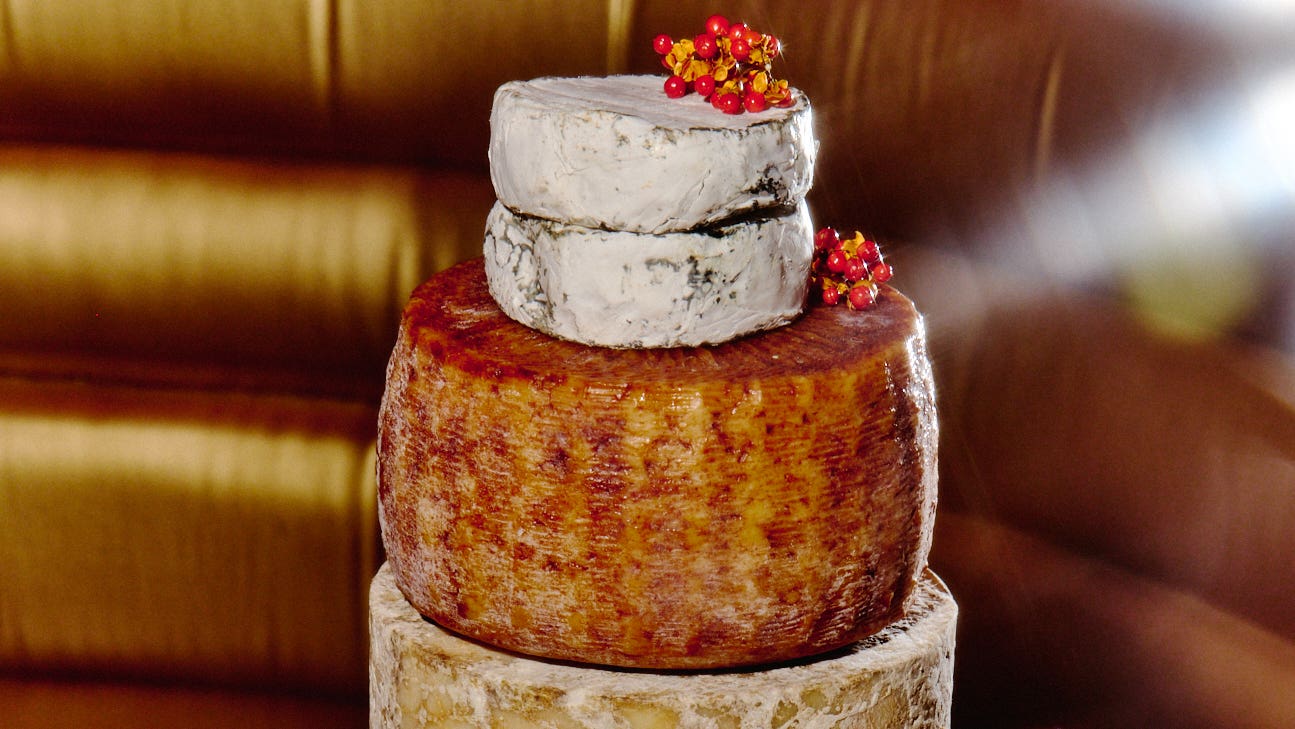

There isn’t any magic trick to creating a cake of cheese—it’s as simple as stacking wheels on top of each other that get a little smaller as you go. Park recommends starting with a hard or semi-firm cheese for a sturdy base, and utilizing cake boards between layers. If you’re using mostly soft, semi-soft, or bloomy-rind cheeses, use dowels or straws inside the cheese itself.
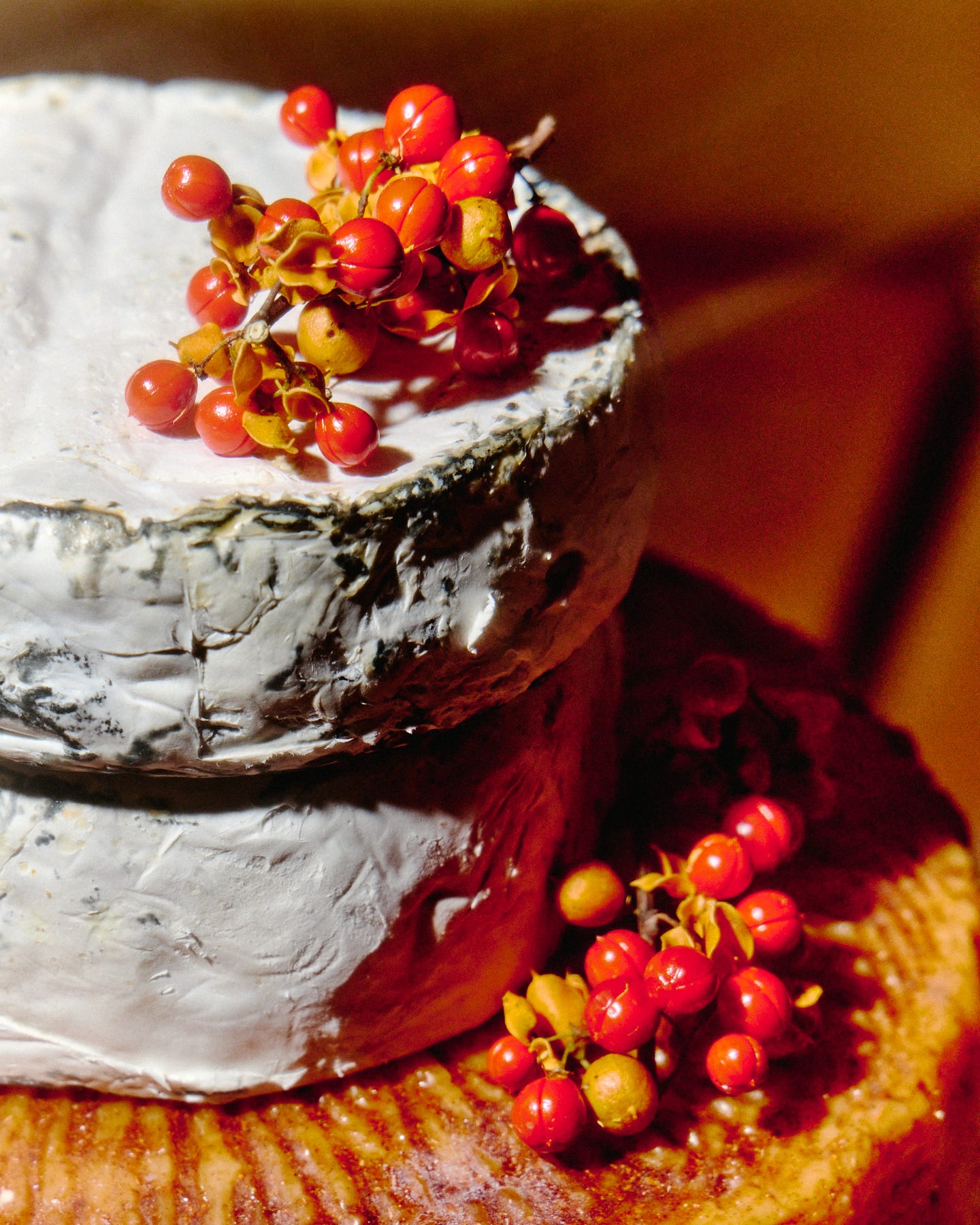
Decorations can be as simple or as complicated as you’d like, just remember that more delicate cheese rinds can easily absorb flavor and color. “If you decorate with berries, you may get staining or flavor infusion into a brie rind,” Bonilla points out. Both Bonilla and Park suggest using natural garnishes like herbs, whole spices, edible flowers, and fruit. Cake decorations that you’d use on a sweet layered cake, ingredients on toothpicks, or a nice ribbon wrapped around a layer or two are other ways to give extra flair.
Cutting and Serving a Savory Cake
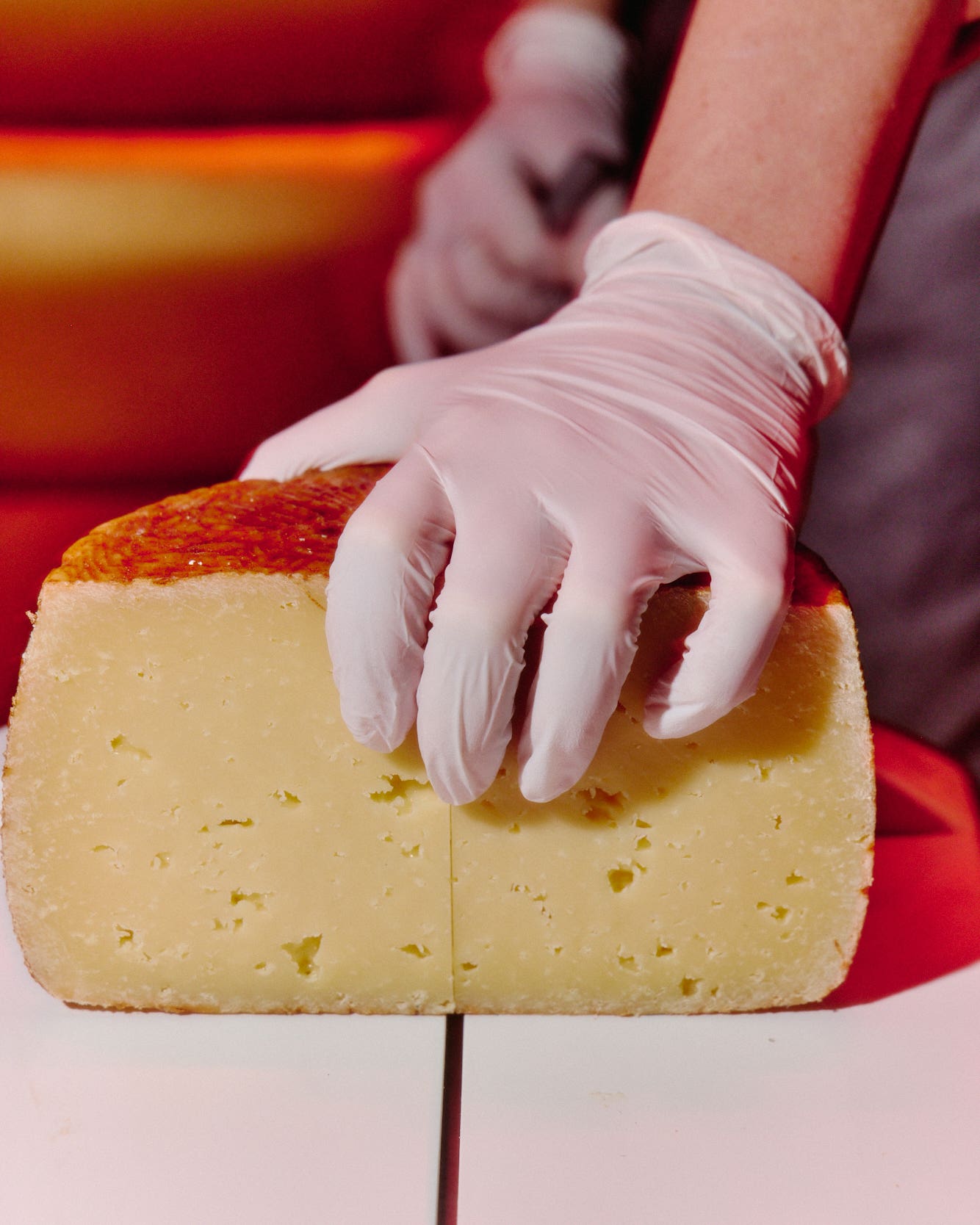

Similar to how you would carve a turkey tableside, you can disassemble the cake of cheese and start cutting it up for guests instead of letting them go at a full cake. Bonilla likes the opportunity for people to learn about cheeses layer by layer, suggesting giving a presentation of where the cheese is from, why you picked it, and a brief overview of what it tastes like or pairs with. “You don’t have to spend the rest of the party breaking down all of these wheels. By leading by example, you can show guests how to cut each cheese and let them take it from there.”
A chef’s knife is a great all-purpose way to break down most cheeses if you don’t have a cheese knife set, Bonilla says, with one big safety note: “Just a sharp knife that you’re comfortable with is probably going to be the best cheese knife. If you’re cutting through a whole wheel, especially for the first time, fold a towel nice and thick and hold it over the tip of the knife as you cut.”
Pairings and Accompaniment Ideas
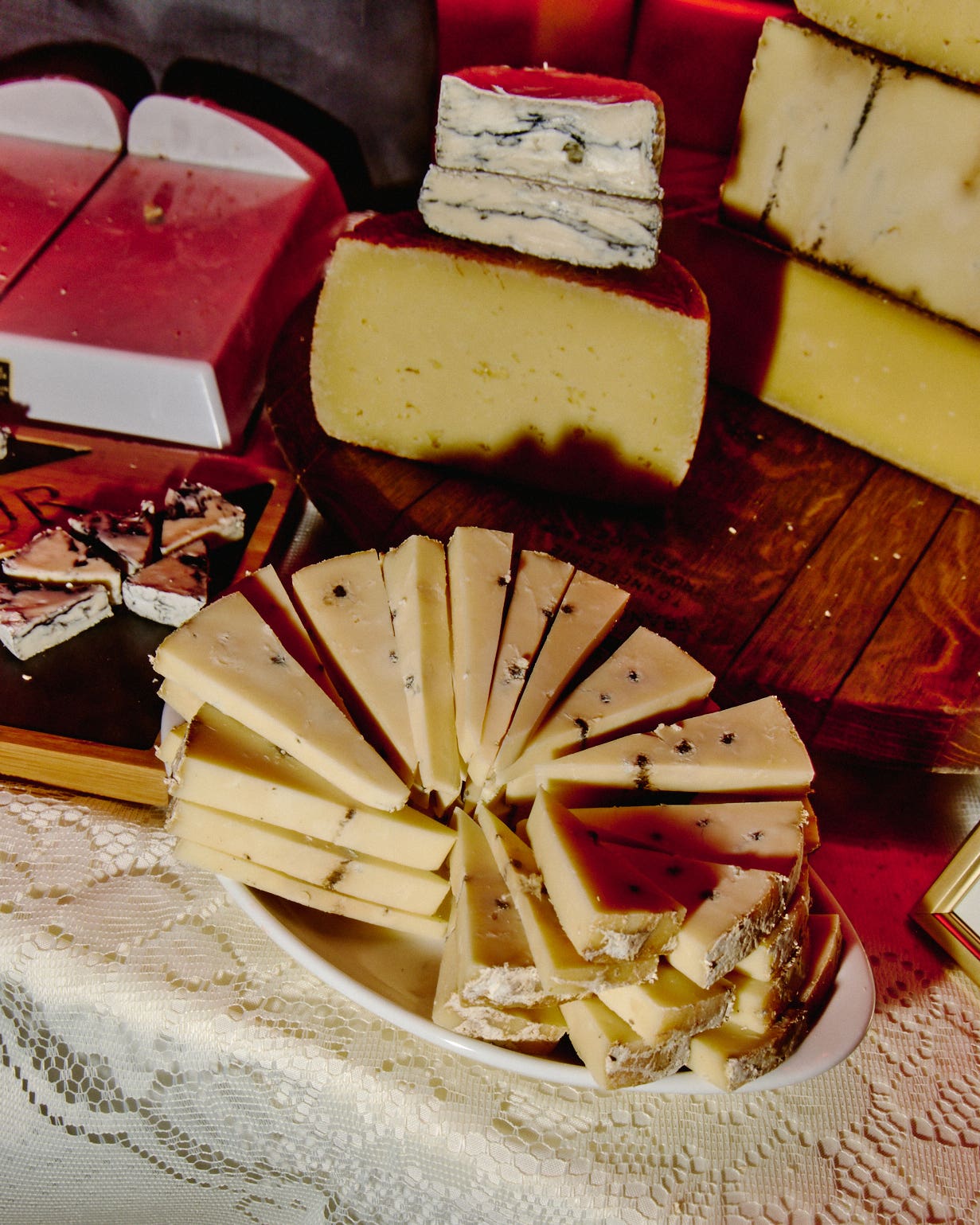

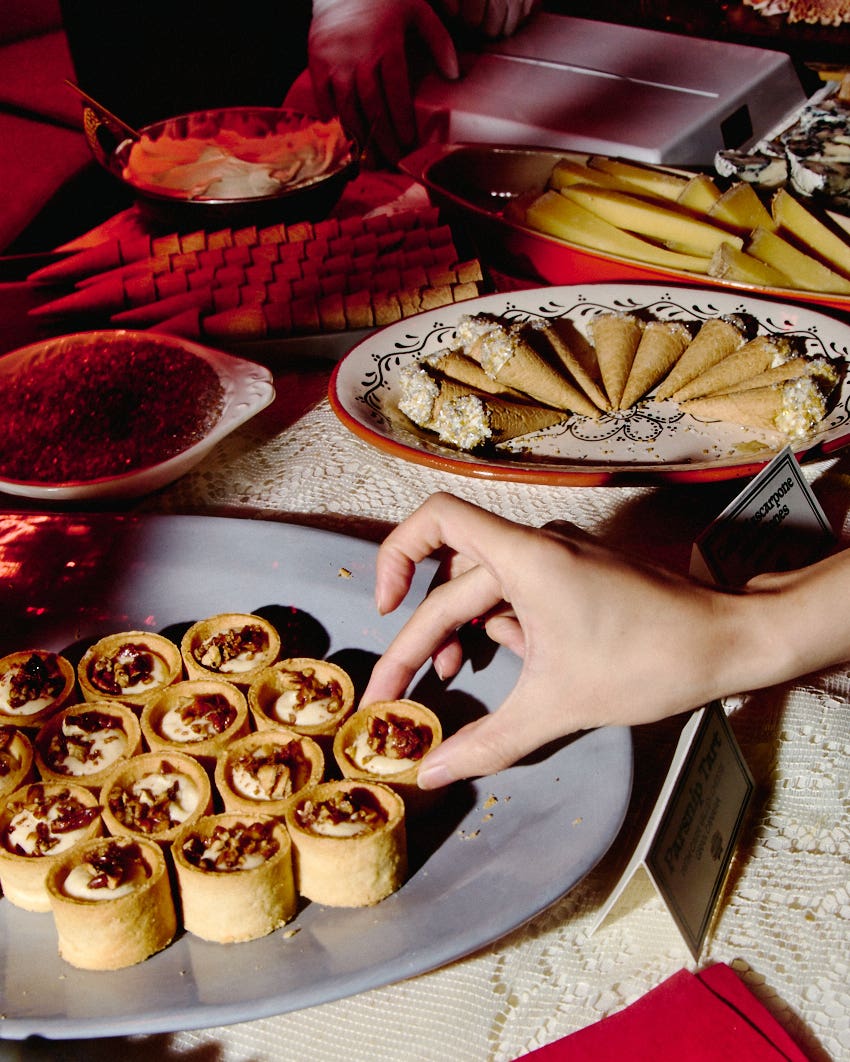
Anything that can go on a cheese board can be part of a cake of cheese service: jams, jellies, figs, dried and fresh fruit, nuts, crackers, bread, cured meats, pickles, and olives. For drinks, Jordan Salcito (sommelier and author of wine guide Smart Mouth) says you can’t go wrong with “sparkling rosé, a versatile, easy match with a variety of cheeses” or a “good-quality dry German Riesling that’s powerful and textured with plenty of weight and structure along with spades of zippy acidity.”
Cheers to cakes of cheese and stacking up new traditions this holiday season!
Keep Reading


Continue to Next Story