Mrs. Barrenger’s Marmalade
Fill your kitchen with the sweet smell of oranges by making this time-honored family recipe.

By Paul Richardson


Published on February 11, 2026

This recipe is adapted from author Paul Richardson’s grandmother, Hilda Marion Josephine Barrenger. “Her marmalade—not orange marmalade, which sounds like a tautology to my British ears—was a family tradition, passed down from her own mother during the First World War,” he writes. Richardson makes it using the bitter oranges that grow on his farm in western Spain. He also adds lemons, which bring a puckering ­liveliness to this traditional preserve. 

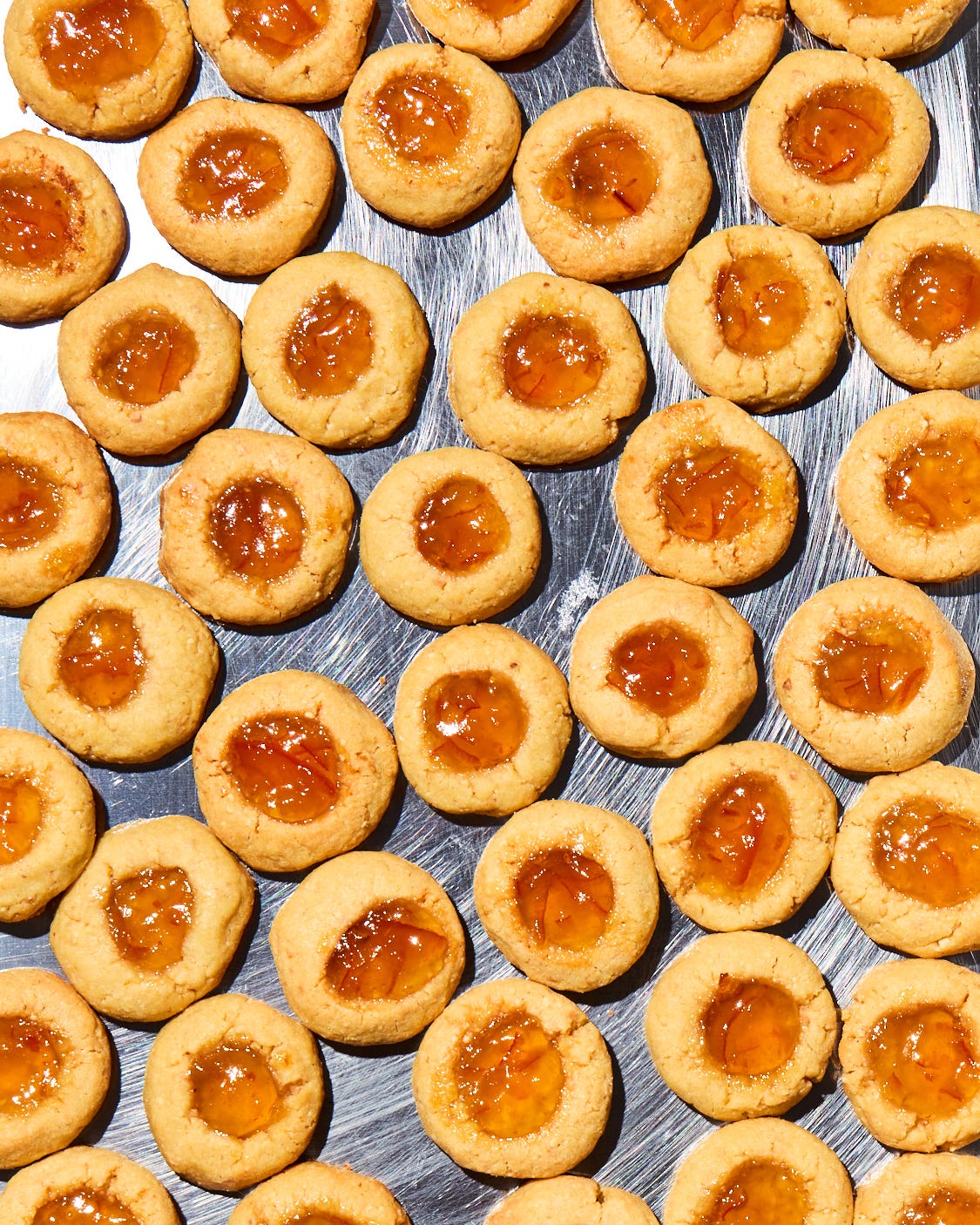
Should you be blessed with unwaxed fruit, skip step 1. The jars, lids, ladle, and funnel must be sterilized; to do this in your dishwasher, run them on the hottest cycle, then keep the door closed until you’re ready to use them. While marmalade has a number of uses in the kitchen—Richardson’s mother topped her suet pudding with marmalade, and it makes an inspired addition to barbecue sauce or an excellent filling for thumbprint cookies—it’s at its simple best on hot buttered toast.

Featured in “The Marmalade Lesson” in the Fall/Winter 2025 issue. See more recipes and stories from Issue 205.

  • Makes

    Nine 8-oz. jars

  • Time

    10 hours 30 minutes, plus cooling

Photo: Murray Hall • Food Styling: Jason Schreiber

Ingredients

  • 2 lb. Seville oranges (about 12–16)
  • 3 medium lemons
  • 6 cups sugar

Instructions

Step 1

Bring a large, nonreactive pot of ­water to a boil. Working in batches, lower the citrus into the water for 10–15 seconds. Using a slotted spoon, transfer to a cutting board. Once cool, under warm running water, use a kitchen towel to scrub off the wax coating.

Step 2

Pour out the water and place a fine-mesh strainer over the pot. Halve each fruit on the equator, then squeeze over the strainer, reserving the spent halves. Wrap the seeds in cheesecloth, tie with twine, and place in the pot with the juice.

Step 3

Thinly slice the spent halves and transfer to the pot. Add 12 cups of cool water and set aside at room temperature for 6–12 hours.

Step 4

Place a saucer in the freezer. Bring the pot to a boil, then turn the heat to low and simmer until the peels are soft and nearly translucent, about 2 hours.

Step 5

Add the sugar and continue cooking, stirring occasionally, until the sugar is dissolved, 5–10 minutes. Turn the heat to medium-high and boil, stirring frequently, until the boiling slows and the mixture darkens and sets, 45 minutes–2 hours. To test for a good set, onto the chilled saucer, ladle a little of the hot liquid. After 2 minutes, push the edge with a fingertip; if it wrinkles, the marmalade is ready. If not, return the saucer to the freezer and test again every 10 minutes. Remove from the heat and stir well.

Step 6

Using a funnel or ladle, fill nine sterilized, dried 8-ounce jars with the marmalade, stopping ¼ inch from the rim. Using a clean kitchen towel, wipe the rims. Top with the lids, then tightly screw on the ring bands. Invert the jars for 2 minutes, then flip right side up. Set aside undisturbed for 24 hours; if canned properly, a vacuum seal will form. (The marmalade will keep in a cool, dark place for up to 1 year.)
  1. Bring a large, nonreactive pot of ­water to a boil. Working in batches, lower the citrus into the water for 10–15 seconds. Using a slotted spoon, transfer to a cutting board. Once cool, under warm running water, use a kitchen towel to scrub off the wax coating.
  2. Pour out the water and place a fine-mesh strainer over the pot. Halve each fruit on the equator, then squeeze over the strainer, reserving the spent halves. Wrap the seeds in cheesecloth, tie with twine, and place in the pot with the juice.
  3. Thinly slice the spent halves and transfer to the pot. Add 12 cups of cool water and set aside at room temperature for 6–12 hours.
  4. Place a saucer in the freezer. Bring the pot to a boil, then turn the heat to low and simmer until the peels are soft and nearly translucent, about 2 hours.
  5. Add the sugar and continue cooking, stirring occasionally, until the sugar is dissolved, 5–10 minutes. Turn the heat to medium-high and boil, stirring frequently, until the boiling slows and the mixture darkens and sets, 45 minutes–2 hours. To test for a good set, onto the chilled saucer, ladle a little of the hot liquid. After 2 minutes, push the edge with a fingertip; if it wrinkles, the marmalade is ready. If not, return the saucer to the freezer and test again every 10 minutes. Remove from the heat and stir well.
  6. Using a funnel or ladle, fill nine sterilized, dried 8-ounce jars with the marmalade, stopping ¼ inch from the rim. Using a clean kitchen towel, wipe the rims. Top with the lids, then tightly screw on the ring bands. Invert the jars for 2 minutes, then flip right side up. Set aside undisturbed for 24 hours; if canned properly, a vacuum seal will form. (The marmalade will keep in a cool, dark place for up to 1 year.)
Recipes

Mrs. Barrenger’s Marmalade

Fill your kitchen with the sweet smell of oranges by making this time-honored family recipe.

  • Makes

    Nine 8-oz. jars

  • Time

    10 hours 30 minutes, plus cooling

Mrs. Barrenger’s Marmalade
PHOTO: MURRAY HALL • FOOD STYLING: JASON SCHREIBER

By Paul Richardson


Published on February 11, 2026

This recipe is adapted from author Paul Richardson’s grandmother, Hilda Marion Josephine Barrenger. “Her marmalade—not orange marmalade, which sounds like a tautology to my British ears—was a family tradition, passed down from her own mother during the First World War,” he writes. Richardson makes it using the bitter oranges that grow on his farm in western Spain. He also adds lemons, which bring a puckering ­liveliness to this traditional preserve. 

Should you be blessed with unwaxed fruit, skip step 1. The jars, lids, ladle, and funnel must be sterilized; to do this in your dishwasher, run them on the hottest cycle, then keep the door closed until you’re ready to use them. While marmalade has a number of uses in the kitchen—Richardson’s mother topped her suet pudding with marmalade, and it makes an inspired addition to barbecue sauce or an excellent filling for thumbprint cookies—it’s at its simple best on hot buttered toast.

Featured in “The Marmalade Lesson” in the Fall/Winter 2025 issue. See more recipes and stories from Issue 205.

Ingredients

  • 2 lb. Seville oranges (about 12–16)
  • 3 medium lemons
  • 6 cups sugar

Instructions

Step 1

Bring a large, nonreactive pot of ­water to a boil. Working in batches, lower the citrus into the water for 10–15 seconds. Using a slotted spoon, transfer to a cutting board. Once cool, under warm running water, use a kitchen towel to scrub off the wax coating.

Step 2

Pour out the water and place a fine-mesh strainer over the pot. Halve each fruit on the equator, then squeeze over the strainer, reserving the spent halves. Wrap the seeds in cheesecloth, tie with twine, and place in the pot with the juice.

Step 3

Thinly slice the spent halves and transfer to the pot. Add 12 cups of cool water and set aside at room temperature for 6–12 hours.

Step 4

Place a saucer in the freezer. Bring the pot to a boil, then turn the heat to low and simmer until the peels are soft and nearly translucent, about 2 hours.

Step 5

Add the sugar and continue cooking, stirring occasionally, until the sugar is dissolved, 5–10 minutes. Turn the heat to medium-high and boil, stirring frequently, until the boiling slows and the mixture darkens and sets, 45 minutes–2 hours. To test for a good set, onto the chilled saucer, ladle a little of the hot liquid. After 2 minutes, push the edge with a fingertip; if it wrinkles, the marmalade is ready. If not, return the saucer to the freezer and test again every 10 minutes. Remove from the heat and stir well.

Step 6

Using a funnel or ladle, fill nine sterilized, dried 8-ounce jars with the marmalade, stopping ¼ inch from the rim. Using a clean kitchen towel, wipe the rims. Top with the lids, then tightly screw on the ring bands. Invert the jars for 2 minutes, then flip right side up. Set aside undisturbed for 24 hours; if canned properly, a vacuum seal will form. (The marmalade will keep in a cool, dark place for up to 1 year.)
  1. Bring a large, nonreactive pot of ­water to a boil. Working in batches, lower the citrus into the water for 10–15 seconds. Using a slotted spoon, transfer to a cutting board. Once cool, under warm running water, use a kitchen towel to scrub off the wax coating.
  2. Pour out the water and place a fine-mesh strainer over the pot. Halve each fruit on the equator, then squeeze over the strainer, reserving the spent halves. Wrap the seeds in cheesecloth, tie with twine, and place in the pot with the juice.
  3. Thinly slice the spent halves and transfer to the pot. Add 12 cups of cool water and set aside at room temperature for 6–12 hours.
  4. Place a saucer in the freezer. Bring the pot to a boil, then turn the heat to low and simmer until the peels are soft and nearly translucent, about 2 hours.
  5. Add the sugar and continue cooking, stirring occasionally, until the sugar is dissolved, 5–10 minutes. Turn the heat to medium-high and boil, stirring frequently, until the boiling slows and the mixture darkens and sets, 45 minutes–2 hours. To test for a good set, onto the chilled saucer, ladle a little of the hot liquid. After 2 minutes, push the edge with a fingertip; if it wrinkles, the marmalade is ready. If not, return the saucer to the freezer and test again every 10 minutes. Remove from the heat and stir well.
  6. Using a funnel or ladle, fill nine sterilized, dried 8-ounce jars with the marmalade, stopping ¼ inch from the rim. Using a clean kitchen towel, wipe the rims. Top with the lids, then tightly screw on the ring bands. Invert the jars for 2 minutes, then flip right side up. Set aside undisturbed for 24 hours; if canned properly, a vacuum seal will form. (The marmalade will keep in a cool, dark place for up to 1 year.)

Continue to Next Story

Want more SAVEUR?

Get our favorite recipes, stories, and more delivered to your inbox.